High Quality Stone Quarry Crushing Plant Certificate: A Benchmark of Excellence and Compliance
In the global aggregates industry, a High Quality Stone Quarry Crushing Plant Certificate is far more than a mere document; it is a comprehensive testament to operational excellence, regulatory compliance, and a steadfast commitment to quality, safety, and environmental stewardship. This certification serves as a critical differentiator in a competitive market, assuring clients, regulators, and stakeholders that the plant operates at the pinnacle of industry standards. It validates that every process—from geological assessment to final product stockpiling—is controlled, optimized, and audited against rigorous benchmarks.
1. The Essence and Scope of the Certification
A High Quality Stone Quarry Crushing Plant Certificate is typically awarded by an independent, accredited certification body or a national standards authority following an extensive audit. It is not a one-time achievement but a cyclical commitment requiring regular surveillance audits for maintenance. Its scope encompasses multiple integrated domains:
- Product Quality Consistency: Certifies that crushed stone products (e.g., aggregates for concrete, asphalt, road base) consistently meet or exceed specified national and international standards (such as ASTM C33, EN 12620, or IS 383) for key parameters like particle size distribution (gradation), flakiness index, cleanliness (clay content), soundness, and crushing strength.
- Process Control and Efficiency: Verifies that the entire crushing circuit—from primary blasting or excavation to secondary/tertiary crushing, screening, washing (if applicable), and material handling—is managed via documented procedures. This ensures optimal yield, minimizes waste (fines generation), and guarantees energy efficiency.
- Environmental Management: Confirms adherence to environmental regulations concerning dust suppression (using mist cannons, bag filters), noise control (acoustic enclosures), water recycling in processing plants, prevention of silt runoff, biodiversity management plans for the quarry site.
- Health & Safety Management: Demonstrates implementation of a certified Occupational Health & Safety Management System (e.g., ISO 45001). This covers safe access platforms around crushers and screens lock-out/tag-out (LOTO) procedures for maintenance machine guarding slip/trip/fall prevention blasting safety protocols.
- Management System Integration: Often based on internationally recognized management system standards like ISO 9001 (Quality) ISO 14001 (Environment) integrated into a single cohesive framework ensuring continuous improvement.
2. The Technical Pillars of a Certifiable Plant
To earn this prestigious certification a crushing plant must be built upon several non-negotiable technical pillars:
A. Geological Resource & Feed Control:
Certification begins at the source. A certified plant must have a proven reserve with consistent geomechanical properties (hardness abrasiveness specific gravity). Regular geological surveys and face sampling are required to monitor feed quality variability allowing for pre-emptive adjustments in the crushing process to maintain final product consistency.
B. Advanced Plant Design & Equipment Selection:
The plant layout must follow principles of optimal material flow minimizing bottlenecks re-handling points. Equipment selection is paramount:
- Primary Crusher: Jaw crushers or gyratory crushers chosen based on feed size abrasiveness required reduction ratio.
- Secondary/Tertiary Crushers: Cone crushers impact crushers configured in open or closed circuits with screens to achieve precise product shaping gradation control.
- Screening Technology: High-efficiency vibrating screens with correctly sized apertures ensure accurate separation of sized fractions.
- Automation & Control Systems: A state-of-the-art PLC/DCS-based automation system is indispensable. It monitors key parameters: crusher power draw chamber pressure feed rates screen loads conveyor belt weights enabling real-time optimization for throughput product quality.
C. Rigorous Quality Assurance Laboratory:
An on-site laboratory equipped with standardized testing equipment sieve shakers Los Angeles abrasion machine soundness test apparatus is mandatory. Certified technicians perform frequent tests following statistically valid sampling plans SPC charts are maintained providing objective evidence of consistent quality forming backbone of certification audit.
D. Sustainability & Environmental Controls:
Beyond compliance leading certified plants incorporate sustainability measures: using electric-powered equipment where possible implementing solar power for auxiliary systems achieving near-zero wastewater discharge through closed-loop water management systems rehabilitating quarried areas progressively.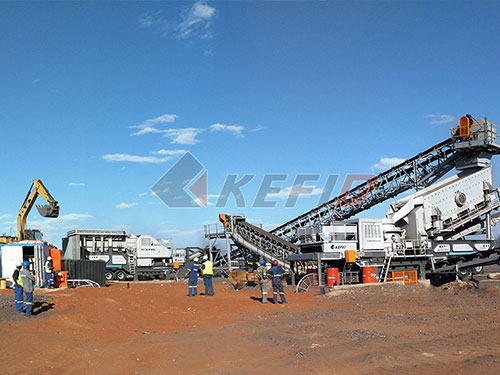
3. The Certification Process: A Rigorous Journey
The path to certification involves meticulous steps:
- Gap Analysis & System Development: The quarry operator conducts an internal review against chosen standard(s) develops all necessary documentation policies procedures work instructions records formats.
- Implementation & Internal Audit: The new system is deployed across operations internal auditors verify effectiveness address non-conformities management reviews system performance.
- Selection of Certification Body: An accredited reputable third-party certifier is engaged.
- Stage 1 Audit (Documentation Review): Auditors examine the plant’s management system documentation ensure it meets standard requirements planning for Stage
- Stage 2 Audit (On-site Evaluation): This intensive multi-day audit involves:
- Witnessing operations from face to stockpile
- Interviewing personnel from managers to operators
- Reviewing calibration records maintenance logs test reports training certificates
- Verifying emergency preparedness incident response
- Checking environmental monitoring data
- Corrective Actions & Certification Decision: Any identified non-conformities must be addressed rectified evidence provided auditors then recommend certification issuance certificate valid typically three years subject annual surveillance audits.
4. Tangible Benefits Beyond Compliance
The investment in obtaining maintaining this certification yields substantial returns:
- Market Advantage & Premium Pricing: Certified “high-quality” aggregates command trust preferred specification by engineers contractors major infrastructure projects highways bridges precast concrete plants where material consistency is critical structural integrity.
- Risk Mitigation: Systematic approach minimizes risk of operational failures environmental incidents workplace accidents costly litigation reputational damage.
- Operational Cost Savings: Process optimization reduces energy consumption per ton lowers wear part costs minimizes re-processing waste improves overall equipment effectiveness OEE.
- Stakeholder Confidence: Builds stronger relationships with local communities regulators financial institutions investors demonstrating responsible corporate citizenship long-term viability operation.
- Export Market Access: Many international projects require ISO-certified materials; this certificate serves as passport global markets.
Conclusion
In conclusion High Quality Stone Quarry Crushing Plant Certificate represents holistic maturity quarrying operation transcends basic regulatory compliance embodies culture continuous improvement technical precision responsible resource management ultimate assurance customer receives product not only meets technical specifications but produced manner respects environment safeguards workforce contributes sustainable development infrastructure globally therefore pursuit this certification strategic imperative any aggregate producer aiming leadership longevity increasingly quality-conscious regulated marketplace symbolizing unwavering dedication excellence every rock crushed every process controlled every standard upheld
