High Quality Gyratory Crusher Prices: A Comprehensive Analysis
In the world of industrial crushing, particularly within mining, quarrying, and large-scale aggregate production, the gyratory crusher stands as a cornerstone of primary comminution. When the topic of high-quality gyratory crusher prices arises, it transcends a simple figure on an invoice. It represents a complex equation where capital expenditure (CAPEX) intersects with long-term operational value, total cost of ownership (TCO), and the relentless pursuit of operational efficiency. This article delves into the multifaceted factors that determine these prices, the justification for premium investment, and a strategic framework for evaluating such a critical capital purchase.
Understanding the Machine: The Gyratory Crusher’s Role
A gyratory crusher is characterized by a concave surface and a conical head (mantle), both lined with manganese steel wear liners. The head gyrates within the concave, creating a progressive crushing cavity that reduces massive feed material (often over 1 meter in size) to a conveyable product. Its key advantages over alternatives like jaw crushers include higher capacity (often exceeding 10,000 t/h), lower unit power consumption at high throughputs, continuous crushing action, and suitability for direct feed from haul trucks. It is typically employed for heavy-duty primary crushing of abrasive ores like copper, iron ore, and gold, or in high-tonnage aggregate operations.
Deconstructing the Price: Core Cost Components
The price of a high-quality gyratory crusher is not monolithic. It is an aggregation of several critical components:
- Materials and Metallurgy: The single most significant factor. Premium crushers use high-grade cast steel for the main frame (spider, top shell) to withstand immense stress and fatigue. The mantle and concave liners are made from advanced manganese steel alloys with micro-alloying elements (like chromium, molybdenum) for optimal work-hardening and wear resistance. The quality and quantity of these materials directly drive base cost.
- Engineering and Design: This encompasses sophisticated Finite Element Analysis (FEA) to optimize stress distribution, advanced kinematics design for optimal stroke and speed (“gyrating” motion), and computer-aided design for precision manufacturing. Investment in R&D for features like automated setting adjustment systems (ASRi) is factored into the price.
- Manufacturing and Fabrication: Precision machining of massive components—like the main shaft weighing tens of tons—requires specialized CNC equipment and stringent quality control. The assembly process itself is highly skilled labor-intensive.
- Drive System: The heart of the crusher’s power transmission includes a high-torque motor (often 1 MW+), V-belts or direct drive systems, an eccentric assembly, and sometimes sophisticated hydraulic systems for overload protection (e.g., Hydroset system).
- Automation and Control Systems: Modern high-quality crushers are integrated with advanced programmable logic controllers (PLCs), sensors for monitoring parameters like power draw, pressure, temperature, and closed-loop control systems for real-time optimization.
- Brand Value and Support: Established OEMs (Original Equipment Manufacturers) like Metso Outotec, FLSmidth (TSmith), ThyssenKrupp Industrial Solutions command premium prices due to decades of proven performance, extensive global service networks, readily available spare parts libraries, and application expertise.
Price Range Spectrum: From Budget to Premium
Providing an exact price is impractical without specific specifications (size/capacity). However, we can outline ranges:
- Smaller / Re-manufactured Units: For secondary applications or smaller mines/aggregate sites with capacities around 500-1,500 t/h can range from $500k to $2 million USD.
- Standard Primary Crushers: The workhorses for mid-tier mines (~2k-6k t/h), typically priced between $2 million to $5 million USD.
- Large / Super-Class Gyratories: Designed for mega-mines with capacities exceeding 10k t/h can command prices from $5 million up to $10+ million USD.
Crucially,high-quality implies positioning at the mid-to-upper end of these ranges.
Justifying the Premium: Total Cost of Ownership vs. Initial Price
The central thesis when discussing price is that focusing solely on initial CAPEX is myopic. A truly high-quality gyratory crusher justifies its higher price through superior TCO:
- Operational Availability & Reliability: Premium designs minimize unplanned downtime through robust construction and predictive maintenance features. A single day of lost production in a large mine can cost hundreds of thousands in lost revenue—far exceeding any initial savings from a cheaper machine.
- Energy Efficiency: Optimized chamber designs and efficient drive trains reduce specific energy consumption per ton crushed over decades-long lifespans.
- Wear Life & Liner Costs: Superior metallurgy extends liner life significantly—sometimes by 20-30% or more—reducing change-out frequency costs (downtime + labor + parts).
- Product Quality & Yield: Consistent cavity geometry ensures stable product gradation with fewer fines or oversize material generation downstream processing costs.
- Safety Features: Integrated safety systems for maintenance (e.g., locking mechanisms during liner changes) reduce risk exposure—a priceless attribute.
- Residual Value & Support: Equipment from top-tier OEMs holds better resale value and ensures continuous access to technical support process optimization over its entire lifecycle.
Strategic Procurement Framework
When evaluating suppliers based on quoted prices: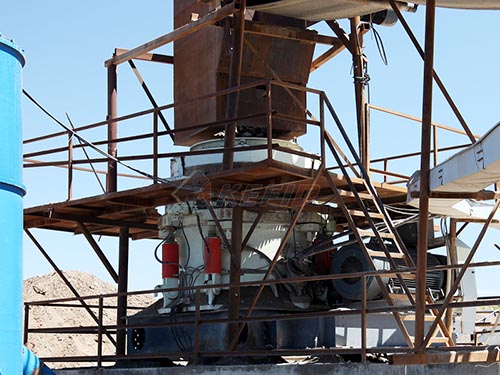
- Define Specifications Rigorously: Clearly outline required throughput feed size hardness product size availability target before requesting quotes ensure comparability.
2 Request Detailed Breakdowns Ask suppliers provide cost breakdowns not just total price understand what included excluded e.g., installation supervision commissioning spares package
3 Conduct Lifecycle Cost Modeling Model TCO over expected lifespan e.g., years Include estimated energy consumption liner replacement costs scheduled maintenance labor parts projected availability impact revenue
4 Evaluate Service Ecosystem Scrutinize supplier local presence technical support capabilities digital tools remote monitoring training programs parts inventory proximity
5 Inspect Reference Installations Visit similar operating sites talk operators maintenance managers about real-world performance reliability support responsiveness
6 Consider Financing Options Many OEMs offer creative financing leasing structures align payments operational cash flow reducing upfront burden
Conclusion: An Investment in Core Process Integrity
Ultimately,high-quality gyratory crusher prices reflect an investment in foundational plant integrity rather than mere equipment purchase decision-making process must shift focus from minimizing initial expenditure maximizing long-term value per crushed ton delivered lowest sustainable cost while ensuring safety reliability premium machine backed strong manufacturer partnership provides insurance against catastrophic failure operational instability pays dividends throughout its service life Therefore most expensive option upfront often proves most economical choice long run whereas lower-priced alternative may become source recurring expense production bottlenecks true measure quality not just its invoice but its contribution overall profitability resilience operation
