High-Quality Coke Vibration Screen Manufacturing: Engineering Excellence for Critical Sizing Operations
In the complex and demanding world of metallurgical and fuel production, the efficient processing of coke—a crucial carbon material derived from coal or petroleum—is paramount. At the heart of this efficiency lies a seemingly simple yet profoundly sophisticated piece of equipment: the coke vibration screen. The manufacturing of high-quality coke vibration screens is not merely a fabrication process; it is a discipline of precision engineering, materials science, and applied dynamics, tailored to withstand some of the harshest industrial environments. This article delves into the intricacies, technological considerations, and manufacturing standards that define excellence in this specialized field.
Understanding the Application: Why Quality Matters
Coke, whether used as a fuel and reducing agent in blast furnaces (metallurgical coke) or as a source of carbon anodes (petroleum coke), is abrasive, dusty, and often handled at elevated temperatures. Screening is the critical process of separating coke into precise size fractions to ensure optimal performance in downstream processes. Inefficient screening leads to:
- Furnace Inefficiency: Off-spec material can disrupt blast furnace permeability, increasing fuel consumption and reducing output.
- Downstream Damage: Oversized or undersized particles can cause wear, blockages, and operational issues in conveying and charging systems.
- Product Value Loss: Inconsistent sizing directly impacts product quality and market value.
A high-quality vibration screen is engineered to maximize screening efficiency (throughput of correctly sized material), availability (uptime), and longevity, directly impacting the profitability and reliability of the entire coke handling circuit.
Core Principles of Design and Engineering
Manufacturing begins with design. A high-quality screen is defined by its ability to generate and control specific vibratory motion.
-
Vibration Mechanism & Dynamics: The core is the exciter system. High-quality manufacturers employ robust, balanced eccentric shaft assemblies or dual-vibrator motor systems to generate a controlled, linear or circular vibratory motion. The amplitude (stroke) and frequency (RPM) are precisely calculated based on:
- Material Characteristics: Coke bulk density, particle size distribution, moisture content, and abrasiveness.
- Process Requirements: Desired capacity (tons per hour) and separation sharpness.
- Dynamic Stability: The entire system—deck, body, exciters—must be tuned to avoid resonant frequencies that cause destructive stress and fatigue.
-
Deck Assembly & Screening Media: This is the “working surface” where separation occurs. Quality is paramount here.
- Modular Panels: Top-tier screens use interchangeable, polyurethane or rubber-clad modular panels with precisely molded apertures. Polyurethane offers superior abrasion resistance (3-5x longer life than steel), noise reduction, anti-blinding properties (due to its flexibility), and corrosion resistance.
- Tensioned Deck Systems: For fine screening or heavy-duty applications, high-strength stainless steel wire mesh panels are tensioned uniformly across the deck frame using specialized rail systems and tensioning devices to ensure consistent vibration transmission and prevent premature sagging or failure.
-
Structural Integrity & Frame Construction: The screen body must act as a rigid platform transmitting vibratory forces without flexing or deforming. High-quality manufacturing involves:
- Robust Steel Fabrication: Use of high-yield-strength steel plates (e.g., S355JR) for side plates and cross members.
- Advanced Joining Techniques: Primarily submerged arc welding (SAW) for deep penetration and consistency on long seams. Critical welds are often stress-relieved post-welding to eliminate internal stresses that lead to fatigue cracking under cyclic loading.
- Modular Design Philosophy: Modern screens are designed in bolt-together modules for easier transport, installation within confined plant spaces, maintenance access.
Manufacturing Process: From Raw Material to Finished Product
The journey from design to deployment involves meticulous stages:
Stage 1: Material Selection & Preparation
- Steel plates are ultrasonically tested for internal flaws.
- All components are shot-blasted to SA 2½ cleanliness standard (near-white metal) to ensure optimal paint adhesion.
Stage 2: Precision Fabrication & Welding
- CNC laser or plasma cutting ensures dimensional accuracy for all parts.
- Welding is performed by certified welders following strict Welding Procedure Specifications (WPS). Non-Destructive Testing (NDT) like Magnetic Particle Inspection (MPI) or Dye Penetrant Inspection (DPI) is conducted on critical weld joints.
Stage 3: Sub-Assembly & Dynamic Balancing
- The exciter assembly is dynamically balanced as a complete unit on balancing machines to ISO G6.3 standard or better. This minimizes transmitted vibrations to the supporting structure prevents bearing failure.
Stage 4: Assembly & Alignment
- The main frame assembled with machined mating surfaces ensures perfect alignment shafts/bearings housings.
- Decks installed leveled precisely; on multi-deck screens proper vertical alignment feed/discharge chutes crucial preventing material bypass leakage between decks.
Stage 5: Surface Treatment & Protection
- A multi-coat protective system applied typically an epoxy zinc-rich primer followed by polyurethane topcoat resistant chemicals moisture UV radiation For extremely corrosive environments hot-dip galvanizing may specified key structural components
Stage 6: Comprehensive Testing & Run-In
Before shipment quality manufacturer conducts rigorous testing:
- Geometric Inspection: Verifying all critical dimensions tolerances
- No-Load Run Test: Operating screen at full speed for extended period monitoring bearing temperatures vibration amplitudes at key points using vibrometers confirming levels within design specifications
- Functional Check: Testing drive motor controls safety guards lubrication systems
Key Technological Advancements in High-Quality Manufacturing
Leading manufacturers differentiate themselves through innovation: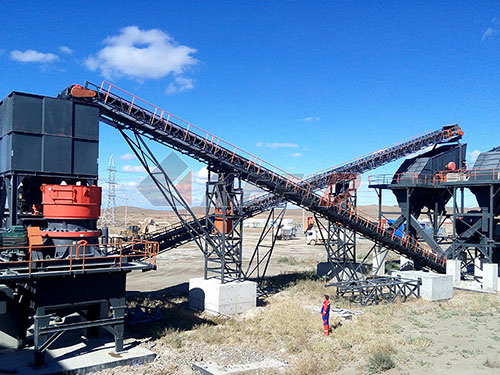
- Condition Monitoring Integration: Provision for mounting wireless vibration temperature sensors directly on bearing housings enabling predictive maintenance preventing catastrophic failures
- Dust Containment Sealing Systems: Advanced labyrinth seals multiple sealing layers effectively contain coke dust protecting internal bearings from contamination major cause premature failure
- Variable Frequency Drive (VFD) Compatibility: Designing exciters motors compatible VFDs allowing operators tune amplitude/frequency real-time adapt changing feed conditions optimize performance
- Finite Element Analysis FEA Simulation: Using FEA software during design phase simulate stress distribution under dynamic loads identify reinforce potential weak points before fabrication begins ensuring structural reliability
- Advanced Wear Materials: Development proprietary polyurethane compounds with embedded ceramic beads silicon carbide additives further enhance wear life screening media specific coke applications
Conclusion: The Hallmarks of Excellence
Manufacturing high-quality coke vibration screen transcends basic metal fabrication It represents synthesis mechanical engineering tribology metallurgy Its hallmarks include:
- A design rooted deep understanding material process dynamics not just copied from previous models
- Uncompromising commitment material integrity verified through rigorous certification testing protocols
- Precision manufacturing where every weld cut alignment held exacting tolerance ensuring dynamic balance operational smoothness
- Incorporation advanced technologies materials extend service life reduce total cost ownership TCO client
- Comprehensive after-sales support including detailed maintenance manuals training spare parts availability technical advisory services
Ultimately investment premium quality coke vibration screen translates directly into operational stability reduced downtime lower maintenance costs consistent product quality For any facility where coke handling critical link production chain partnering with manufacturer embodies these principles strategic decision underpinning long-term productivity competitiveness
