Hammermill Contract Manufacturing: A Comprehensive Technical and Commercial Datasheet
Abstract: This datasheet provides a detailed, objective analysis of the Hammer Mill Contract Manufacturer sector. It delves into the technical specifications, manufacturing capabilities, quality assurance protocols, and commercial considerations that define this specialized field of industrial equipment production. Aimed at OEMs (Original Equipment Manufacturers), engineering firms, and large-scale processing plants, this document serves as a guide for evaluating and engaging with contract manufacturers for custom hammer mill solutions.
1. Introduction: The Role of the Contract Manufacturer
A hammer mill contract manufacturer is a specialized engineering firm that designs, fabricates, assembles, and tests hammer mills on behalf of another company (the client). Unlike off-the-shelf models, these are often custom or semi-custom machines built to precise client specifications for unique applications. This outsourcing model allows clients to leverage deep technical expertise, established supply chains, and dedicated manufacturing infrastructure without the capital expenditure and operational overhead of in-house production.
The core value proposition lies in transforming a client’s performance requirements—throughput, particle size distribution (PSD), material characteristics, and operational environment—into a robust, reliable, and efficient piece of size-reduction equipment.
2. Technical Specifications & Customization Capabilities
A reputable contract manufacturer’s portfolio is defined by its flexibility across key technical parameters.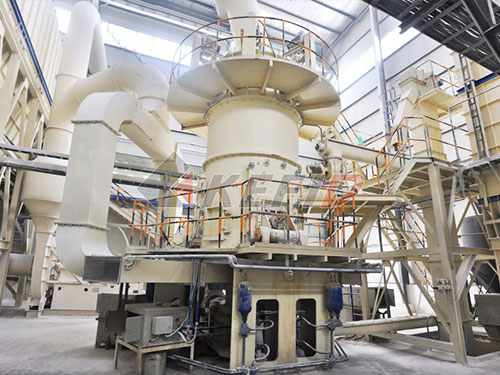
2.1 Core Machine Design & Construction:
- Rotor Assembly: The heart of the hammer mill. Manufacturers offer variations in rotor diameter (from 12″ to 60″+), width, rotational speed (1,800 to 3,600+ RPM), and hammer configuration (swing vs. rigid). Rotors are dynamically balanced to G6.3 or better standards to ensure smooth operation at high speeds.
- Hammers/Beaters: Customization includes material selection (e.g., heat-treated steel T-1 tool steel for abrasion resistance; stainless steel for food/pharma; carbide-tipped for extreme wear), quantity, thickness, and edge geometry (blunt for impact crushing vs. sharp for shearing).
- Grinding Chamber & Liner Plates: Chambers are engineered for optimal airflow and material trajectory. Liners are offered in various materials (AR400/500 abrasion-resistant steel; stainless; polyurethane) with replaceable sections to extend service life.
- Screen/Sieve Technology: Perforated screens or bar grates are critical for final particle size control. Capabilities include manufacturing screens from 0.020″ (fine grinding) to several inches (coarse crushing) in diameter, with various open-area percentages.
- Drive System: Options include direct drive via flexible coupling or V-belt drive systems. Manufacturers calculate required power based on material grindability and throughput, specifying motors from 5 HP to over 500 HP.
- Feeding System: Integration with custom infeed chutes, volumetric screw feeders (for rate control), or pneumatic conveying inlets.
2.2 Application-Specific Engineering:
- Size Reduction Goals: Fine grinding (<200 microns), coarse crushing (>1/4″), or shredding/fiberizing.
- Material Science Expertise: Designing mills for specific categories:
- Abrasive Materials (Minerals/Silica): Focus on wear mitigation.
- Friable/Brittle Materials (Grains/Salts): Optimizing for clean fracture.
- Fibrous/Tough Materials (Wood/Biomass/Plastics): Emphasizing shear and cutting action.
- Heat-Sensitive/Volatile Materials (Foods/Pharmaceuticals/Chemicals): Incorporating cooling jackets, nitrogen inerting ports.
- Hygroscopic/Sticky Materials: Specialized chamber geometry and screen cleaning mechanisms.
2.3 Performance Data Points:
Manufacturers provide calculated or empirically derived data:
- Throughput Capacity: Expressed in kg/hr or tons/hr under defined conditions.
- Power Consumption: kW per ton of output.
- Particle Size Distribution (PSD): Ability to achieve d50/d90 targets with consistency.
- Noise Levels: Typically ranging from 85-100+ dBA; acoustic enclosures can be offered.
- Airflow Requirements: Critical for pneumatic discharge systems; specified in CFM.
3. Manufacturing Facilities & Quality Assurance
The physical and procedural backbone of a contract manufacturer determines output quality.
3.1 Fabrication & Machining Capabilities:
- Heavy-duty CNC machining centers for precision rotor shafts and bearing housings.
- Laser/plasma cutting tables for accurate plate component fabrication.
- Robotic/MIG welding stations with procedures qualified per ASME Section IX standards.
- In-house dynamic balancing equipment up to ISO 1940-1 G2.5 standards for high-speed rotors.
3.2 Quality Control & Testing Protocols:
- Material Certification: All incoming raw materials traceable to mill certificates (ASTM/EN standards).
- Non-Destructive Testing (NDT): Dye penetrant or magnetic particle inspection on critical welds.
- Dimensional Inspection: Using CMMs (Coordinate Measuring Machines) or laser scanning for critical tolerances (±0.001″).
- Factory Acceptance Testing (FAT): A standard offering including:
- Dry-run testing under no-load conditions to verify vibration levels (<2 mm/s RMS typical), bearing temperature rise (<70°C), and alignment.
- Load testing with customer-supplied sample material is often available as an optional service to verify throughput and PSD.
4. Commercial Considerations & Project Workflow
Engaging a contract manufacturer is a project-based partnership governed by clear commercial terms.
4.1 Typical Project Phases: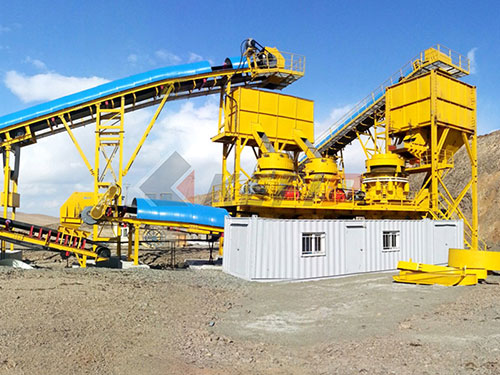
- Consultation & Feasibility: Review of client’s Material Safety Data Sheets (MSDS), sample analysis, and process requirements.
- Quotation & Proposal: Detailed offering including CAD layouts, performance guarantees, bill of materials, delivery schedule (~12-24 weeks typical), and commercial terms (Guarantees typically cover mechanical performance under specified conditions).
- Engineering Review & Final Design: Iterative process using Finite Element Analysis (FEA) on stress points; approval of final general arrangement drawings.
- Procurement & Manufacturing.
- Testing & Inspection (FAT).
- Packaging & Shipping. Crating designed for ocean freight or intermodal transport.
- Post-Delivery Support: Installation supervision commissioning services training spare parts packages
4 .2 Pricing Structure:
Pricing is rarely unit-based but project-based influenced by:
• Raw Material Costs : Volatility in steel prices can affect quotes
• Complexity Of Customization : Standard designs modified versus ground-up engineering
• Quantity : Economies scale apply but less dramatically than consumer goods given custom nature
• Ancillary Systems : Inclusion feeders dust collection explosion protection adds cost
Typical range For A medium-capacity industrial mill can span $50k-$500k+
5 .Industry Applications And Client Profile
Contract manufacturers serve clients who require solutions beyond catalog items:
• OEMs Integrating Size Reduction Into Larger Process Lines e g feed pelleting plants recycling systems
• Engineering Procurement Construction Management firms undertaking turnkey projects
• Large-Scale Processors In Mining Agriculture Chemicals Food Pharmaceuticals needing proprietary grinding solutions protect product integrity
• Research Institutions Government Labs requiring specialized small-batch R&D mills
6 .Selection Criteria For A Hammer Mill Contract Manufacturer
Prospective clients should evaluate partners on:
• Technical Portfolio : Depth experience specific application Request case studies references
• Manufacturing Transparency : Willingness conduct facility audits share QC documentation
• Project Management Communication : Dedicated point contact structured update schedule
• After-Sales Support : Global service network spare parts inventory responsiveness warranty terms typically – months mechanical defects)
• Regulatory Compliance : Ability build accordance applicable standards CE PED ATEX USDA FDA depending region industry)
7 .Conclusion
The landscape hammer mill contract manufacturing characterized by high mix low volume production deep application engineering Selecting right partner requires thorough evaluation both technical prowess collaborative project management capabilities Successful engagement results not just piece equipment but optimized process solution delivering predictable particle size reliable operation long-term return investment Through clear specification rigorous vendor assessment companies can effectively leverage specialized expertise contract manufacturers enhance their own competitive position materials processing marketplace
