Gyratory Crusher Manufacturing Customization: Engineering Excellence for Optimal Comminution
In the demanding world of mineral processing and aggregate production, the gyratory crusher stands as a cornerstone of primary crushing. Renowned for its high capacity, robustness, and ability to handle hard, abrasive ores and large feed sizes, it is a critical capital investment. While standard models form the backbone of many operations, the true potential of this machine is unlocked through sophisticated manufacturing customization. This process transcends mere modification; it is a holistic engineering discipline that tailors the crusher’s design, materials, and functionality to exact application parameters, ultimately optimizing total cost of ownership, throughput, and product quality.
The Imperative for Customization: Beyond One-Size-Fits-All
The driving force behind customization is the profound variability in raw materials and operational goals. A crusher processing hard, abrasive granite for railway ballast faces fundamentally different challenges than one handling wet, sticky iron ore or recycled concrete aggregate. Key variables necessitating customization include:
- Material Characteristics: Compressive strength, abrasiveness (Ai index), stickiness, moisture content, and feed size distribution.
- Plant Objectives: Desired throughput (tph), product size (P80), required availability/uptime, and downstream process requirements.
- Site-Specific Constraints: Installation space (headroom, footprint), power availability, climate conditions (arctic vs. tropical), and maintenance access philosophies.
A standard crusher applied to a non-ideal application will suffer from premature wear, unscheduled downtime, higher energy consumption, and sub-optimal product gradation. Customization mitigates these risks by aligning the machine intrinsically with its duty.
Core Areas of Manufacturing Customization
1. Geometrical Design & Kinematics:
This is the foundation of performance customization. Engineers manipulate key geometrical parameters to achieve specific outcomes.
- Chamber Design: The profile of the crushing chamber—the space between the mantle (moving concave surface) and concave (stationary liner)—is paramount. A steep chamber promotes a finer product size but may reduce capacity. A flatter chamber increases capacity but yields a coarser product. Custom-designed chambers can feature multi-zonal profiles to optimize nip angle (the angle between the mantle and concave at the feed point) throughout the crushing stroke, balancing feed acceptance, reduction ratio, and liner wear life.
- Eccentricity & Stroke: The throw (stroke) of the main shaft is determined by the eccentric bushing or assembly. Customizing eccentricity allows control over the number of crushing cycles per minute and the aggressiveness of each stroke. A longer stroke can be beneficial for slabby material, while a higher speed (shorter stroke) might suit blocky feed for higher throughput.
- Speed & CSS Adjustment: The rotational speed of the eccentric and the Closed Side Setting (CSS) are interlinked. Customized control systems allow for precise CSS adjustment under load (ASRi systems) tailored to specific wear characteristics and product consistency goals.
2. Advanced Materials & Metallurgy:
Perhaps the most critical area of customization lies in material science applied to wear parts.
- Concave & Mantle Liners: Beyond standard manganese steel (Mn14%, Mn18%, Mn22%), custom alloys are developed for specific abrasion/impact ratios. For highly abrasive materials, chrome-molybdenum white iron alloys offer superior wear life despite lower impact resistance. Composite liners with different materials in different chamber zones are also customized.
- Specialized Heat Treatments: Microstructure is key. Custom austenitic manganese steel can be heat-treated for optimal work-hardening properties specific to the expected impact energy of an application.
- Surface Technologies: Application-specific hard-facing patterns can be welded onto critical areas using automated systems. The pattern geometry (e.g., zigzag dots vs continuous ribs), alloy composition (e.g., high-chromium carbide), and application thickness are all customized to direct material flow and maximize liner utilization.
3. Structural & Mechanical System Enhancements:
The supporting cast must be tailored to handle customized crushing forces.
- Main Shaft & Head Center Design: For ultra-duty applications requiring immense crushing force or dealing with tramp metal risks, shafts can be custom-forged from higher-grade alloys with enhanced fatigue resistance. The design of the head center—the interface between shaft and mantle—can be optimized for stress distribution.
- Spider & Top Shell: The spider bridges over the feed opening must be designed for both structural integrity and serviceability based on expected loads and maintenance plans.
- Lubrication & Hydraulic Systems: In cold climates, oil heaters and insulated lines are customized into lubrication circuits. In hot climates or dusty environments enhanced filtration cooling capacity may be prioritized Hydraulic system pressure settings for clamping adjustment clearing are tuned to operational needs
4.Application Specific Features Integration
Customization extends into integrated features that address unique challenges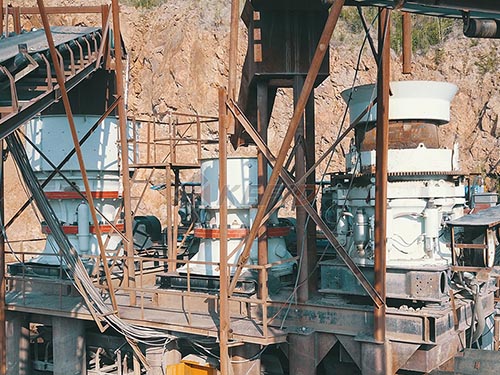
- Dust Control Sealing Systems For operations where dust suppression is critical such as those processing silica sand custom labyrinth seals positive pressure air curtains or dedicated water spray rings can be engineered into housing
- Automation Readiness Crushers can built with extensive sensor integration points pressure temperature position vibration readiness data acquisition systems facilitating integration plant wide process control networks
- Maintenance Accessibility Designs can modified include larger service platforms special lifting tools integrated hydraulic assists mantle removal or split top shells locations where frequent liner changes anticipated due highly abrasive ore
The Customization Process Collaborative Engineering
Achieving optimal result not simply ordering from catalog It rigorous collaborative process typically involving
1 Application Analysis Detailed exchange data including material test reports plant flow sheets historical performance metrics from similar sites
2 Conceptual Proposal Manufacturer’s engineering team creates preliminary design proposal outlining recommended geometry materials features predicted performance curves wear life estimates
3 Iterative Review Joint review with client’s engineering team often using advanced tools like Discrete Element Modeling DEM simulate material flow particle breakage validate design choices before metal cut
4 Final Design Manufacturing Detailed drawings released manufacturing Special processes like casting simulation used optimize integrity custom wear parts
5 Testing Commissioning Support Larger scale customization often involves factory acceptance testing FAT load simulation Commissioning support field ensures design intent realized operation
Benefits Tangible Return on Investment
The significant upfront engineering investment customization yields substantial long term returns
- Maximized Wear Life Optimized chamber profiles matched materials reduce cost per ton crushed sometimes doubling tripling liner life compared misapplied standard design
- Enhanced Throughput Efficiency Chamber designed ideal nip angle feed material ensures full utilization horsepower maximizing throughput potential reducing bottleneck risk
- Superior Product Shape Gradation Control over kinematics allows influence product particle shape distribution critical final product quality aggregate shape concrete asphalt production
- Increased Availability Reliability Application tailored designs experience fewer failures unplanned stoppages directly boosting plant availability revenue
- Reduced Energy Consumption Efficient crushing action achieved through proper geometry translates lower specific energy consumption kWh ton contributing sustainability goals lowering operating costs
Conclusion Strategic Partnership for Long Term Success
Gyratory crusher manufacturing customization represents pinnacle applied mechanical engineering comminution It shift transactional equipment purchase towards strategic long term partnership between operator manufacturer In era where mining aggregate operations pushed ever higher efficiency lower environmental footprint ability tailor primary crusher heart process exact needs not luxury necessity Through deep collaboration leveraging advanced materials digital simulation manufacturers today deliver gyratory crushers that truly unique extensions client’s process delivering optimized performance throughout entire lifecycle This commitment bespoke engineering ensures these massive machines continue serve as reliable high performance foundations upon which modern resource industries built
