
The extraction of gold, a symbol of wealth and a cornerstone of global finance, begins with the critical process of liberating the precious metal from its host rock. Gold ore crushing equipment forms the essential first link in this comminution chain, reducing mined material to a size suitable for further processing. This article provides a detailed, objective analysis of the key producers dominating this specialized market, the technological spectrum of equipment available, and the complex factors influencing their prices.
Before delving into equipment specifics, it is crucial to understand the context. Gold ores vary dramatically, from free-milling alluvial deposits to complex refractory ores where gold is locked within sulfide minerals. The crushing circuit’s primary objective is to achieve optimal particle size for the subsequent stage—usually grinding and then leaching (e.g., cyanidation) or gravity separation. Efficient crushing directly impacts overall recovery rates and operational costs. A poorly configured or maintained crushing stage can create bottlenecks, increase energy consumption in downstream grinding (the most energy-intensive step), and lead to significant metal losses.
The market for heavy-duty crushing equipment is dominated by a handful of multinational corporations with extensive R&D capabilities and global service networks. These companies do not manufacture equipment exclusively for gold mining, but their machinery is industry-standard for hard rock mining applications.
1. Metso Outotec (Finland) & Sandvik (Sweden): Often considered the top tier, these Nordic giants offer comprehensive solutions. Metso’s Nordberg® cone crushers (HP Series) and C-Series jaw crushers are ubiquitous in gold mines worldwide for their reliability and high performance in secondary and tertiary crushing roles. Sandvik’s CH/CS series cone crushers and jaw crushers are equally prominent, known for advanced automation systems like ASRi that optimize crusher performance in real-time.
2. FLSmidth (Denmark/USA): A historic player in mineral processing, FLSmidth provides robust crushers like the TSUV gyratory crusher (claimed as the world’s most durable) for primary crushing and a range of cone crushers. Their acquisition of ThyssenKrupp’s mining business further solidified their portfolio.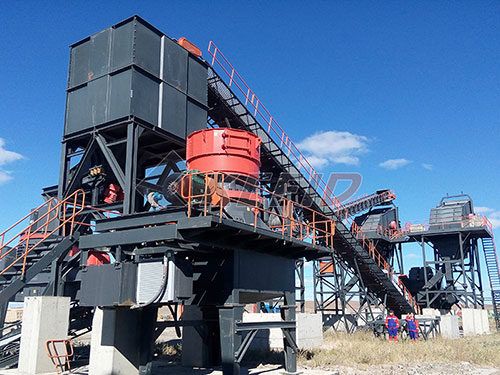
3. Terex MPS (USA): Through its Cedarapids, Simplicity, and Canica brands, Terex offers a strong range of jaw crushers, cone crushers, and horizontal shaft impactors (HSIs). They are particularly competitive in the North American market and for modular crushing plants.
4. ThyssenKrupp Polysius (Germany): Renowned for their massive gyratory crushers used in primary crushing at large-scale open-pit gold mines (e.g., Boddington in Australia). Their eccentric roll crusher (ERC) represents an innovative design offering high throughput with a compact footprint.
5. Chinese Manufacturers: Companies like SBM Machinery, Liming Heavy Industry, and Shanghai Joyal Machinery have grown significantly. They offer competitively priced jaw crushers, cone crushers, and impact crushers that are increasingly reliable. While historically perceived as lower-tier in terms of durability and technology integration, their quality has improved markedly, making them attractive for cost-sensitive projects or in markets where local support is strong.
Selection depends on ore characteristics (abrasiveness, hardness, moisture content), required capacity, and plant configuration.
Primary Crushers:
Secondary & Tertiary Crushers:
Mobile & Semi-Mobile Crushing Plants: A growing trend driven by flexibility. Producers like Metso Outotec and Sandvik offer track-mounted or wheeled units that can be relocated within a mine pit to reduce truck haulage distances—a significant cost saver.
Prices are never listed as simple sticker figures; they are project-specific quotes ranging from tens of thousands to millions of USD per unit.
1. Scale & Capacity: A small 50 tph mobile jaw crusher may cost $150-400k USD while a massive primary gyratory crusher for 10k tph operations can exceed $5 million USD.
2. Technology & Features: Advanced automation systems (like Metso’s IC™ or Sandvik’s ASRi), wear monitoring sensors,lubrication systems,and remote connectivity add substantial cost but improve uptime,efficiency,and safety—delivering long-term ROI.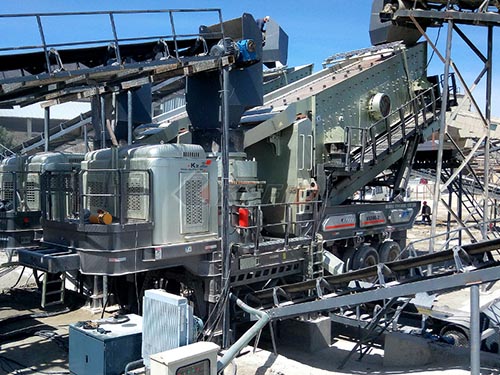
3. Material & Build Quality: The gradeof steel usedfor wear parts(mantles,bowls,jaw plates)andthe robustnessof the frame.Heavier,moredurableconstructioncommandsahigherpricebutreduceslifecyclecosts.Crushersthatusehigh-chromemartensiticsteelorcompositeceramiclinersarepremiumproducts。
4. Brand Premium vs.Value Proposition: Established European/North American brands carrya premiumforprovenreliability,globalpartssupplychains,andengineeringsupport。Chinesemanufacturersmayoffer similar-spec machineryat30-50%lowercapitalcost,thoughoperationalcostsandavailabilityoftechnicalexpertisecanvary。
5. Market Conditions:Commoditypricesindirectlyinfluence demand。Highgoldprices spurmineexpansionand newequipmentorders,potentiallytighteningleadtimesandallowingproducerstomaintainfirmpricing。Conversely,downturnsleadtoheavy discountingandareliancetheusedequipmentmarket。
A significant secondary market exists via companies like Wagner Equipment Co.or through online platforms.Major OEMs also derive substantial revenue from aftermarket services—wear parts(which are recurring revenue streams),field service contracts,and rebuilds.This ecosystem creates pricing tiers:new OEM equipment,OEM-remanufactured units,and third-party/used machines.Purchasing decisions often hinge on balancing upfront capital expenditure(CAPEX)against long-term operating expenditure(OPEX).
The market forgoldorecrushingequipmentis sophisticatedanddrivenbytheimperativeofmaximizingmetallurgicalrecoverywhileminimizingtotalcostpertonne。MajorproducerslikeMetsoOutotec,Sandvik,andFLSmidthleadt hroughcontinuousinnovationinreliabilityandefficiency,butcompetitivepressurefromvalue-orientedmanufacturersisreal。Equipmentpricesareafunctionnotjustoftonsperhour,butoftotalengineeringintegration,material science,and digital intelligence。For any mining project,the selection process must involve rigorous test work anda lifecycle cost analysis that weighs upfront price against long-term operational performance,downtime costs,and compatibility with the broader processing flowsheet.In this high-stakes industry,the rightcrushingequipmentinvestmentis foundationaltoeconomicviability
Lorem ipsum dolor sit amet, consectetur adipisicing elit. Consectetur sequi saepe ut sunt eveniet perferendis excepturi, iste obcaecati. Qui tempore hic sed quia soluta obcaecati vel.