Gold Ore Crushing Equipment: A Comprehensive Guide to Manufacturers and Factory Pricing

The pursuit of gold, a symbol of wealth and stability for millennia, begins not in a vault but at the rock face. Before the precious metal can be extracted and refined, the host ore must be liberated, reduced, and prepared. This critical first step in the mineral processing chain is the domain of gold ore crushing equipment. For mining companies, selecting the right machinery from reliable manufacturers at a competitive factory price is a pivotal decision impacting operational efficiency, recovery rates, and overall project economics. This article provides a detailed exploration of the equipment ecosystem, key manufacturers, and the multifaceted factors that determine factory pricing.

The Crucial Role of Crushing in Gold Processing

Gold ore is rarely found in pure, nugget form. It is typically locked within quartz veins, sulfide minerals (like pyrite), or other host rocks. The primary objective of crushing is to reduce large run-of-mine (ROM) ore into smaller, uniform particles, exposing the gold-bearing minerals for subsequent processes like grinding, leaching (cyanidation), or gravity separation.

The crushing circuit is typically arranged in stages:

  1. Primary Crushing: This first stage handles ROM ore directly from the mine, which can be as large as 1-1.5 meters in diameter. The goal is to reduce it to a size manageable for secondary crushers (typically 100-250 mm).
  2. Secondary Crushing: Further reduces the primary crushed product to a smaller size (20-100 mm), preparing it for fine grinding.
  3. Tertiary/Quaternary Crushing: In some high-tonnage or hard-abrasive ore operations, additional crushing stages are employed to achieve a finer feed for grinding mills, optimizing energy efficiency (as crushing is generally more energy-efficient than grinding).

Key Equipment Types and Their Applications

Manufacturers offer specialized machinery for each stage, each with distinct advantages.

1. Jaw Crushers: The workhorses of primary crushing. They utilize a fixed and a movable jaw to create a “V” cavity where ore is crushed by compression.

  • Best For: Hard, abrasive ores; high-capacity primary crushing.
  • Key Manufacturers: Metso Outotec (Nordberg C Series), Sandvik (CJ Series), Terex MPS (Jaques), Thyssenkrupp Industrial Solutions.
  • Considerations: Robust design but can produce flaky particles; setting adjustment controls product size.

2. Gyratory Crushers: Used for very high-capacity primary crushing (>1,000 t/h). A gyrating mantle within a concave bowl crushes ore continuously.

  • Best For: Large-scale mining operations with high throughput needs.
  • Key Manufacturers: Metso Outotec (Superior™ MKIII), Sandvik (CS & CH Series), Thyssenkrupp (KB Series).
  • Considerations: Higher capital cost than jaw crushers but offer greater throughput and efficiency at large scales.

3. Cone Crushers: The standard for secondary and tertiary stages. They operate similarly to gyratories but on a smaller scale with a faster gyration speed.

  • Best For: Producing well-shaped, fine products; hard and abrasive ores.
  • Key Manufacturers: Metso Outotec (HP™ & MP™ Series), Sandvik (CH & CS Series), Terex MPS (Cedarapids MVP).
  • Considerations: Various chamber designs allow optimization for different product sizes and ore characteristics.

4. Impact Crushers (HSI & VSI): Utilize high-speed rotors and hammers/anvils to shatter ore via impact.

  • Horizontal Shaft Impactors (HSI): Good for softer, less abrasive ores in secondary applications.
  • Vertical Shaft Impactors (VSI): Excellent for producing cubical sand products from quarried rock; less common in primary gold ore circuits but used for specific shaping needs.
  • Key Manufacturers: Metso Outotec (NP Series), Sandvik (Prisec™), Terex MPS.

5. High-Pressure Grinding Rolls (HPGR): An increasingly popular technology for tertiary crushing/pre-grinding. Ore is crushed between two counter-rotating rolls under extreme pressure.

  • Best For: Energy-efficient size reduction; can lead to micro-fracturing that improves downstream gold leach recovery.
  • Key Manufacturers: Thyssenkrupp Polysius, FLSmidth (ABON®), KHD Humboldt Wedag.
  • Considerations: High wear-part consumption on very abrasive ores requires careful cost-benefit analysis.

Landscape of Gold Ore Crushing Equipment Manufacturers

The market is dominated by global “full-line” suppliers and supported by strong regional players and OEMs.

Tier 1: Global Full-Line Leaders
These companies offer complete systems from crushing to grinding and processing.

  • Metso Outotec & Sandvik Rock Processing Solutions: The two undisputed leaders following recent mergers/acquisitions(Metso+Outotec; Sandvik+). They provide cutting-edge technology, extensive R&D, global service networks, and complete plant solutions.
  • FLSmidth & Thyssenkrupp Industrial Solutions: Long-standing engineering powerhouses with deep expertise in mineral processing equipment including gyratory crushers, HPGRs,and complete systems.

Tier 2: Major Specialists & Regional Powerhouses

  • Terex MPS, Weir Minerals: Offer robust lines of jaw and cone crushers with strong regional support.
  • Chinese Manufacturers: Companies like SBM Machinery , Shanghai Zenith Mining ,and Liming Heavy Industry have significantly improved quality over the past decade.They are major players offering competitive alternatives,capturing substantial market share in Africa,Southeast Asia,and domestic China through aggressive pricingand improving technical capabilities.They often excel at providing cost-effective solutionsfor mid-sized projects.

Decoding Factory Price Determinants

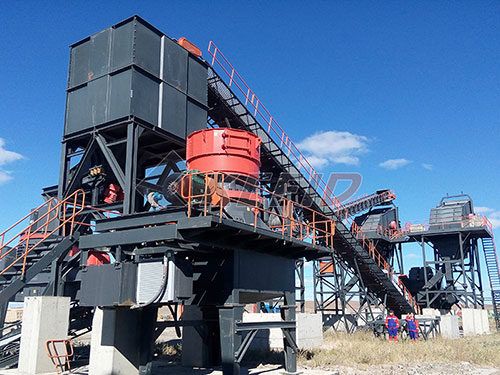
The term “factory price” refers to the ex-works cost before shipping,duties,and installation.It is not a single figure buta complex calculation influenced by:Gold Ore Crushing Equipment Makers Factory Price
1. Core Machine Specifications:

  • Capacity & Size: A 500 t/h cone crusher costs significantly more than a 100 t/h model.Price increases non-linearly with capacity.
  • Materials of Construction: The quality of steel,manganese contentin wear liners,and special alloysfor extreme abrasion resistance are major cost drivers.For gold ores often associatedwith abrasive quartz,the choiceof liner materialis critical.A premium alloy mantle/concavecan doublethe wear lifebut also increasethe part’sprice substantially.

2.Technological Features & Automation:
*Modern crushers come with advanced automation systems like ASRi(Automatic Setting Regulation)for cone crushersor hydraulic adjustment systems.Thesesystems optimize throughputand protectthe machinebut addto the initialcost.Sophisticated lubricationand cooling systemsalso contribute.

3.Brand Premium vs.Value Proposition:
*Tier 1 European/North American brands commanda premiumfor perceived reliability,certified performance data,and global aftermarket support.Their factory pricesare typically higher.Chinesemanufacturersoffer lower entry prices,sometimes30-50% lessfor comparable nominal capacity,making them attractivefor capital-consciousprojects.The long-termTotal Cost of Ownership(TCO)—factoringin parts life,efficiency,and service—mustbe carefully evaluated.

4.Order Configuration & Ancillaries:
*Factory price varies if purchasinga bare crusher versusa skid-mountedor modular unitwith motors,vibrating feeders,and conveyors.Dust suppression systems,safety guards,and electrical control panelsare often quotedas add-ons.

5.Economies of Scale & Market Conditions:
*Purchasinga full circuitfrom one supplieroften yieldsbetter pricingthan piecemeal orders.Raw material(steel)price fluctuationsand globaleconomic conditionsdirectly impactfactory costs.Competitionin specific regionscan also leadto localizeddiscounting.

Strategic Considerations Beyond Sticker Price

For any mining operation,the decision must look beyondthe initialfactory invoice:Gold Ore Crushing Equipment Makers Factory Price

  • Total Cost of Ownership(TCO): Includes energy consumption per ton crushed,wear part costsand replacement frequency,downtimefor maintenance,and expectedservice life.A cheapercrusherwith higherenergyor liner costscan be far more expensiveover5 years.
  • Ore Characteristics Testwork : Investingin comprehensiveore characterization(abrasivenessindex,Bond Work Index)is essentialto selectthe rightmachine typeand specifications,matchingthe equipmentto theore body.This prevents catastrophicunderperformanceor excessivewear costs
    .*
    After-Sales Support& Parts Availability :For remote gold mines,the proximityof service engineersand warehoused sparepartsis crucial.Local supportfrom themanufactureror their authorizeddistributorcan meanthe differencebetween24-houranda 2-weekdowntimeevent.This isoften whereglobal brandshavea distinctadvantage,but regionalplayersare strengtheningtheir networks.*

Modularity& Mobility :For smalleror satellite deposits,the trendis towardmodular,semi-mobilecrushing plantsthatcan be relocated.Modular designsoften carrya differentpricingstructurebut offer significantflexibility.*

Conclusion

Navigatingthe marketfor goldore crushingsolutionsrequiresa balanceof technicalacumenand commercialsavvy.The choicebetweena premiumglobal manufactureranda value-focusedregional supplierhinges on projectscale,budgetconstraintsore complexity,and long-termoperational philosophy.Factory priceis merelythe startingpointof this calculation.The ultimategoal isto achieveoptimal comminutionatthe lowestpossibletotal costper tonoverthe lifeofthe mine.Investingtimein propertestworkconsultingwith multiplevendorsfor site-specificproposalsand conductingrigorousTCO analysiswill ensurethatthe selectedcrushingsystembecomesa reliablefoundationforthe entiregold recoveryprocessratherthana sourceof persistentoperationalheadaches

Lorem ipsum dolor sit amet, consectetur adipisicing elit. Consectetur sequi saepe ut sunt eveniet perferendis excepturi, iste obcaecati. Qui tempore hic sed quia soluta obcaecati vel.