Gold Ore Crushing Equipment Fabricator: Engineering the Foundation of Mineral Wealth

The extraction of gold, a symbol of wealth and stability for millennia, begins not in the smelter or the refinery, but at the rock face. The transformation of massive, unyielding gold-bearing rock into a mill-ready product is a critical first step, and its efficiency dictates the entire project’s economic viability. This is the domain of the Gold Ore Crushing Equipment Fabricator—a specialized engineering partner whose expertise forms the bedrock of modern mining operations. Far more than simple manufacturers, these fabricators are integrators of mechanical force, metallurgical science, and process optimization, providing the robust machinery that liberates precious metal from its geological prison.

The Core Mission: From ROM to Mill Feed

The primary objective of crushing equipment is size reduction. Run-of-Mine (ROM) ore from an open pit or underground mine can consist of boulders measuring over a meter in diameter. The milling circuit (grinding), where gold is chemically liberated, typically requires feed finer than 1/4 inch (6mm). Bridging this gap is a multi-stage process engineered by the fabricator:

  1. Primary Crushing: This is the first line of attack, handling the largest and most abrasive feed. Fabricators design and build heavy-duty Gyratory Crushers or Jaw Crushers. Gyratory crushers are favored for high-capacity operations (often >1,000 tons per hour), using a mantle gyrating within a concave bowl to crush ore by compression. Jaw crushers, with their reciprocating motion of a fixed and a movable jaw plate, are workhorses for slightly lower capacities or where mobility is needed. Fabrication here focuses on immense structural integrity: high-strength steel castings (often manganese steel for wear surfaces), massive shafts, and robust hydraulic systems for adjustment and clearing.

  2. Secondary and Tertiary Crushing: Following primary crushing, ore is further reduced. Cone Crushers are the standard here. Fabricators produce a range from robust standard cones for secondary duty to finely-tuned short-head cones for tertiary applications, producing precisely shaped cubical product. Modern fabricators integrate advanced automation directly into their designs—like hydraulic setting adjustment systems (e.g., ASRi) that optimize crusher load and output in real-time based on feed conditions.Gold Ore Crushing Equipment Fabricator Brochure
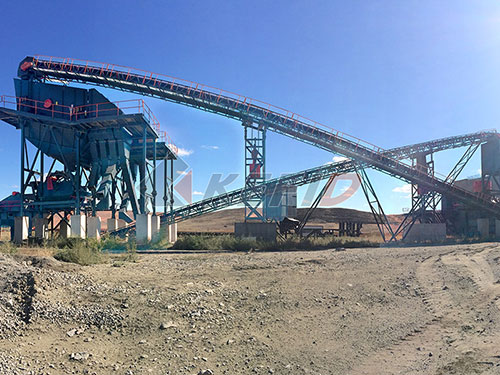
  3. Additional Size Reduction Circuits: For certain ore types (especially wet, clay-rich ores), fabricators may also supply or integrate High-Pressure Grinding Rolls (HPGRs) as secondary/tertiary units. HPGRs apply extreme compressive force between two counter-rotating rolls, creating micro-fractures that significantly improve downstream grinding efficiency—a critical consideration for energy-intensive gold processing.

The Fabricator’s Value Proposition: Beyond Metal Cutting

A distinguished gold ore crushing equipment fabricator differentiates itself through deep vertical integration and application-specific engineering.Gold Ore Crushing Equipment Fabricator Brochure

  • Materials Science & Metallurgy: They are not just welders; they are experts in wear materials. Different ore characteristics (abrasive silica vs. hard granite vs. corrosive sulfide-bearing rock) demand specific material solutions. Fabricators select from advanced alloys, apply specialized hard-facing techniques, and design liner profiles to maximize wear life and throughput.
  • Process Integration & Flow Sheet Design Support: The best fabricators act as consultative partners during feasibility studies. They advise on optimal crusher cavity profiles, closed-side settings (CSS), and crusher selection to achieve target product size distributions (“P80”) while minimizing over-grinding—a key factor in controlling cyanide consumption later in leaching.
  • Modular & Portable Plant Design: For remote deposits or phased projects, fabricators engineer complete modular crushing plants—primary-secondary-tertiary stations pre-assembled on skids with integrated walkways, dust suppression, and electrical controls. These “plug-and-play” modules drastically reduce onsite construction time and cost.
  • Advanced Control Systems Integration: Modern crushing is governed by programmable logic controllers (PLCs) and distributed control systems (DCS). Leading fabricators design their equipment with smart sensors (for power draw, pressure, cavity level) and pre-integrate control logic that allows seamless communication with the plant’s broader supervisory system for optimized performance.
  • Lifecycle Support & Digital Twins: Service extends beyond installation. Fabricators provide comprehensive wear part inventories, field service engineers, and increasingly, digital twin technology—a virtual model of the crushing circuit that simulates performance under different conditions to predict maintenance needs and plan optimization campaigns proactively.

Critical Considerations in Equipment Selection & Fabrication

When a mining company selects a fabricator partner for its gold project several non-negotiable factors come into play:

  • Capacity & Availability: Uptime is paramount; every hour lost in primary crushing represents lost revenue.Fabricators design for high mechanical availability (>95%) with features like hydraulic clearing tramp release systems to handle uncrushable material without catastrophic downtime.
  • Energy Efficiency: Crushing can account for a significant portion of a mine’s energy footprint.Fabrication choices influence this directly through efficient drive systems (e.g., direct drive vs.V-belt), optimal chamber designs that reduce “dead zones,”and promoting inter-particle crushing in cone crushers.
  • Dust Suppression & Environmental Compliance: Gold ores can contain hazardous elements like silica or arsenic.Fabricated enclosures,wet suppression spray systems integrated into chute work,and designs facilitating effective baghouse filter connections are essential for worker safetyand environmental permits.
  • Adaptability to Ore Variability: Ore hardness(measured by Bond Work Index or SMC testing)and clay content can vary across an ore body.Equipment must be fabricated with sufficient adjustability(e.g.,variable speed drives,crusher setting hydraulics)and built-in robustness to handle these fluctuations without choking or excessive wear.

The Future Landscape: Innovation Driven by Fabricators

The frontier of gold ore crushing fabrication is being pushed by several key trends:

  1. Smart Wear Monitoring: Embedding RFID tags or wireless strain gauges within liners to provide real-time wear data,predicting liner changeouts accurately,and minimizing unexpected failures.
  2. Advanced Simulation Software: Using Discrete Element Method(DEM) modeling software during design phase to simulate particle flow,crusher interaction,and optimize chamber geometry virtually before any steel is cut.This leads to higher throughputand better product shape.
  3. Sustainability-Driven Design: Focus on reducing water use in dust control through dry fog systems,and developing liner recycling programs where worn manganese steelis reclaimedand reprocessed.
  4. Integration with Pre-Concentration Technologies: As head grades decline,fabricators are designing circuits that accommodate early waste rejection via sensors(sorting)or gravity concentration.Crushers may be configuredto produce specific size fractions idealfor these pre-concentration units,maximizing overall plant economics.

Conclusion

The role of the Gold Ore Crushing Equipment Fabricator is fundamental yet profoundly sophisticated.They translate geological modelsand metallurgical test resultsinto tangible,massive steel structures that perform under relentless duress.Their work determines how efficiently energyis used how consistently feedis deliveredto mills,and ultimately how much valueis extractedfrom each tonof ore processed.In an industry where marginsare dictatedby gramsper ton,the engineering excellenceprovidedby these specialized fabricatorsdirectly converts mechanical innovationinto financial return.They do not merely build machines;they engineerthe very foundationupon which mineral wealthis built ensuringthatthe ancient pursuitof gold remainsviablein themodern ageof precisionminingandefficiency.As technologyadvances,the most successfulfabricatorswill continueto evolveintegratingdigital intelligencewith brute forceto deliver ever moresustainable resilientand intelligentcrushing solutionsfor themining industry worldwide

Lorem ipsum dolor sit amet, consectetur adipisicing elit. Consectetur sequi saepe ut sunt eveniet perferendis excepturi, iste obcaecati. Qui tempore hic sed quia soluta obcaecati vel.