Gold Ore Crushing Equipment Exporters: Navigating Global Delivery and Logistics
The global mining industry relies on a complex, interconnected supply chain to maintain its operations. At the heart of this chain for gold extraction is the provision of robust, efficient crushing equipment. Gold ore crushing equipment exporters play a pivotal role, not merely as manufacturers but as integrated solution providers whose responsibility extends from the factory floor to the often-remote mine site. The “delivery” component of their service is a critical, multifaceted process that encompasses logistics planning, technical compliance, risk mitigation, and after-sales support. This article delves into the detailed ecosystem surrounding the export and delivery of gold ore crushing machinery.
1. The Export Ecosystem: Key Players and Equipment Types
Gold ore crushing is a multi-stage process, and exporters typically offer a range of equipment tailored to each stage:
- Primary Crushers: Jaw crushers and gyratory crushers that handle the initial, coarse breaking of run-of-mine (ROM) ore.
- Secondary and Tertiary Crushers: Cone crushers and impact crushers that further reduce the ore size to liberate gold-bearing particles.
- Mobile and Semi-Mobile Solutions: Track-mounted or wheeled crushers and screens offering flexibility for satellite deposits or mines with shifting faces.
- Complete Circuits: Integrated systems including feeders, screens, conveyors, and dust suppression systems.
Major exporting hubs include China (offering competitive pricing and rapid production), Germany (renowned for high-precision engineering), the United States (leading in advanced technology and automation), Finland, Sweden, and South Africa. Each exporter’s value proposition hinges on product quality, technological innovation, total cost of ownership, and crucially, their project execution and delivery capability.
2. The Delivery Process: A Phased Approach
Delivery is far more than shipping; it is a project-managed sequence.
Phase 1: Pre-Delivery Engineering & Preparation
Before any item is crated, meticulous planning occurs. This involves:
- Site-Specific Design: Equipment is often customized for ore characteristics (abrasiveness, moisture content) and climatic conditions (arctic cold or tropical heat).
- Dimensional & Weight Analysis: Crushers are massive; a primary jaw crusher can weigh over 100 tons. Exporters conduct detailed transportability studies to determine if equipment will be shipped assembled, semi-knocked down (SKD), or completely knocked down (CKD).
- Packaging & Cration: Heavy-duty, weather-proof crating using treated timber and steel frames is standard. Critical components are shock-mounted and desiccants used to prevent corrosion during ocean transit.
- Documentation Mastery: Preparing commercial invoices, packing lists, certificates of origin (often for preferential tariffs), mill test reports for steel, detailed manuals, and CE/ISO certifications is essential for smooth customs clearance.
Phase 2: Logistics & Transportation
This phase involves selecting the optimal multimodal route:
- Land Transport: Moving equipment from the manufacturing plant to the port using multi-axle trailers (for oversized loads), requiring route surveys and police escorts.
- Ocean Freight: The primary mode for intercontinental delivery.
- Breakbulk/Heavy-Lift Vessels: Used for massive indivisible pieces. Vessels equipped with cranes capable of lifting 500+ tons are employed.
- Roll-on/Roll-off (RORO): Suitable for mobile crushing plants.
- Container Shipping: For CKD components or smaller crushers. Requires careful stuffing plans to maximize space and secure loads.
- In-Country Logistics: The final challenge involves moving equipment from the destination port to the mine site—which may involve river barges, narrow-gauge rail, or arduous overland travel on temporary roads.
Phase 3: Customs Clearance & Regulatory Compliance
Exporters must navigate a labyrinth of regulations:
- Import Duties & Taxes: Providing accurate HS codes for crushing machinery parts.
- Sanitary/Phytosanitary Rules: Many countries mandate fumigation certificates for wooden packaging (ISPM-15 standard).
- Local Mining & Safety Standards: Equipment may need modification to comply with destination country regulations on noise levels dust emissions electrical safety.
Phase 4: Site Delivery & Offloading
Delivery concludes only when equipment is safely positioned at its designated foundation. This requires:
- Specialized Handling: Coordinating with local agents possessing heavy-lift cranes or hydraulic gantries.
- Technical Supervision: Sending export-side engineers to supervise offloading uncrating initial placement ensuring no transit damage has occurred.
3. Critical Challenges in Delivery
Exporters face significant hurdles that can derail projects:
- Geopolitical & Trade Instability: Sudden embargoes sanctions or tariff changes can halt shipments mid-transit necessitating costly rerouting.
- Infrastructure Deficits: Inadequate port facilities poor road conditions low bridge clearances or weak bridges in developing mining regions pose severe risks requiring innovative logistical solutions.
- Weather & Force Majeure Events. Hurricanes port strikes pandemics can cause extensive delays impacting critical path mining schedules leading to liquidated damages claims against suppliers
- Damage Loss Risk. Despite robust crating vibration shock humidity salt spray can damage precision bearings hydraulics electrical systems Comprehensive marine insurance covering “All Risks” including war strikes is non-negotiable
4. Best Practices for Successful Delivery
Leading exporters differentiate themselves through: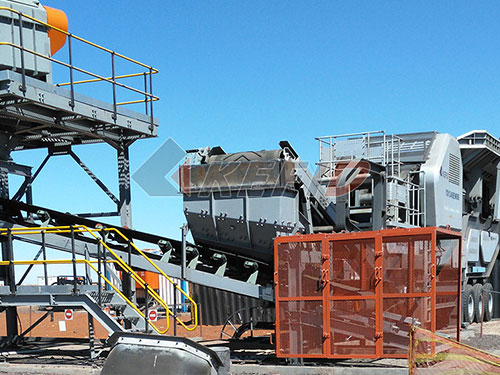
- Early Engagement. Involving logistics experts during the design phase to ensure transport-friendly design (e.g., modularization).
- Digital Tracking. Providing clients real-time GPS tracking temperature/humidity/shock monitoring data for high-value shipments
- Strong Local Partnerships. Establishing reliable networks with in-country freight forwarders customs brokers heavy transport companies familiar with regional nuances
- Transparent Communication. Maintaining clear constant communication channels between exporter client logistics partners mitigating surprises
- Comprehensive Incoterms Selection. Clearly defining responsibilities using standardized Incoterms® rules—e.g., EXW FOB CIF DAP DDP—to avoid disputes over cost risk transfer points
Conclusion
The export delivery of gold ore crushing equipment represents a capital-intensive high-stakes endeavor where engineering excellence must be matched by logistical mastery For mining companies selecting an exporter based solely on equipment specifications price is a profound oversight The true measure lies in evaluating their proven track record in executing complex global deliveries—their ability navigate bureaucratic hurdles manage physical risks orchestrate multimodal transport seamlessly deliver turnkey solutions operational readiness As mining frontiers push into more remote challenging environments demand grows not just for stronger crushers but smarter more resilient supply chains Consequently successful gold ore crushing equipment exporters are evolving into holistic logistics consultants ensuring that their machinery not only performs optimally but arrives safely efficiently ready to unlock value from day one
