Gold Ore Crushing Equipment: A Comprehensive Guide for Exporters
Introduction
Gold ore crushing equipment forms the critical first stage in the mineral processing chain, transforming blasted or mined rock into a size suitable for further liberation and recovery of gold. As a cornerstone of the global mining industry, this specialized machinery is subject to intense international demand, particularly from resource-rich but technology-importing regions. This article provides a detailed, objective analysis of the gold ore crushing equipment export market, covering technical specifications, key machinery types, market dynamics, and strategic considerations for exporters.
The Fundamental Role of Crushing in Gold Processing
Before delving into equipment specifics, it is essential to understand why efficient crushing is non-negotiable in gold extraction. Gold is often locked within host rocks like quartz, sulfides, or tellurides. The primary objective of crushing is to reduce the ore particle size to a point where the gold-bearing minerals are sufficiently liberated for subsequent processes—typically milling and chemical leaching (e.g., cyanidation) or physical concentration.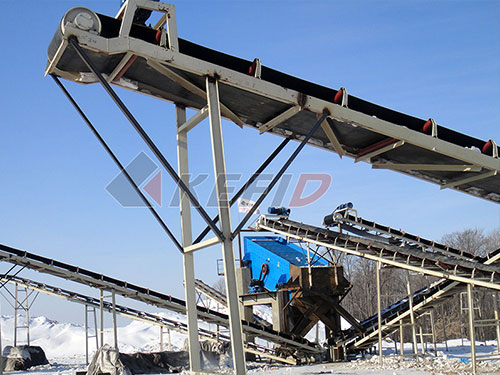
The comminution circuit (crushing and grinding) is the most energy-intensive stage in gold processing, accounting for up to 70% of total energy consumption on a site. Therefore, the efficiency, reliability, and design of crushing equipment directly impact operational costs, throughput rates, and overall project economics. Exporters must position their equipment not just as machinery, but as solutions for total cost of ownership (TCO) optimization.
Key Types of Gold Ore Crushing Equipment for Export
The choice of crusher depends on ore characteristics (abrasiveness, hardness, moisture content), required throughput, feed size, and product size. A modern circuit often employs multiple stages—primary, secondary, and sometimes tertiary crushing.
1. Primary Crushers: The First Line of Reduction
- Jaw Crushers: The workhorse of primary crushing. They utilize a fixed and a movable jaw to create a “V” cavity where ore is crushed by compression. Modern designs feature heavy-duty frames, hydraulic adjustment systems for setting discharge gaps (CSS – Closed Side Setting), and advanced kinematics for higher capacity and better shaped particles. They are ideal for hard, abrasive ores.
- Gyratory Crushers: Used for high-capacity primary crushing (typically above 900 tonnes per hour). They consist of a conical head gyrating within a larger conical bowl. Gyratories offer higher efficiency and lower energy consumption per tonne than jaw crushers for similar duties but come with higher capital costs and installation complexity.
- Primary Impact Crushers: Less common for hard-rock gold ores but can be suitable for softer materials. They use high-speed impact rather than compression.
2. Secondary & Tertiary Crushers: Achieving Finer Liberation
- Cone Crushers: The dominant choice for secondary and tertiary stages. They operate similarly to gyratory crushers but on a smaller scale with a faster speed. Modern cone crushers feature sophisticated hydraulic systems for overload protection (tramp release) and automatic adjustment (ASRi – Automatic Setting Regulation). High-performance (HP) cones are engineered for finer products and higher reduction ratios.
- High-Pressure Grinding Rolls (HPGR): An increasingly adopted technology as an alternative to tertiary cone crushers or even in place of ball milling for some ores. HPGRs compress the feed material between two counter-rotating rolls under extreme pressure (50-350 MPa), causing micro-fractures that improve downstream leach recovery—a critical advantage for refractory gold ores.
3. Mobile & Semi-Mobile Crushing Solutions
A significant trend driving exports is the demand for modular and mobile plants.
- Track-Mounted Mobile Crushers: Offer unparalleled flexibility for smaller deposits, satellite pits, or projects with limited infrastructure. They can be relocated easily to follow the mining face.
- Semi-Mobile Crushing Stations (SMCS): A compromise between fixed in-pit crushers and fully mobile units. SMCS are relocated periodically using heavy transport crawlers (e.g., every 1-5 years), offering significant savings on truck haulage costs without the premium price of fully mobile systems.
Technical Specifications & Customization: The Exporter’s Toolkit
Exporters must be fluent in technical specifications that influence performance:
- Feed Size & Product Size: Defined as F80 (80% passing size of feed) and P80 (80% passing size of product). Crucial for circuit design.
- Capacity: Rated in tonnes per hour (tph) under defined conditions.
- Power Draw & Drive Systems: Electric motors vs. diesel-hydraulic drives (for mobility).
- Wear Parts Metallurgy: Manganese steel grades (e.g., 14%, 18%, 22% Mn), composite alloys, or ceramic inserts tailored to specific ore abrasion indices.
- Automation & Control Integration: Compatibility with plant-wide SCADA systems; sensors monitoring power draw, cavity level, pressure, and temperature.
Customization is key: an exporter serving West African lateritic deposits will emphasize different features than one supplying equipment for frozen Canadian Archean greenstone belts.
Global Market Dynamics & Demand Drivers
The export market is influenced by several macro factors:
- Gold Price Volatility: Sustained high prices spur exploration and development of new mines requiring new equipment.
- Geographical Shifts: While traditional markets exist in Canada, Australia, USA,and South Africa,significant growth originates from:
- West Africa (Ghana,Mali,Burkina Faso,Côte d’Ivoire)
- Central Asia (Kazakhstan,Uzbekistan)
- Latin America (Peru,Mexico,Brazil)
- Southeast Asia/Pacific (Indonesia,Papua New Guinea)
- Regulatory Environment: Increasing emphasis on environmental,social,and governance(ESG) criteria drives demand forenergy-efficient equipment(like HPGRs)and dust suppression/sound attenuation packages.
- Technology Adoption Cycle: Mines seek upgrades to improve efficiency;older operations retrofit modern automation onto existing crushers,presenting an aftermarket parts export opportunity.
Strategic Considerations For Exporters
Successfully exporting gold ore crushing equipment requires more than manufacturing prowess.It demands strategic market engagement:
- Value Proposition Beyond Price: Compete on lifecycle cost,efficiency gains,and service support rather than just initial capital expenditure(CAPEX).Demonstrate ROI through improved throughput or reduced energy/liner wear costs.
- After-Sales Ecosystem: Establish regional service hubs,inventory warehousesfor wear parts,and local technician training programs.Downtime in mining is prohibitively expensive;rapid response capability is a decisive competitive advantage.
3.Compliance & Certification: Ensure equipment meets international standards(CE Marking,IEC standards)and destination-specific regulations(mining safety codes,customs requirements).
4.Partnership Models: Collaborate with local distributors who possess cultural understandingand established networks.Consider strategic alliances with engineering firms(EPCs)that design entire processing plants.
5.Digital Integration: Offer smart crusher packages with IoT sensorsand predictive maintenance analytics.This data-driven approach allows operators to optimize performance remotely,a powerful selling point.
Challenges In The Export Landscape
Exporters face significant hurdles:
Logistical Complexity: Transporting heavy,massive machinery requires specialized shippingand handling expertise.Port infrastructure limitationsin some target countries can pose risks.Currency Fluctuation & Payment Risks:Mining projects are long-term;managing financial exposure across currenciesis critical.Geopolitical Instability:Mining often occursin regionswith political risk requiring careful assessmentand potential export credit agency support.Intellectual Property Protection:Safeguarding proprietary designsin different legal jurisdictionsis an ongoing concern.Competition from Local/Regional Manufacturers:In some markets(e.g.,China),local manufacturers offer cost-competitive alternatives,pressing international exporters to clearly differentiate on quality innovation,and total value.
Conclusion:The Path Forward For Exporters
The global market forgold ore crushing equipment remains robust driven by enduring demandfor goldas botha financial assetand industrial commodity.The trajectory howeveris towardssmarter more efficientand sustainable solutions.Successful exporters will be those who transitionfrom being mere suppliersof machineto becoming providersof integrated productivity solutions.This entails deep technical expertise proactive after-sales supportand an agile approachto navigating complex international markets.Ultimatelythe abilityto help miners reduce their costper ounce recoveredthrough superior reliablecrushing technologywill definethe leading exportersof tomorrow.In this capital-and energy-intensive industrythe rightcrushingequipmentis notan expensebuta strategic investment—a factthat must beatthe coreof every exporter’svalue propositionand communicationstrategy
