Gold Ore Crushing Equipment: A Comprehensive Technical Overview
Gold ore crushing is a critical stage in the mineral processing chain, bridging mining and extraction. The selection and operation of appropriate crushing equipment directly impact downstream recovery rates, operational costs, and overall project economics. This article provides a detailed, objective examination of the machinery, principles, and considerations central to modern gold ore comminution.
1. The Comminution Circuit: Context and Objectives
Gold ore rarely exists as pure native gold in large, free-milling nuggets. It is typically disseminated within host rock like quartz, sulfides (e.g., pyrite, arsenopyrite), or tellurides. The primary objective of crushing is to liberate these gold particles by reducing the ore to a specific size fraction suitable for subsequent processes: secondary/tertiary grinding, gravity separation, or direct leaching.
A well-designed circuit aims for:
- Optimal Liberation: Achieving the particle size where gold is freed from the gangue (waste rock).
- Energy Efficiency: Crushing is far more energy-efficient than grinding; thus, the goal is to “crush as coarse as possible and grind as fine as necessary.”
- Circuit Reliability: Ensuring consistent feed size and throughput for downstream operations.
- Safety and Minimized Downtime: Robust design for abrasive ores and containment of dust (often a health hazard).
2. Key Equipment Types: Principles and Applications
Equipment choice depends on ore characteristics (competency, abrasiveness, clay content, gold particle distribution), plant capacity (TPH – tonnes per hour), and placement within the circuit.
A. Primary Crushers
These handle run-of-mine (ROM) ore directly from the mine, typically at large feed sizes (up to 1.5m).
-
Jaw Crushers:
- Principle: A fixed vertical jaw and a reciprocating moving jaw create a compressive “chewing” action.
- Characteristics: Robust, simple design. High reduction ratio (~4:1 to 6:1). Can handle hard, abrasive ores. Output is somewhat slabby. Often set with a closed-side setting (CSS) of 150-250mm.
- Best For: High-capacity primary crushing of hard rock gold ores. Often followed by a cone crusher.
-
Gyratory Crushers: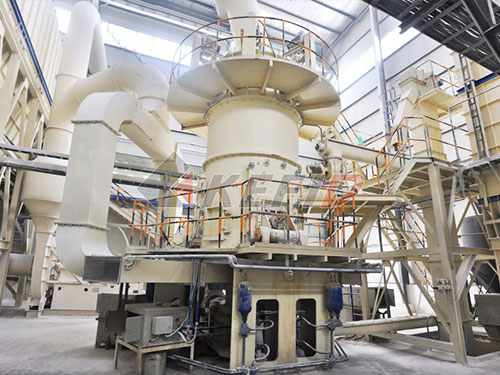
- Principle: A mantle gyrates within a concave bowl, applying continuous compressive force.
- Characteristics: Higher capacity and lower headroom requirement than jaw crushers for same feed size. More expensive capital cost but can be more efficient for high-tonnage operations (>1,000 TPH). Delivers a more uniform product.
- Best For: Large-scale mining operations with high daily throughput.
B. Secondary and Tertiary Crushers
These further reduce ore from primary crushing (typically <250mm) to feed for grinding mills (often <20mm).
-
Cone Crushers (The Workhorse):
- Principle: Similar to gyratories but with a smaller eccentric throw and higher speed. The crushing chamber design (standard, short-head) dictates product size.
- Characteristics: Highly efficient for intermediate and fine reduction. Modern models feature hydraulic adjustment for CSS and clearing of tramp metal/uncrushables. Key parameters are CSS, eccentric speed, and chamber profile.
- Types:
- Standard Cone: For secondary duty.
- Short-Head Cone: For tertiary/quaternary duty, producing finer product.
- HPGR-fed Cone Circuits: Increasingly used in conjunction with High-Pressure Grinding Rolls for energy-efficient pre-grinding.
-
High-Pressure Grinding Rolls (HPGR):
- Principle: Two counter-rotating rolls compress a bed of ore particles in a confined space, causing inter-particle comminution.
- Characteristics: Extremely energy-efficient compared to conventional crushing/ball milling. Generates micro-cracks in particles, improving downstream leach recovery for some refractory ores. Produces a more compacted product with fines.
- Best For: Processing competent ores where energy savings are paramount; particularly valuable for oxide or transitional ores amenable to heap leaching after HPGR crushing.
-
(Less Common) Impact Crushers & Vertical Shaft Impactors (VSI):
- Principle: Utilize high-speed impact/hammers or rock-on-rock attrition.
- Characteristics: Good cubical product shape but high wear rates on abrasive gold ores containing quartz/silicates. More common in aggregate industry.
- Best For: Specific applications with softer, less abrasive ores.
3. Circuit Design Considerations
A typical gold ore flowsheet involves staged crushing with screening between stages (closed-circuit crushing) to ensure optimal size control.
- Primary Crushing Stage: Often open-circuit (no screen returning oversize). Jaw or gyratory crusher reduces ROM ore to ~150-200mm.
- Secondary Crushing Stage: Closed-circuit with a cone crusher and vibrating screen. Screen undersize proceeds; oversize returns to crusher.
- Tertiary Crushing Stage: Further closed-circuit reduction using cone crushers or HPGRs to produce final crusher product (P80 – 80% passing size) of 10-20mm for SAG mill feed or as fine as 6-10mm for ball mill feed.
SAG Mill Feed Preparation Circuits may use minimal primary crushing followed by a single-stage secondary cone crusher.
Ball Mill Feed Preparation Circuits often require three stages of compression crushing to achieve finer feed.
4. Ore-Specific Technical Challenges & Solutions
- Abrasive Ores (High Silica Quartz): Rapid wear of liners/mantles/roll surfaces.Solution: Use advanced metallurgy (manganese steel alloys, chrome white iron), automated liner condition monitoring, and predictive maintenance schedules.
- “Wet & Sticky” Ores (Clay Content): Can cause plugging/choking in crusher cavities and screens.Solution: Pre-screening (“scalping”) to remove fines, incorporating water flushing systems in crushers, selecting non-choke fed crushers like jaw units for primary duty.
- “Refractory” Ores (Gold locked in sulfides): Requires ultra-fine grinding (<30µm P80) for liberation.Solution: Focus shifts to creating an optimal feed for fine grinding mills; HPGRs are advantageous due to micro-crack generation enhancing downstream liberation.
- “Free-Milling” Ores (Gold readily leachable after coarse crush): Ideal for heap leaching.Solution: Two or three-stage crushing circuit targeting a specific lump size (~12-25mm) to maximize permeability in heaps while ensuring adequate liberation.
5。 Automation & Modern Advancements
Modern gold crushing plants are highly automated:
- Crusher PLC Controls & Optimization Systems: Automatically adjust CSS/Eccentric Speed based on power draw and chamber pressure to maintain optimal throughput and product size.
- Particle Size Measurement: In-line laser-based analyzers provide real-time P80 data for process control loops。
- Wear Monitoring: Ultrasonic sensors和激光扫描仪测量衬板磨损,实现预测性维护。
- Rock-on-Rock vs。 Rock-on-Iron:现代圆锥破碎机腔型设计优化了层压破碎,提高了效率并减少了磨损。
Conclusion
Gold ore crushing is not merely about breaking rock; it is the first controlled step in value liberation。从坚固的颚式破碎机到高效的HPGR,设备的选择代表了矿石特性、经济性和最终回收工艺之间的复杂权衡。持续的趋势是提高能源效率(通过HPGR和优化电路)、通过先进的自动化提高可靠性,以及开发能够处理日益复杂和低品位矿石的耐磨材料。正确的破碎设备选择和电路设计为整个金矿加工厂奠定了成功的基础,直接影响运营成本和最终利润。因此,它仍然是一个需要深入冶金和工程专业知识的领域。
