
The aggregate industry forms the bedrock of modern infrastructure, providing the essential materials for construction, road building, and landscaping. At the heart of this industry lies the stone crusher, a machine designed to reduce large rocks into smaller, more usable gravel, sand, and dust. While “Girner Stone Crushers” is not a recognized global brand in the heavy machinery sector, the term serves as an excellent archetype to discuss a generic stone crushing company or product line. This article will provide a comprehensive analysis of such an entity, exploring the fundamental principles of rock crushing, the various types of crushers it might manufacture or utilize, their operational mechanisms, key applications, and the critical considerations for selection and operation.
Regardless of the specific brand or model, all stone crushers operate on a few basic principles of comminution (the process of reducing solid materials to a smaller average particle size). The primary methods employed are:
A company like “Girner Stone Crushers” would design its equipment to optimize one or more of these forces based on the intended application.
A full-range supplier would offer a progression of machines designed for different stages of the crushing circuit.
1. Primary Crushers: The First Line of Attack
2. Secondary Crushers: Refining the Product
After primary crushing, the material (typically 150-250mm) needs further reduction. Secondary crushers take this feed and process it into a more uniform shape and size.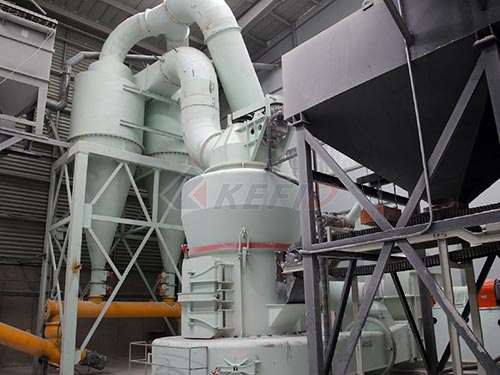
3. Tertiary and Quaternary Crushers: The Final Touch
For applications requiring very specific grading or ultra-fine materials (e.g., manufactured sand for high-strength concrete), tertiary or quaternary crushing stages are employed. These often use specialized cone crushers set to very tight tolerances or VSI crushers specifically configured for sand production.
4. Mobile vs. Stationary Plants
A modern “Girner Stone Crushers” would offer both stationary plants—permanently installed at quarries with long-term reserves—and highly mobile track-mounted or wheeled plants.
The products from these crushing plants are indispensable across numerous sectors:
Choosingthe right “Girner”crusheror any other brand involvesa multi-faceted decision-making process:
1.Feed Material Characteristics:
Hardness & Abrasiveness(Abrasiveness Index): Granite requires robust jawand conecrusherswith manganese steel liners.Softer limestone may be better suitedfor an impactcrusher.
Size:The maximum feed size dictates whether aprimary jawor impactoris neededfirst
*Moisture & Clay Content:Sticky materialscan plugcrushersthat aren’t designedforit;in such cases,a scalping screenor apron feeder maybe necessary
2.Required Final Product:
Gradation:The precise mixof particle sizesneeded(e.g.,for concreteor asphalt specifications).
Cubical Shape:Conecrusherscan produce cubical products,but VSIsare superiorfor achievingthe highestshape factor,criticalfor high-performance asphaltand concrete
*Fines Content:Some applicationsrequire minimalfines(e.g.,drainage layers),while othersneedthem(as afillerin asphalt)
3.Production Capacity(Tons Per Hour):
Themachine mustbe sizedto meetthe requiredthroughputovera shiftora year.This influenceseverythingfromcrusher sizeto conveyor beltspeed
4.Mobility Requirements:
Is thisa permanent quarryoperationora contractcrushingjobthat movesevery few months?The answer determineswhether amobileor stationary plantis appropriate
5.Operational Costs & Efficiency:
This includeswear partcosts(jaws,mantles,bowl liners),fuel/power consumption,and labor.The Total Costof Ownership(TCO)is amore importantmetric than justthe initial purchase price.Modern automatedcrusherscan significantlyreduce TCOby optimizing performancein real-time
6.Environmental Compliance:
Dust suppression systems(water sprays,dust collectors)and noise abatement measuresare nolonger optionalbut mandatoryin most jurisdictions.A responsible manufacturerwould integratethese featuresinto their designs
While “Girner StoneCrushers”serves hereas ageneric placeholder,the principles governingits hypothetical product lineare universal.The stonecrushing industryis adynamic fielddrivenbythe relentlessdemandforhigh-qualityaggregates.Efficiency,sustainability,and versatilityarethe guidingprinciples formoderncrushingequipment design.Whether aprimary jawcrusheroverpoweringa boulder,a precisionconecrusherengineeringperfectly graded gravel,a VSIcrafting premiummanufacturedsand,the technologycontinuesto evolve.Ultimately,the successof anycrushingoperation—whetherit usesequipment froma global giant ora specialized regional manufacturerlike “Girner”—hinges on selectingtheright toolforthe job,basedon athorough understandingof thematerial,the desiredproduct,andthe economicandenvironmental contextin whichit operates
Lorem ipsum dolor sit amet, consectetur adipisicing elit. Consectetur sequi saepe ut sunt eveniet perferendis excepturi, iste obcaecati. Qui tempore hic sed quia soluta obcaecati vel.