The Indispensable Role of the Crusher in Ferromanganese Silicate Slag Processing
Introduction
In the intricate and demanding world of metallurgy, the production of ferromanganese (FeMn) is a cornerstone process, supplying an essential alloying agent for the steel industry. A significant by-product of this production is ferromanganese silicate slag, a hard, abrasive, and often valuable material that requires careful handling and processing. At the heart of this post-production workflow lies a critical piece of equipment: the ferromanganese silicate slag crusher. This machine is not merely a size-reduction tool; it is a pivotal component that bridges the gap between molten waste and a manageable, often marketable, secondary product. This article delves into the characteristics of this unique slag, the operational principles and types of crushers employed, the immense challenges they face, and the overarching importance of this process within a circular economic model.
Understanding the Material: Ferromanganese Silicate Slag
To appreciate the engineering behind its crusher, one must first understand the nature of ferromanganese silicate slag. It is formed in submerged arc furnaces during the carbothermic reduction of manganese ores (primarily pyrolusite or rhodochrosite) with carbon sources like coke. The slag is typically tapped from the furnace at temperatures exceeding 1300°C and is allowed to cool in pits or through air-quenching.
The resulting material possesses distinct physical and chemical properties that dictate its processing requirements:
- Extreme Hardness and Abrasiveness: The primary constituents of this slag are silicates, such as rhodonite (MnSiO₃) and tephroite (Mn₂SiO₄), which form a hard, glassy matrix embedded with crystalline phases. Its Mohs hardness can often exceed 6-7, making it significantly more abrasive than many natural aggregates like limestone or granite.
- High Density: Due to its manganese content (typically 15-35% MnO), the slag is dense, with a specific gravity often ranging from 3.2 to 3.6 g/cm³.
- Variable Composition and Structure: The cooling rate profoundly affects the slag’s structure. Slow-cooled slag forms large, monolithic blocks with high internal stress and micro-fractures, while granulated (water-quenched) slag forms smaller, more granular but still very hard particles.
- Economic Value: Historically considered waste, this slag is now increasingly recognized as a potential source of residual manganese and silicon. It can be recycled back into the furnace or sold for use in construction as an aggregate for concrete or road bases, provided it is properly processed to a specific size.
It is this combination of hardness, abrasiveness, and density that makes crushing ferromanganese silicate slag one of the most challenging applications in comminution.
The Crusher: Types and Operational Principles
No single crusher type can efficiently handle all stages of reducing large furnace blocks to fine, usable granules. Therefore, a crushing circuit—often comprising primary, secondary, and sometimes tertiary stages—is employed.
1. Primary Crushing: Jaw Crushers
The primary crushing stage deals with massive slabs of slag straight from the cooling pit, which can measure over a meter in their largest dimension.
- Machine of Choice: Heavy-duty Double Toggle Jaw Crushers are almost universally preferred for this role.
- Operational Principle: A fixed vertical jaw acts as an anvil while a movable jaw exerts immense compressive force against it in an elliptical motion. This “chewing” action effectively breaks down large blocks by exploiting their natural weaknesses and micro-fractures.
- Why it Works: Jaw crushers are robustly built with heavy frames and wear parts designed to withstand shock loads from large feed material. Their design allows for a large feed opening and high capacity.
- Key Features for Slag:
- Massive Manganese Steel Jaws: The wear plates (cheek plates) and jaws are made from austenitic manganese steel (e.g., Toothed Wedgie Liner), which work-hardens upon impact, providing exceptional resistance to abrasion.
- Robust Eccentric Shaft and Bearings: Engineered to handle peak stresses without failure.
- Adjustable Discharge Setting: Allows operators to control the top size of the product exiting the primary stage.
2. Secondary Crushing: Cone Crushers
The output from the jaw crusher (typically <250mm) is fed to a secondary crusher for further reduction to sizes like 50mm or below.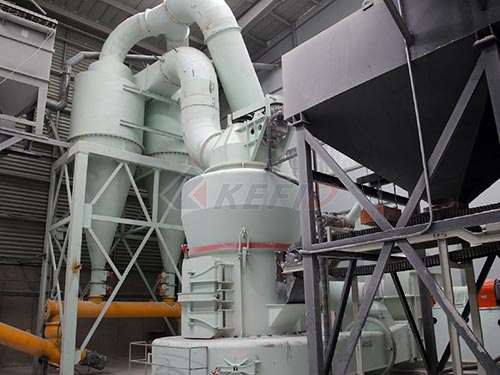
- Machine of Choice: Cone Crushers are ideal for this intermediate stage due to their continuous operation and ability to handle hard, abrasive materials efficiently.
- Operational Principle: An eccentrically gyrating mantle crushes material against a stationary concave bowl liner. The material is subjected to continuous compressive crushing as it travels down the chamber.
- Why it Works: Cone crushers provide a high reduction ratio and produce a more cubical product compared to jaw crushers.
- Key Features for Slag:
- Heavy-Duty Liners: The mantle and bowl liners are critical wear parts made from specialized alloys or composite materials with high chromium content for superior abrasion resistance.
- Hydraulic Adjustment and Clearing: Modern cone crushers feature hydraulic systems that allow for quick adjustment of the closed-side setting (CSS) to control product size. Hydraulic clearing automatically releases the chamber in case of an overload (e.g., tramp metal), preventing catastrophic damage.
- Advanced Chamber Designs: Different chamber profiles (standard, fine, etc.) can be selected based on feed size and desired product specifications.
3.Tertiary/Fine Crushing: Vertical Shaft Impactors (VSI)
For applications requiring fine aggregates or sand-like material (e.g., <10mm), Vertical Shaft Impactors offer an efficient solution.
- Operational Principle: Material is fed into the center of a high-speed rotor which flings it outward against stationary anvils or into a rock-on-rock crushing chamber within itself.
- Why it Works: VSI crushers utilize impact rather than pure compression to fracture particles along natural grain boundaries. This results in a well-shaped, cubical product ideal for concrete aggregate.
- Key Features for Slag:
- Tungsten Carbide Tips: The rotor tips and anvils are typically fitted with tungsten carbide inserts due to their extreme hardness and wear resistance.
- Rock-on-Rock Configuration: For highly abrasive materials like FeMn slag,a rock-on-rock configuration can be used where material forms its own protective lining withinthe crushing chamber,cascading onto other incoming particles.This reduces wear on metal components but may offer less control over particle shape.
Overarching Challenges in Crushing Ferromanganese Silicate Slag
Operating any machinery in this environment presents formidable challenges:
- Extreme Wear: Abrasion isthe single greatest adversary.Wear parts—jaws,bowl liners,mantles,VSI tips—havea limited service life.Replacement costsand machine downtimefor maintenanceare major operational expenses.The industry constantly researches advanced materials like ceramic compositesand improved metallurgiesto extend component life
2.Tramp Metal:A constant riskis uncrushed metallicshotsor piecesof electrode materialthat may be presentin themolten slugwhen pouredThese uncrushable objectscan cause severe damage tocrusher internalsModern systems employ metal detectorsand automatic release mechanisms(like hydraulic clearingin cone crushers)to mitigate this risk
3.Dust Generation:The crushing process generates significant amounts offine,dustyparticulatescontaining manganeseEffective dust suppression(water sprays)and collection systems(baghouses)are not justan environmental imperativebut alsoa critical healthandsafety requirementto protect workersfrommanganesedust exposure
4.High Energy Consumption:The combinationofhardmaterialandhighreductionratiosdemandssubstantialpowerdrivingupoperatingcostsOptimizingthecrushingcircuitfor maximum efficiencyisacontinuousengineeringeffort
Conclusion: Beyond Size Reduction – Enabling Sustainability
The ferromanganese silicate slag crusher transcends its basic functionofsize reduction.Itisa key enablerin transforminga challenging industrial by-productinto auseful resourceBy producinga consistent,sizedaggregatethecrusherfacilitatestheuseofslagsin constructionreducingtheneedfornaturalquarriedmaterialsFurthermoreby preparingtheslagforrecyclingbackintothefurnaceitimprovesoverallmanganeserecoveryratesandeconomicsoftheFeMnsmeltingoperation
The selectionoperationandmaintenanceofthese robustmachinesrequireadeepunderstandingofmaterial science mechanical engineeringandprocessoptimizationAsmetallurgicalprocessesevolvetowardgreatercircularityandefficiencythedemandforreliablehigh-performancecrusherstohandleferromanganesesilicateslagwillonlygrowunderscoringtheirindispensableroleinthisnichebutcriticalsectorofthemetalsindustry
