
Introduction
The term “FDA-approved” is a powerful designation in the United States, signifying that a product, drug, or device has undergone rigorous evaluation by the U.S. Food and Drug Administration (FDA) for safety and efficacy for its intended use, particularly when related to human consumption, medical applications, or food contact. Applying this term to industrial machinery such as gold ore crushing equipment represents a fundamental misunderstanding of the FDA’s regulatory scope. This article will clarify the jurisdictional boundaries of the FDA, detail the actual regulatory bodies and standards governing mining equipment, and provide a comprehensive technical datasheet for a typical gold ore crusher from an objective engineering perspective. The conflation of “FDA-approved” with heavy industrial machinery can lead to significant market confusion and misrepresentation.
Part 1: The FDA’s Jurisdiction and Its Inapplicability to Mining Crushers
The FDA’s authority is derived from federal statutes, primarily the Federal Food, Drug, and Cosmetic Act (FD&C Act). Its purview is explicitly focused on products that impact public health through consumption or direct bodily contact. Key areas include:
Gold ore crushing equipment falls entirely outside these categories. A jaw crusher or cone crusher processes raw geological material (ore) extracted from the earth. This ore is not intended for human or animal consumption; it is an intermediate product in a metallurgical process aimed at extracting a precious metal. The machinery itself does not function as a medical device, a food contact substance, or a consumer radiation-emitting product.
The only conceivable, albeit highly indirect, link would be if a specific lubricant or hydraulic fluid used in the crusher was certified as NSF H1 or H2 for incidental food contact if the equipment were in a food processing plant. However, this certification pertains to the lubricant itself (handled by NSF/ANSI standards), not the machinery, and is irrelevant in a mining context.
Part 2: The Actual Regulatory and Standards Landscape for Crushing Equipment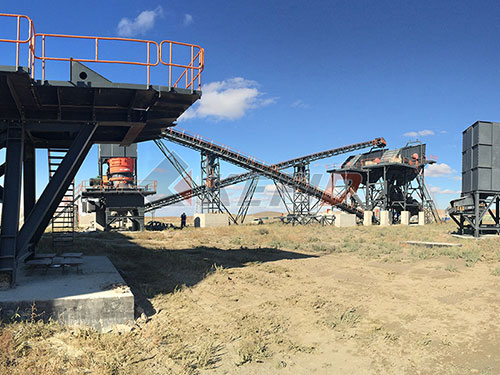
While not subject to FDA oversight, gold ore crushing equipment is designed and manufactured under stringent international engineering standards and is regulated by health and safety agencies in the countries where they operate.
1. Occupational Safety and Health Administration (OSHA):
In the United States, OSHA is the primary regulator for worker safety in mining and other industries. OSHA mandates under 29 CFR Part 1910 enforce critical safety requirements for machinery like crushers:
2. Mine Safety and Health Administration (MSHA):
For mining operations specifically in the U.S., MSHA provides more granular regulation than OSHA.
3. International Electrotechnical Commission (IEC) & National Electrical Manufacturers Association (NEMA):
These organizations set critical standards for the electrical components of crushers.
4. International Organization for Standardization (ISO):
ISO standards ensure quality, interoperability, and reliability.
Compliance with these standards demonstrates that a manufacturer adheres to globally recognized best practices in engineering design worker safety rather than any irrelevant health-consumption-based approval
This datasheet provides an objective overview of standard specifications based on industry-leading models used in large-scale gold mining operations.
| Datasheet Section | Specifications & Description |
|---|---|
| Model Designation | GC-60-89 Heavy-Duty Gyratory Crusher |
| Intended Application | Primary crushing of run-of-mine (ROM) gold ore with a maximum feed size of up to 1500mm. Designed for high-tonnage operations exceeding 10,000 tonnes per day. |
| Regulatory Compliance & Standards | Compliant with MSHA (30 CFR Part 56/57), OSHA (29 CFR 1910), IEC 60529 (IP54 rated enclosures), ISO 9001:2015 Quality Management System certified manufacturing facility. Note: Not subject to FDA regulation or approval. |
| Crushing Principle | Gyratory action. A long spindle with a crushing head (“mantle”) gyrates within a concave “bowl liner.” Ore is crushed by compressive forces between the mantle and concaves as it moves down through the chamber.. |
| Feed Opening & Capacity | – Feed Opening: 1500 mm x 2200 mm – Maximum Capacity: Up to 5,,500 metric tons per hour (tph), dependent on ore characteristics,, closed-side setting,,and feed gradation.. |
| Power & Drive System | – Main Drive Motor: High-voltage squirrel-cage induction motor,, rated at 600 kW,, compliant with IEC/NEMA standards. – Drive System: Direct V-belt drive or gear-driven configuration available.. Hydraulic system for adjustmentand overload protection.. |
| Construction & Materials | – Main Frame: Fabricated high-strength steel platewith integral lifting points. – Concave & Mantle Liners: Austenitic Manganese Steel(12-14% Mn)or premium martensitic chrome iron alloysfor enhanced abrasion resistancein highly abrasive gold ores.. |
| Key Features & Safety Systems | – Automated Control System: PLC-based system monitors mainshaft position power draw oil pressureand temperatureproviding real-time dataand automated control. – *Hydraulic Setting Adjustment: Allowsfor remote CSS adjustmentduring operationfor consistent product size. – Tramp Release System:* Hydraulic cylinders provide instantaneous reliefin caseof an uncrushable object(e.g., tramp metal)enteringthe chamberpreventing catastrophic damage. – *Integrated Safety Guards: Full perimeter guardingaround rotating partsand drive systemscompliantwith OSHA1910..212. – LOTO Points:* Clearly marked isolation pointsfor electricaland mechanical energy sources. |
| Operational Parameters | – Max Feed Size: <1500 mm – *Closed Side Setting(CSS) Range: 150 -250 mm – Product Size(80% passing):* ~200 -250 mm(dependent on CSSand feed) – *Installed Power: ~600 kW Ambient Operating Temp Range:* -20°Cto +50°C. |
In summary,the conceptof “FDA-approvedgold ore crushingequipment”is technically inaccurateand legally unfounded.The Foodand Drug Administration’smandateis centeredon protectingpublic healththrough theregulationof consumables medicalproducts,and radiation-emittingdevices—a scopethat doesnot intersectwiththe realmof heavy-dutyindustrialmining machinery.The design manufacture,and operationof goldorecrushersare governedbya robustframeworkof occupationalsafetyagencieslikeOSHAand MSHA,and internationalengineeringstandardssetbyorganizationslikeISO,IEC,and NEMA.Manufacturersdemonstrate theircommitmentto qualityandsafetythrough compliancewiththesebenchmarks.Whenevaluatingcrushingequipmentprofessionalsintheminingindustrymustfocusonthesespecifictechnicalperformancemetrics,safetyfeatures,and relevantcertificationsratherthan seekingornotingan irrelevantregulatorydesignationthat fundamentallymisunderstandstheproduct’sapplication
Lorem ipsum dolor sit amet, consectetur adipisicing elit. Consectetur sequi saepe ut sunt eveniet perferendis excepturi, iste obcaecati. Qui tempore hic sed quia soluta obcaecati vel.