
The search query “FDA Approved 250-300tph Stone Crushing Plant Cheap” presents a fundamental and significant misconception that must be clarified before any meaningful discussion can proceed. The U.S. Food and Drug Administration (FDA) does not approve stone crushing plants. This conflation of regulatory domains is a critical red flag, often indicative of misleading marketing or a lack of technical understanding. This article will deconstruct the query, explain the relevant regulatory frameworks, detail the specifications of a 250-300 TPH plant, analyze the concept of “cheap” in this context, and provide a roadmap for legitimate procurement.
The FDA is a U.S. federal agency responsible for protecting public health by ensuring the safety, efficacy, and security of human and veterinary drugs, biological products, medical devices, food supply, cosmetics, and products that emit radiation. Its mandate covers consumables and products that directly impact human and animal biology.
A stone crushing plant is a piece of heavy industrial equipment used in the mining, quarrying, and construction aggregate industries. Its output—crushed stone, sand, and gravel—is a raw material for infrastructure (roads, concrete, asphalt) and construction. It is not a food, drug, cosmetic, or medical device.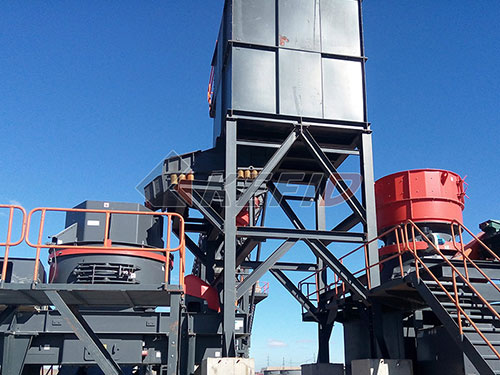
The appropriate regulatory bodies for a stone crushing plant involve:
Any claim of “FDA Approved” for such machinery is factually incorrect and should immediately discredit the vendor. Legitimate manufacturers comply with OSHA, EPA, and industry standards (like those from ASTM or ISO), not FDA regulations.
A 250-300 Tons Per Hour (TPH) stationary or portable crushing plant is a mid-to-large-scale operation capable of producing significant aggregate tonnage for major projects. A typical configuration includes:
Such a plant represents a major capital investment involving engineering design for optimal flow (“circuit design”), high-wear components made from manganese steel or specialized alloys,and sophisticated electrical controls.
In heavy industrial equipment,the term “cheap” carries substantial risk.Costs break down as follows:
Total Cost of Ownership (TCO) is the key metric.TCO includes CAPEX + OPEX + Downtime Costs + Regulatory Compliance Costs.A reliable,efficient plant from reputable engineering firm has higher CAPEX but lower TCO.A “cheap” plant has low CAPEX but exorbitant TCO due to frequent breakdowns low production yield high energy consumption per ton,and regulatory non-compliance risks.
For buyers seeking value at this scale,a professional approach is non-negotiable:
1.Define Requirements Precisely: Feed material type/hardness? Required final product sizes percentages? Site constraints mobility needs?
2.Focus on Correct Certifications: Seek vendors who demonstrate compliance with international mechanical standards ISO certifications)and discuss detailed EPA/OSHA compliance plans for their equipment-not FDA claims
3.Evaluate Total Cost Ownership: Request detailed OPEX projections wear part life guarantees energy efficiency data Case studies from similar applications
4.Prioritize Engineering Support: Reputable suppliers provide circuit flow analysis foundation drawings comprehensive after-sales service training programs parts inventory support
5.Conduct Rigorous Inspection: For used equipment engage third-party inspection service scrutinize maintenance logs measure critical wear components
The phrase “FDA Approved -TPH Stone Crushing Plant Cheap” encapsulates multiple layers misunderstanding potential deception.The FDA plays no role in regulating rock crushing machinery which instead falls under environmental workplace safety jurisdictions.A -TPH facility represents serious industrial investment where pursuit initial cheapness almost invariably leads higher long-term costs operational failures significant liability
Professional buyers must look beyond misleading marketing buzzwords focus on core engineering principles regulatory compliance true total cost ownership Partnering with established manufacturers engineering firms who prioritize durability efficiency safety ultimately provides most economical sustainable path toward establishing productive reliable aggregate production operation The goal not simply purchase machine but invest system that delivers predictable profitable output over its entire lifecycle while safeguarding workers environment
Lorem ipsum dolor sit amet, consectetur adipisicing elit. Consectetur sequi saepe ut sunt eveniet perferendis excepturi, iste obcaecati. Qui tempore hic sed quia soluta obcaecati vel.