
In the global construction and infrastructure development landscape, the demand for high-quality aggregates remains insatiable. At the heart of aggregate production lies the stone quarry crushing plant—a sophisticated assembly of machinery designed to reduce large rocks into specified sizes of crushed stone, sand, and gravel. For exporters and manufacturers, offering a competitive price for these plants is not merely a matter of undercutting rivals but a complex equation involving engineering efficiency, component quality, logistical strategy, and total cost of ownership for the buyer. This article delves into the multifaceted factors that define a truly competitive price in the export market for stone quarry crushing plants.
A competitive price begins with a clear breakdown of what constitutes a crushing plant. The plant is not a single machine but a system, and its cost is an aggregate of its parts:
Primary Crusher: This is the workhorse (e.g., jaw crusher, gyratory crusher) that handles the largest feed material. Prices vary dramatically based on capacity (tons per hour), power rating, and wear-resistant materials (like manganese steel). A competitively priced plant will match the crusher precisely to the client’s feed material hardness (abrasiveness) and required reduction ratio, avoiding over- or under-specification.
Secondary and Tertiary Crushers: Cone crushers and impact crushers further refine the material. The choice here—between higher-cost but more abrasive-resistant cone crushers for hard stone versus versatile impact crushers for softer stone—directly impacts price and long-term operating costs.
Screening Equipment: Vibrating screens separate crushed material into different size fractions. The number of decks, screen area, and technology (e.g., linear vs. circular motion) affect both upfront cost and product yield efficiency.
Conveying System: Belt conveyors link all stages. Their length, width, incline, and quality of idlers/pulleys are significant cost factors. A competitive design minimizes transfer points and energy consumption.
Feeders and Hoppers: These regulate material flow into the crushers. Robustness and automation level (e.g., variable frequency drives) add cost but improve operational stability.
Power System: This includes motors, switchgear, cabling, and sometimes onboard generators for remote sites. Electrical component quality is a critical area where cost-cutting can lead to catastrophic failures.
Control & Automation System: From simple local control panels to advanced PLC-based systems with remote monitoring capability, this layer significantly influences price while offering substantial value through optimized throughput, reduced downtime, and lower labor costs.
Structural Steel & Platforms: The framework that supports all equipment must be engineered for durability, ease of maintenance, and safety compliance (e.g., guardrails, access ladders). Fabrication quality here dictates longevity.
Mobility Option: Stationary plants are typically cheaper per ton of capacity than mobile or semi-mobile track-mounted plants. However, mobile plants offer unparalleled flexibility for multi-site contractors, justifying their premium price in specific market segments.
Achieving a competitive export price requires strategic optimization across several pillars:
1. Design Efficiency & Modularity:
A truly competitive supplier invests in intelligent plant design that minimizes wasted space, energy consumption (a major operational cost), and on-site installation time. Modular designs allow for pre-assembled sections that reduce civil engineering work at the quarry site—lowering the client’s total installed cost even if the ex-works price appears slightly higher.
2. Strategic Sourcing & Supply Chain Management:
Manufacturers with strong relationships with component suppliers (for bearings, motors, steel castings) can secure better prices without compromising quality.
Vertical integration—producing key components like crusher bodies or frames in-house—can offer significant cost control advantages.
Efficient logistics planning from factory to port reduces inland freight costs.
3.Value Engineering vs.Cost Cutting:
This is the crucial distinction.
4.Total Cost of Ownership(TCO)Focus:
Sophisticated buyers evaluate TCO:
initial purchase price + installation + operating costs(energy,wearing parts,labor)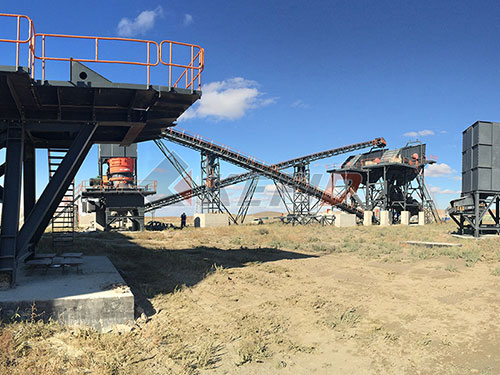
5.ScaleofProduction&TechnologicalAdvantage:
Large-scale manufacturers benefit from economiesofscalein procurementandproduction.
Furthermore,
investmentsin proprietary technology(e.g.,
automated setting adjustment systemslike ASRi™for cone crushers)
allow themto offer superior performanceatapremiumthatthemarketacceptsascompetitivefor
thevalue delivered.
The quest fora competitivepriceforexportstonequarrycrushingplantsisajourneybeyondsimplecostcomparison.Itisaboutdeliveringoptimizedvalue.Themostsuccessfulexportersarethosewhocombine:
Ultimately,a competitively priced crushing plant is not necessarilythecheapestoneontheinitialinvoice.Itistheonethatdeliversthe lowest reliablecostpertonofhigh-qualityaggregateoveritsentire servicelife,inthe specific operatingcontextofthebuyer’squarry.This holisticvalue propositionisthetruemeasureofcompetitivenessintheglobalexportmarketforthesecriticalindustrialassets
Lorem ipsum dolor sit amet, consectetur adipisicing elit. Consectetur sequi saepe ut sunt eveniet perferendis excepturi, iste obcaecati. Qui tempore hic sed quia soluta obcaecati vel.