Export Stone Crusher Plant Datasheet: Technical Specifications, Operational Parameters, and Global Compliance Standards
1. Introduction
A stone crusher plant, also referred to as a stone crushing and screening plant, is an industrial facility designed to process raw, extracted rock (such as granite, basalt, limestone, river gravel, or dolomite) into specific aggregate sizes for use in construction, road building, concrete production, and infrastructure development. For export markets, particularly in regions such as Africa, Southeast Asia, the Middle East, and South America, the datasheet of a stone crusher plant must provide comprehensive, technically precise, and legally compliant information. This document serves as a detailed technical datasheet for a typical medium-to-large capacity stone crusher plant intended for export, covering mechanical design, electrical systems, environmental controls, throughput capacities, and logistics specifications.
2. Plant Overview and Core Functionality
The standard export stone crusher plant is a modular, integrated system comprising primary crushing, secondary crushing, tertiary crushing, screening, and material handling units. The plant is designed for continuous operation under harsh conditions, with a typical working life exceeding 15 years when properly maintained. The core objective is to reduce run-of-mine (ROM) material, which can have a feed size of up to 1000 mm, into final products ranging from 0–5 mm (manufactured sand) to 40–80 mm (road base aggregate).
2.1 Plant Type and Configuration
- Type: Stationary / Semi-mobile / Fully mobile (depending on client requirement)
- Configuration: Open-circuit or closed-circuit with multi-stage crushing
- Stages: 3-stage (primary jaw crusher, secondary cone crusher, tertiary VSI crusher)
- Control System: PLC-based automated control with remote monitoring capability (SCADA-ready)
3. Technical Specifications by Module
3.1 Primary Crushing Unit (Jaw Crusher)
The primary crusher is the first stage of size reduction. It accepts the largest feed material and reduces it to a size suitable for secondary crushing.
- Model: PE-900×1200 or equivalent
- Feed Opening: 900 mm × 1200 mm
- Max Feed Size: ≤ 750 mm
- Discharge Range: 95–165 mm (adjustable)
- Capacity: 200–350 tons per hour (tph)
- Motor Power: 110–132 kW
- Eccentric Shaft Speed: 180–220 rpm
- Weight: Approx. 52 tons
- Material of Jaw Plates: High manganese steel (Mn13Cr2 or Mn18Cr2)
- Lubrication: Grease or oil circulation system
3.2 Secondary Crushing Unit (Cone Crusher)
The secondary crusher further reduces material from the primary stage. Cone crushers are preferred for hard and abrasive rock types.
- Model: CS-240 or HP-300 series
- Feed Opening: 240 mm (closed side setting)
- Max Feed Size: ≤ 300 mm
- Discharge Range: 20–60 mm
- Capacity: 150–300 tph
- Motor Power: 220–280 kW
- Cavity Type: Medium or coarse
- Hydraulic Adjustment: Automatic hydraulic clearing system for tramp iron protection
- Weight: Approx. 25 tons
3.3 Tertiary Crushing Unit (Vertical Shaft Impact Crusher – VSI)
The VSI crusher is used for final shaping and production of fine aggregates, including manufactured sand.
- Model: VSI-9000 or Barmac-type
- Rotor Diameter: 900 mm
- Max Feed Size: ≤ 50 mm
- Capacity: 100–200 tph
- Motor Power: 2 × 200 kW (dual motor)
- Rotor Speed: 1200–1800 rpm (variable)
- Throughput: Up to 200 tph for sand production
- Wear Parts: Tungsten carbide tips or high-chrome alloy
- Weight: Approx. 18 tons
3.4 Screening Units (Vibrating Screens)
Screens separate crushed material into different size fractions. Typically, a plant includes primary and secondary screens.
- Primary Screen: 2YK-2460 (2 decks, 2400×6000 mm)
- Secondary Screen: 3YK-2460 (3 decks)
- Screen Area: 14.4 m² per deck
- Vibration Frequency: 800–1000 rpm
- Amplitude: 6–10 mm
- Motor Power: 18.5–30 kW per screen
- Mesh Material: Spring steel or polyurethane (wear-resistant)
- Capacity: 150–350 tph per screen
3.5 Conveyor System
- Belt Width: 800 mm, 1000 mm, 1200 mm (depending on material flow)
- Belt Speed: 1.0–1.6 m/s
- Motor Power: 5.5–30 kW per conveyor
- Idler Type: Troughing idlers (35° angle)
- Belt Material: EP-200 or EP-300 rubber with steel cord reinforcement
- Length: Variable (typically 15–50 m per section)
3.6 Electrical and Control System
- Main Voltage: 380V / 440V / 660V / 11kV (as per client country standard)
- Frequency: 50 Hz or 60 Hz
- Control Panel: Centralized PLC cabinet with HMI touchscreen
- Protection: Overload, short circuit, phase failure, and thermal protection
- Cabling: Armored, weatherproof, and UV-resistant
- Transformers: Step-down transformers included for voltage conversion
4. Operational Parameters
4.1 Throughput and Production Capacity
- Nominal Capacity: 250–400 tph (depending on rock hardness and moisture content)
- Final Product Output:
- 0–5 mm (sand): 30–40% of total output
- 5–10 mm (small aggregate): 20–25%
- 10–20 mm (medium aggregate): 20–25%
- 20–40 mm (large aggregate): 10–15%
- 40–80 mm (base course): 5–10%
- Reject Ratio: ≤ 5% (oversized material recirculated)
4.2 Power Consumption
- Total Installed Power: 800–1200 kW (including crushers, screens, conveyors, and auxiliary equipment)
- Specific Energy Consumption: 2.5–4.0 kWh per ton of finished product
- Power Factor Correction: Capacitor banks recommended for PF > 0.9
4.3 Water Consumption (for wet process, if applicable)
- Water Flow: 50–100 m³/h (for dust suppression and washing)
- Water Pressure: 3–5 bar
- Recycling System: Closed-loop water treatment with settling tanks and filter press (optional)
5. Environmental and Safety Compliance
Export stone crusher plants must meet stringent environmental and occupational safety standards, particularly for markets in the EU, Middle East, and Australia.
5.1 Dust Control
- Dust Suppression System: High-pressure water spray nozzles at crusher inlets, conveyor transfer points, and screen decks.
- Dust Collection: Baghouse or cyclone dust collector (optional, for dry process)
- Emission Limit: ≤ 50 mg/Nm³ (PM10) as per EU Directive 2010/75/EU
5.2 Noise Control
- Noise Level: ≤ 85 dB(A) at 1 meter from equipment (operator ear protection required)
- Enclosures: Acoustic panels for crushers and screens (optional)
- Vibration Isolation: Rubber mounts and spring dampers for vibrating screens
5.3 Safety Features
- Emergency Stop: Pull-cord switches along all conveyors
- Guardrails: All moving parts guarded per ISO 14120
- Lockout/Tagout (LOTO): Mandatory for maintenance
- Fire Suppression: Automatic fire extinguishing system in electrical room
- Operator Training: Manual and on-site training included in export contract
6. Logistics and Export Packaging
6.1 Shipping Dimensions and Weight
- Total Plant Weight: Approx. 350–500 tons (including all modules)
- Largest Module: Primary jaw crusher (approx. 52 tons, 4.5 m × 2.5 m × 3.0 m)
- Containerization: 20 ft and 40 ft open-top containers for smaller components; flat rack or break-bulk for heavy modules
- Packaging: Rust-proofing with VCI (Volatile Corrosion Inhibitor) film; wooden crating for electrical panels; steel frames for crushers
6.2 Documentation Required for Export
- Commercial Invoice: Including HS Code (8474.20 for crushing machinery)
- Packing List: Detailed weight and dimensions per package
- Certificate of Origin: For preferential tariff treatment (e.g., GSP, FTA)
- CE Marking: Required for EU markets (EN 12100, EN 60204)
- ISO 9001:2015: Quality management system certification
- OEM Manual: Technical drawings, spare parts list, and maintenance schedule
7. Spare Parts and After-Sales Support
To ensure uninterrupted operation, the following spare parts are typically included in the export package:
- Wear Parts: Jaw plates, cone liners, VSI rotor tips, screen meshes (1 set each)
- Electrical Spares: Contactors, relays, fuses, sensors
- Mechanical Spares: Bearings, belts, hydraulic seals, oil filters
- Tools: Specialized wrenches, torque tools, and lifting equipment
After-Sales Services:
- On-site Commissioning: 2–4 weeks by factory engineers
- Training: 1 week for operators and maintenance staff
- Remote Support: 24/7 via satellite or internet (optional)
- Warranty: 12 months from commissioning or 18 months from port of loading
8. Comparative Analysis: Stationary vs. Mobile Plants for Export
| Parameter |
Stationary Plant |
Mobile Plant |
| Capacity |
200–1000 tph |
50–400 tph |
| Setup Time |
4–8 weeks |
1–2 weeks |
| Foundation |
Concrete required |
No foundation needed |
| Mobility |
Fixed location |
Tracked or wheeled |
| Cost (USD) |
$1.5M–$5M |
$0.5M–$2M |
| Best for |
Long-term quarries |
Temporary projects |
9. Conclusion
This datasheet provides a comprehensive technical overview of a typical export-grade stone crusher plant. The specifications outlined ensure high throughput, low operational costs, compliance with international safety and environmental standards, and adaptability to various raw materials and end-product requirements. For export transactions, it is critical to verify local voltage standards, import duties, and certification requirements (e.g., CE, GOST, SABS) prior to shipment. The plant described herein is suitable for medium-to-large scale operations in developing and developed markets alike, offering a balance of reliability, efficiency, and modularity.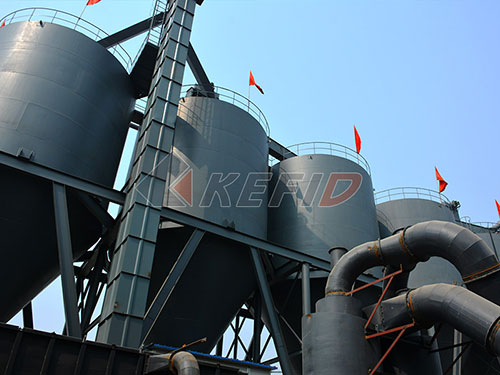
Note: All specifications are subject to change based on final engineering design and client-specific requirements. For a customized datasheet, please consult the manufacturer’s engineering team.
