Export Gyratory Crusher Design Service: Engineering Global Mining and Aggregate Excellence
In the foundational industries of mining, quarrying, and aggregate production, the gyratory crusher stands as a pinnacle of heavy-duty comminution technology. Capable of handling the largest feed sizes with unparalleled throughput and reliability, it is the workhorse for primary crushing in high-tonnage operations. However, the true value of this machinery is not merely in its physical presence but in the sophisticated engineering that defines it. This has given rise to a specialized and critical global service: Export Gyratory Crusher Design Service. This domain represents the export of intellectual capital, advanced engineering expertise, and tailored solutions from design-centric hubs to mining and industrial projects worldwide.
The Core Philosophy: Beyond Equipment Supply
Traditionally, crusher supply involved shipping a standardized machine from a manufacturer’s catalog. The modern Export Gyratory Crusher Design Service transcends this model. It is a holistic, consultative partnership where the exported value is primarily knowledge-based. The service encompasses:
- Conceptual & Feasibility Design: Collaborating with clients from the pre-feasibility stage to determine optimal crusher type (primary vs. secondary gyratory), size, configuration, and integration into the broader mineral processing flow sheet.
- Application-Specific Engineering: Tailoring every aspect—from mantle and concave profiles (crushing chamber design) to mainshaft strength and hydraulic control systems—to the specific ore characteristics (abrasiveness, hardness, moisture content, clay content) and desired product gradation.
- Digital Simulation & Performance Forecasting: Utilizing advanced tools like Discrete Element Method (DEM) modeling and Finite Element Analysis (FEA). DEM simulates particle flow and breakage within the designed chamber to predict throughput, power draw, and product size distribution. FEA ensures structural integrity by simulating stresses on components like the main frame, top shell, and mainshaft under extreme loads.
- Lifecycle Cost Optimization: Designing for total cost of ownership. This involves selecting materials (e.g., high-grade manganese steel alloys) and creating geometries that maximize wear life, reduce downtime for liner changes, and optimize energy consumption per ton of crushed material.
Key Components of an Export Design Package
A comprehensive export design service delivers a complete digital and technical package that enables local manufacturing or informs precise procurement.
- Detailed General Arrangement (GA) Drawings: These are the master blueprints showing the complete assembly of the crusher, its overall dimensions, interfaces with foundations and feed/discharge systems, and key component relationships.
- Precision Component Manufacturing Drawings: Exhaustively detailed drawings for every major part:
- Main Frame & Top Shell: The core structure requiring immense strength and rigidity.
- Mainshaft Assembly: The heart of the gyratory motion, demanding impeccable metallurgical and machining specs.
- Crushing Liners (Mantle & Concaves): Drawings defining not just dimensions but wear profiles critical for performance.
- Eccentric Assembly & Drive System: Including the eccentric bushing, gear, and pinion designs for smooth gyration.
- Hydraulic System Schematics: For adjustment, clearing overloads (tramp release), and clamping.
- Foundation & Load Analysis Documentation: Critical data on static and dynamic loads transmitted to the plant structure. This includes detailed foundation plan requirements to ensure stability under asymmetric crushing forces.
- Control Philosophy & Automation Integration Guides: Specifications for lubrication systems (often with PLC control), monitoring sensors (for power, pressure, temperature), and integration with plant-wide SCADA systems for predictive maintenance.
- Bill of Materials (BOM) & Technical Specifications: A comprehensive list of all components with material grades, international standard compliance (e.g., ASTM, DIN), quality assurance requirements (e.g., non-destructive testing protocols), and performance guarantees.
The Strategic Value Proposition for Global Clients
Why would a mining company in South America or Southeast Asia seek an exported design service rather than simply buying a complete crusher?
- Local Manufacturing & Cost Arbitrage: It allows clients to leverage local heavy fabrication workshops for large structural components (frames), reducing shipping costs import duties significantly while supporting local industry. Only high-precision sub-assemblies might be imported.
- Supply Chain Resilience & Sovereignty: Possessing a complete design package mitigates risk against geopolitical disruptions or sole-supplier dependency. It provides freedom for multi-sourcing spare parts from qualified local or regional vendors.
- Lifecycle Support Empowerment: With full design knowledge archived locally maintenance teams gain deeper insight into machine functionality enabling better troubleshooting rebuild planning reverse engineering of obsolete parts long after original OEM support may fade
- Customization Unconstrained by Standard Offerings: Clients are not limited to an OEM’s standard size range or feature set The design can be innovatively adapted for unique site constraints specific process requirements or novel ore bodies
Challenges in Delivering Export Design Services
This high-value export field is not without significant hurdles:
- Intellectual Property (IP) Protection: Managing sensitive proprietary designs across international borders requires robust legal frameworks NDAs controlled data environments digital rights management
- Quality Assurance Across Borders: Ensuring that locally manufactured components adhere precisely to material specifications heat treatment processes machining tolerances demands rigorous vendor qualification third-party inspection protocols
- Cultural & Regulatory Alignment: Navigating differing engineering standards building codes safety regulations environmental compliance requirements between exporting importing countries
- Technical Support & Knowledge Transfer: The design must be accompanied by effective training for client engineers on its nuances maintenance philosophies operational best practices often requiring sustained remote or on-site collaboration
The Future: Digital Twins and Sustainable Design
The frontier of export gyratory crusher design lies in digitalization sustainability: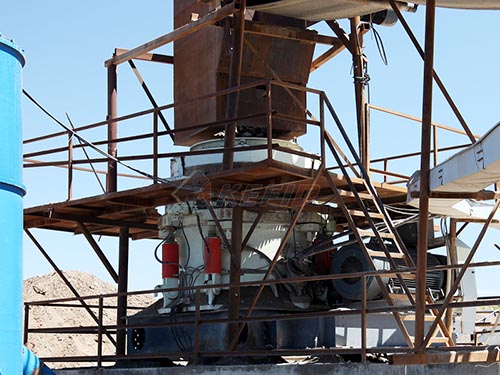
- Digital Twin Technology: The exported package will increasingly include a dynamic digital twin—a virtual model fed with real-time operational data This enables remote performance monitoring predictive wear simulation optimization of crushing parameters from thousands miles away
- Sustainability-Driven Engineering: Designs now prioritize energy efficiency through optimized kinematics reduced friction lighter yet stronger materials Furthermore designs facilitate circular economy principles enabling easier refurbishment recycling crusher components at end-of-life
- AI-Optimized Chamber Designs: Machine learning algorithms analyzing vast datasets from global operations will generate next-generation chamber profiles that auto-adapt via simulation achieve perfect balance between throughput product shape wear rates
Conclusion
The Export Gyratory Crusher Design Service epitomizes evolution global heavy industry from transaction-based equipment sales toward partnership-based knowledge exchange It represents democratization access world-class engineering empowering resource-rich nations build not just infrastructure but also indigenous technical capability By delivering blueprint industrial productivity—customized resilient efficient—this service does more than crush rock; it builds foundations modern sustainable extractive economies Ultimately success this field measured not tonnes crushed but value engineered risks mitigated operational excellence enabled across lifespan every project it touches
