
The procurement of crushing equipment for a gold ore processing operation is a critical strategic decision that directly impacts capital expenditure (CAPEX), operational costs (OPEX), plant availability, and ultimately, the project’s economic viability. Gold ores are geologically diverse, ranging from free-milling ores where gold is readily liberated to complex, refractory ores where gold is locked within sulfide minerals. This variability necessitates a meticulous, scientifically-grounded approach to equipment selection. This guide provides a detailed framework for the procurement process, from initial ore characterization to final commissioning and operational support.
Before any equipment is considered, a comprehensive understanding of the project’s fundamental parameters is essential. Rushing this phase is a common and costly mistake.
1.1 Ore Characterization:
This is the single most important step. The crushing circuit must be designed to handle the specific characteristics of the ore body.
1.2 Plant Capacity and Availability:
The required throughput ( tonnes per hour) dictates the size and number of crushers. Furthermore, defining target plant availability (e.g., 92%) is crucial. A single, large primary crusher might be efficient but becomes a single point of failure. A parallel circuit with two smaller crushers may offer greater overall availability despite a higher initial cost.
1.3 Location and Infrastructure:
The mine’s geographical location affects logistics, power availability, and climate considerations. Remote sites may favor equipment with simpler maintenance requirements and robust designs over highly sophisticated models that require specialized technicians for servicing.
Based on the foundational analysis, engineers can design the crushing circuit flow sheet.
2.1 The Crushing Stages:
A typical gold ore processing plant employs a multi-stage crushing circuit.
2..2 Auxiliary Equipment:
The circuit is not just crushers.
With a defined flow sheet, the formal procurement process begins.
3..1 Developing Technical Specifications:
This document must be unambiguous and performance-based.
3..2 Supplier Prequalification & Request for Quotation (RFQ):
Identify reputable suppliers with proven experience in similar applications globally . Major players include Metso , FLSmidth , Sandvik ,and ThyssenKrupp , alongside strong regional or specialized manufacturers . The RFQ package should include technical specifications ,commercial terms , delivery schedules ,and warranty conditions .
3..3 Bid Evaluation – A Multi-Disciplinary Approach:
Evaluation should not be based on purchase price alone . A disciplined Total Cost of Ownership(TCO) analysis must be conducted .
| Evaluation Factor | Description |
| :— | :— |
| Capital Expenditure (CAPEX) | Initial purchase price , shipping , insurance,and taxes . |
| Operational Expenditure(OPEX) | Power consumption(kWh/t) ,wear part costs(liners ) ,consumables(lubricants ) ,and estimated maintenance labor . |
| Technical Merit | Crusher design efficiency ,reliability history ,product shape,and suitability forthe specific ore type . |
| After-Sales Support & Service | Availabilityof technical support ,spare parts inventory locally/regionally ,training programs,and service contract terms . |
| Warranty & Performance Guarantees | Lengthand coverageof warranty ; supplier’s willingness to guarantee throughputand product size under defined conditions . |
The relationship withthe supplier does not end withthe purchase order .
4..1 Factory Acceptance Testing(FAT):
Witnessingthe FAT ensures thatthe equipmentis assembled correctlyand performs to specification before itis shipped . Thisis criticalfor identifying issues ina controlled environment rather than atthe remote site .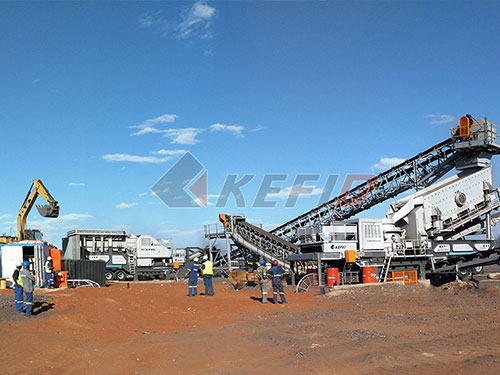
4..2 Logistics & Delivery:
Managingthe complex logisticsof transporting heavy ,often oversized equipmentfromthe manufacturer’s factorytothe mine site requires careful planning .
4..3 Installation Supervision & Commissioning:
Supplier representatives should supervise installationto ensure adherence tO their engineering standards . Commissioning involves starting upthe circuit tuning its performance verifyingthat all guarantees are met .
4..4 Spare Parts Strategy & Training:
Procuringa strategic stockof critical spares(liners bearings etc.)is essentialfor minimizing downtime . Comprehensive trainingfor operationsand maintenance staffis non-negotiablefor ensuring long-term equipment health .
Procuring goldore crushing equipmentisa complex multi-faceted processthat demands rigorous technical evaluation disciplined financial analysisand strategic partnershipswith suppliers It transcends mere transactional purchasing evolving intoa critical project management function By investing significant timein Phase foundational analysis companies can design an optimal circuit select appropriate technologyand ultimately procure equipmentthat delivers lowest total costof ownership maximum availabilityand long-term valueforthe lifeofthe mining operation
Lorem ipsum dolor sit amet, consectetur adipisicing elit. Consectetur sequi saepe ut sunt eveniet perferendis excepturi, iste obcaecati. Qui tempore hic sed quia soluta obcaecati vel.