
Datasheet: Gold Ore Crushing Equipment – A Comprehensive Technical Overview
Document Control: DS-GOC-001
Revision: 2.1
Date: October 26, 2023
Classification: Public Technical Specification
Gold ore processing is a capital-intensive and technically demanding operation, where the comminution (crushing and grinding) circuit typically accounts for the single largest share of both capital expenditure (CAPEX) and operational expenditure (OPEX). The primary objective of the crushing stage is to reduce run-of-mine (ROM) ore to a size suitable for downstream milling, while simultaneously liberating gold-bearing minerals from the gangue matrix. The selection and configuration of crushing equipment are therefore critical determinants of overall plant efficiency, recovery rates, and profitability. This datasheet provides a detailed, objective analysis of the core equipment used in gold ore crushing circuits, covering operating principles, key specifications, application suitability, and technological advancements.
Gold ores vary significantly in mineralogy (e.g., free-milling vs. refractory), hardness (as measured by Bond Work Index, Unconfined Compressive Strength), abrasiveness, moisture content, and clay presence. These characteristics dictate the crushing strategy. A typical three-stage crushing circuit for hard rock gold ores consists of:
The trend towards pre-concentration methods like sensor-based ore sorting has also influenced crusher placement and duty.
Primary crushers handle the largest feed size and must possess high capacity, robustness, and reliability.
These stages focus on producing consistent product size for optimal grinding mill feed.
This technology has transitioned from alternative to mainstream in gold circuits.
(Horizontal Shaft Impactors – HSI , Vertical Shaft Impactors – VSI)
– Application in Gold : More common in softer , non-abrasive oxide gold ores or as part of aggregate production from waste rock . VSI s are excellent sand makers but generate excessive fines unsuitable conventional milling circuits .
– Key Consideration : Generally higher wear costs hard , abrasive sulphide gold ores limiting their use primary comminution stages.
– Concept : Primary crusher(s ) mounted on tracked/wheeled frames or modular semi-mobile platforms connected via shiftable conveyors .
– Advantages : Reduced haulage distances open-pit mines lowering truck fleet costs ; flexibility mine plan changes ; faster commissioning .
– Configuration : Often utilize jaw gyratory crushers large capacity units.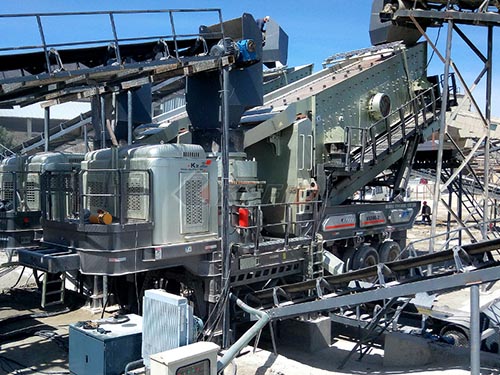
Modern gold ore crushing goes beyond mechanical hardware:
–Advanced Process Control Systems : Integrated platforms use real-time data from sensors measuring power draw , pressure , cavity level , CSS adjust machine parameters optimize throughput , product size energy efficiency automatically .
–Predictive Maintenance Analytics : Vibration analysis , lubrication monitoring wear modeling predict liner changes component failures minimizing unplanned downtime .
–Digital Twin Simulation : Plant designers operators simulate entire circuits using software like Metso Outotec’s Bruno™ FLSmidth’s ECS/ProcessExpert test scenarios optimize flowsheet before physical installation .
–Wear Part Metallurgy : Development ultra-high manganese steels composite materials ceramic-metal matrix liners dramatically extending service life abrasive gold ores reducing operating costs safety risks associated frequent changeouts .
Choosing correct equipment requires holistic analysis :
| Factor | Primary Stage Consideration | Secondary/Tertiary Stage Consideration |
|---|---|---|
| Ore Characteristics | Hardness UCS Bond Wi Abrasiveness Moisture Clay Content Fines Percentage | Same plus feed top size from previous stage |
| Plant Requirements | Target Annual Throughput t/a Mine Life Topography Available Footprint | Required final product P80 Downstream process leaching gravity flotation |
| Economic Factors | CAPEX vs OPEX trade-off Energy consumption per ton Wear parts cost availability Labor maintenance skillset Local power water costs | Total cost ownership TCO over life-of-mine Potential energy savings HPGR integration |
The modern gold ore crushing circuit is sophisticated engineered system where equipment selection directly impacts metallurgical performance financial return investment ROI ). No single solution fits all deposits ). Trend moving towards integrated energy-efficient circuits combining robust primary gyratory/jaw crushers with highly controlled cone crushers HPGR technology all managed advanced automation controls maximize recovery minimize environmental footprint ). Continuous innovation materials science digitalization ensuring sector remains efficient sustainable meeting global demand precious metal while managing increasingly complex lower-grade deposits ).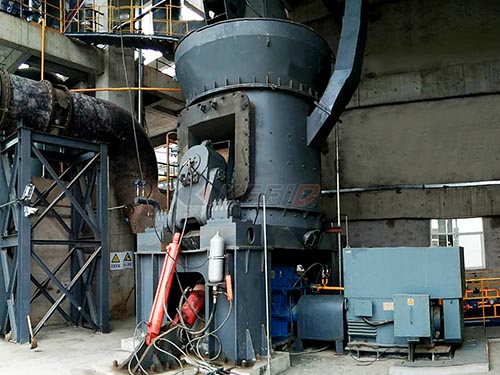
Disclaimer This datasheet intended informational purposes only represents general technical overview specific equipment selection must involve detailed metallurgical testwork feasibility studies consultation qualified engineering professionals Actual specifications subject change manufacturer models.
Lorem ipsum dolor sit amet, consectetur adipisicing elit. Consectetur sequi saepe ut sunt eveniet perferendis excepturi, iste obcaecati. Qui tempore hic sed quia soluta obcaecati vel.