Eco-Friendly Stone Crusher Plant Manufacturers: Pioneering Sustainable Aggregate Production

The global construction industry, the primary consumer of aggregates, is undergoing a profound transformation driven by the imperatives of sustainability. At the heart of this shift are Eco-Friendly Stone Crusher Plant Manufacturers—innovators who are redefining mineral processing by integrating environmental stewardship directly into the design and function of crushing and screening equipment. These manufacturers are no longer mere suppliers of machinery; they have evolved into essential partners for quarry operators, mining companies, and contractors seeking to meet stringent regulatory demands, reduce operational costs, and fulfill corporate social responsibility goals. This detailed exploration examines their strategies, technologies, market dynamics, and the future trajectory of sustainable crushing.

The Imperative for Eco-Friendly Crushing

Traditional stone crushing plants are often associated with significant environmental challenges: high energy consumption, substantial dust emissions, noise pollution affecting surrounding communities, and large volumes of wastewater from washing processes. The ecological footprint is considerable. Regulatory bodies worldwide are tightening controls on particulate matter (PM10 & PM2.5), noise levels, and water usage. Simultaneously, the market is increasingly favoring “green” construction materials with lower embodied carbon.

Eco-friendly manufacturers address these pressures head-on by adopting a holistic philosophy: maximizing efficiency to minimize impact. Their goal is to create a closed-loop system where resource utilization is optimized, waste is nearly eliminated, and energy is used with maximal effect.

Core Technological Pillars of Sustainable Crusher Plants

Leading manufacturers distinguish themselves through several integrated technological advancements:

1. Dust Suppression and Containment Systems: This is the most visible aspect of eco-friendly design. Modern plants go beyond simple water sprays. They incorporate:

  • Advanced Mist/Fog Cannons: Using micron-sized water droplets to effectively coalesce with dust particles without over-wetting material.
  • Dry Fog Systems: Where dust suppression is achieved with minimal moisture addition, crucial for product quality in certain applications.
  • Complete Enclosure and Sealing: Crushers, screens, and transfer points are fully enclosed with durable skirting and seals.
  • High-Efficiency Baghouse Filters: For capturing fine dust from enclosed zones, these fabric filters boast 99.9%+ efficiency, ensuring clean air exhaust.

2. Noise Abatement Technologies: Noise pollution is a major community concern.Eco-Friendly Stone Crusher Plant Manufacturers
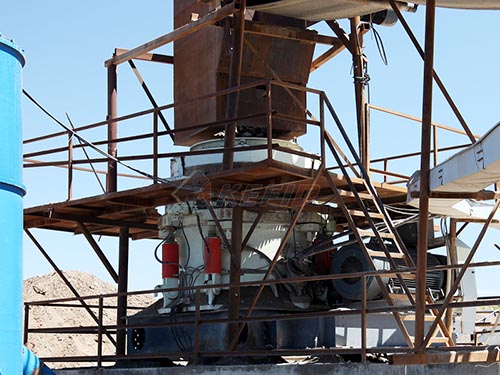
  • Acoustic Enclosures: Engineered panels lined with sound-absorbing materials (mineral wool, foam) envelop crushers, screens, and motors.
  • Vibration Isolation Mounts: Decouple vibrating machinery from the plant structure to prevent noise propagation.
  • Low-Noise Design Components: Utilization of specially designed rollers in screens and optimized crusher chamber geometries that reduce impact noise.

3. Energy Efficiency and Electrification:

  • High-Efficiency Electric Drives: Replacing diesel-powered units with grid-connected electric motors significantly reduces direct carbon emissions and often lowers per-ton energy costs.
  • Variable Frequency Drives (VFDs): These allow motors to run only at the required speed for the load, reducing energy consumption by 30-50% in many applications (e.g., conveyors, fans).
  • Hybrid Power Options: For remote sites, integrating solar arrays or battery storage to supplement grid/diesel power.
  • Energy Recovery Systems: Experimental but promising systems that capture kinetic energy from braking conveyors or crusher inertia.

4. Water Recycling and Zero-Discharge Systems:
Modern washing plants are designed as nearly closed circuits.Eco-Friendly Stone Crusher Plant Manufacturers

  • Sludge Management with Thickeners & Filter Presses: These systems separate water from fine silt/clay particles (sludge). The clarified water is recycled back into the process (achieving 90-95% reuse), while the filter press produces a dry “cake” that can be repurposed (e.g., for land reclamation or brick-making), eliminating slurry ponds.

5. Smart Plant Design & Process Optimization:
Eco-efficiency begins at the drawing board.

  • Modular & Compact Designs: Reduce land footprint and enable easier relocation/reconfiguration.
  • Automated Process Control Systems: Use sensors (load, pressure, level) and AI-driven software to optimize feed rates, crusher settings, and screen configurations in real-time. This prevents bottlenecks and ensures every component operates at peak efficiency—the most sustainable ton is one produced correctly on the first pass.
  • Advanced Crushing Chambers: Computer-designed chambers (like Metso’s “HRC™” or Sandvik’s “CH” series) provide better reduction ratios with less energy input per ton.

Leading Manufacturers & Their Approaches

The market features established multinationals and agile specialists all pushing green innovation.

  • Metso Outotec (Now Metso): A frontrunner with its “Track-mounted Plants” designed for fuel efficiency and its Lokotrack® mobile plants featuring advanced emission control. Their Planet Positive initiative explicitly focuses on offering products that significantly improve customers’ environmental performance.
  • Sandvik Mining & Rock Solutions: Emphasizes electric/hybrid mobile crushers (like the QI353 impact crusher) offering zero emissions at point of use when plugged in. Their automation suite (AutoMine®/My Sandvik) optimizes performance for lower energy use.
  • Terex MPS & Terex Washing Systems: Terex provides comprehensive eco-solutions from highly portable modular crushing plants to state-of-the-art water management systems like the AquaCycle™ thickener for water recycling.
  • Kleemann GmbH (Wirtgen Group): Focuses on highly efficient direct-drive crushers reducing mechanical losses and offers sophisticated plant control systems for optimal material flow management.
  • Stedman Machine Company & Eagle Crusher Co.: Prominent in North America for durable equipment designs that incorporate effective dust control systems as standard features.

Market Drivers & Challenges

Drivers:

  1. Regulatory Compliance: Strict environmental laws globally make eco-friendly plants not a luxury but a necessity for obtaining operating permits.
  2. Economic Incentives: Lower energy bills reduced water costs minimized waste disposal fees lead to a compelling total cost of ownership (TCO) case despite potentially higher initial CAPEX
    3 .Corporate ESG Commitments: Construction giants demand sustainably sourced aggregates requiring suppliers to prove low-emission operations
    4 .Community Relations: Social license to operate; quieter cleaner operations face less opposition from local residents easing expansion plans
    5 .Access to Green Financing/Bidding Advantages: Projects like LEED-certified buildings often award points for materials processed sustainably

Challenges:
1 .Higher Initial Investment: Advanced filtration automation water treatment systems increase upfront capital costs which can be prohibitive for smaller operators
2 .Technical Complexity: Requires more skilled personnel for operation maintenance potentially increasing OPEX
3 .Site-Specific Solutions: There’s no one-size-fits-all; solutions must be tailored to material type local regulations climate etc requiring expert engineering
4 .Performance Perception: Some operators still perceive “green” equipment as less productive or robust—a myth manufacturers actively work to dispel

The Future Outlook

The trajectory points towards greater integration intelligence autonomy:
1 .Full Electrification & Renewable Integration: Expect more fully electric mobile plants powered by onboard battery packs or direct renewable microgrid connections becoming standard particularly in Europe
2 .Digital Twins & Advanced AI: Virtual models of entire crushing circuits will simulate optimize every parameter before physical changes saving energy material waste during commissioning operation
3 .Circular Economy Integration: Plants will be designed not just as processors but as urban mining hubs recycling demolition concrete asphalt directly into high-grade aggregates closing resource loops completely
4 .Lightweight Composite Materials: Use advanced composites in non-wearing parts reduces weight improving fuel/energy efficiency transport logistics
5 .Carbon Capture Utilization Storage(CCUS) Exploration: Research into capturing CO2 emissions from stationary plants potentially mineralizing them within aggregate products themselves creating carbon-negative stones

Conclusion

Eco-friendly stone crusher plant manufacturers stand at confluence industrial engineering environmental science digital innovation They are fundamentally altering landscape aggregate production By viewing environmental constraints as catalysts innovation rather than impediments they deliver solutions that protect planet while enhancing profitability productivity clients As global demand responsible construction materials continues surge these manufacturers role will only become more central They proving heavy industry can indeed be powerful force sustainability turning raw stone foundation greener built environment one efficiently processed ton time

Lorem ipsum dolor sit amet, consectetur adipisicing elit. Consectetur sequi saepe ut sunt eveniet perferendis excepturi, iste obcaecati. Qui tempore hic sed quia soluta obcaecati vel.