
In the global construction, mining, and aggregate industries, the demand for sustainable machinery is no longer a niche preference but a core operational imperative. At the heart of this green transformation within the comminution sector are Eco-Friendly Impact Crushers. While end-users reap the benefits of lower emissions and operational costs, the true vanguard of this innovation is the Original Equipment Manufacturer (OEM) Factory. These specialized production hubs are not merely assembly lines; they are integrated centers of research, engineering, and sustainable manufacturing that redefine how raw materials are processed with minimal environmental footprint. This article delves into the multifaceted role of the OEM factory in designing, producing, and advancing eco-friendly impact crushers.
An impact crusher is a machine that utilizes high-speed impact force to break down materials like limestone, recycled concrete, asphalt, and demolition waste. Traditional models prioritize throughput and reduction ratios, often at the expense of energy consumption, dust generation, and noise pollution.
An eco-friendly impact crusher, however, is engineered with a holistic sustainability mandate:
The shift from conventional to eco-friendly designs originates within the OEM factory’s ecosystem. This involves several interconnected departments:
A. Advanced Research & Development (R&D):
Sustainable innovation is science-driven. OEM factories invest heavily in R&D labs equipped with technologies like:
B. Sustainable Engineering & Design Philosophy:
R&D insights translate into tangible design features:
C. Green Manufacturing Processes:
An eco-friendly product must be born from an eco-conscious process. Progressive OEM factories embody this through:
Walking through an advanced OEM factory floor reveals the assembly of key technologies that define an eco-friendly crusher: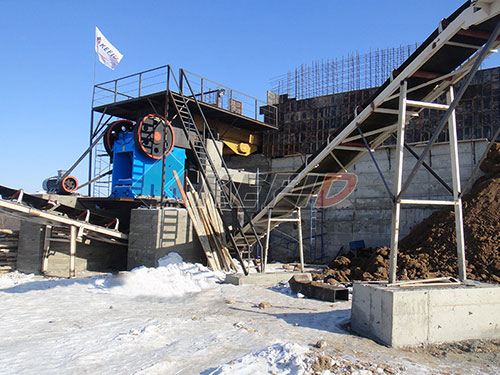
Advanced Rotor Systems: The heart of the machine. Factories produce rotors with optimized mass distribution for greater kinetic energy transfer with less input power. Some feature closed-body designs for better airflow management and reduced air turbulence—a major source of dust.
Integrated Dust Suppression Systems: Instead of treating dust as an afterthought handled by an external baghouse (which itself consumes energy), factories install integrated spray systems with strategically placed nozzles inside the chamber. These systems use ultra-fine mist to bind dust particles at the point of creation with minimal water usage.
Smart Control Systems & IoT Hubs: Modern crushers are manufactured as connected devices. Built-in sensors for vibration, temperature, power draw, and wear are installed on the line. These feed data to cloud-based platforms that enable predictive maintenance—preventing catastrophic failures—and process optimization for peak efficiency in real-time.
Enhanced Wear Parts Metallurgy: Collaborating with metallurgists, OEMs develop proprietary alloys for blow bars and impact plates that offer superior wear life while remaining recyclable at end-of-life.
The OEM’s responsibility extends beyond the factory gate through a lifecycle approach:
The path to greener machinery is complex:
The transition towards sustainable industrial practices is fundamentally engineered.TheEco-Friendly Impact Crusher Oem Factoryis much more thana production facility;it isthe crucible where environmental sciencemeets mechanical excellence.Here,sustainabilityis baked into themetal,firmware,and design philosophyfromthe first blueprintto final assemblyand beyond.
By relentlessly focusingon energy optimization,material intelligence,dustand noise suppressionat source,and digital integration,OEM factoriesare not just respondingto market trends.They are actively enablingthe aggregatesand recycling industriesto meetglobal carbon reduction targets.As regulations tightenand resource scarcity grows,the valueof partneringwith an OEmthat possessesdeep vertical integrationof green manufacturing principleswill becomeparamount.In essence,the modernOEM factoryfor eco-friendlyimpactcrushersis buildingnot just machines,butthe foundational toolsfora more responsibleand circular built environment
Lorem ipsum dolor sit amet, consectetur adipisicing elit. Consectetur sequi saepe ut sunt eveniet perferendis excepturi, iste obcaecati. Qui tempore hic sed quia soluta obcaecati vel.