
The mining and aggregate industries are under increasing pressure to reconcile two seemingly contradictory demands: improving environmental performance and reducing operational costs. Within this context, the query for an “eco-friendly gyratory crusher cheap” encapsulates a common industry aspiration. However, it requires a nuanced exploration to separate marketing hype from technical and economic reality. A truly “cheap” machine in terms of initial purchase price is rarely the most cost-effective or environmentally sound solution over its lifecycle. This article will deconstruct the concepts of “eco-friendly” and “cheap” as they apply to gyratory crushers, arguing that the most viable path forward lies in optimizing Total Cost of Ownership (TCO) through designs that inherently promote efficiency, durability, and reduced resource consumption.
First, it is essential to understand the gyratory crusher’s function. It is a primary crushing machine, typically handling the very first stage of size reduction for run-of-mine ore or large quarry rock. Its core mechanism involves a gyrating mantle within a concave hopper, crushing material through compressive force. Due to their high capacity and ability to process abrasive and hard materials, they are capital-intensive workhorses foundational to most large-scale mining and aggregate operations. Their significant size, power requirements, and continuous operation mean that even minor improvements in efficiency or wear part longevity can have substantial financial and environmental implications.
The term “eco-friendly” for an industrial machine like a gyratory crusher must be interpreted through measurable metrics rather than vague claims. Key areas of environmental impact include:
Energy Efficiency: This is arguably the most significant factor. Crushers are massive consumers of electrical energy. An eco-friendly design focuses on maximizing throughput per unit of energy consumed (tons per kilowatt-hour). This is achieved through advanced mechanical design, such as optimized crushing chamber profiles that ensure effective nip angles and reduce material-on-material sliding, which wastes energy. High-efficiency motors (e.g., IE3 or IE4 class) and variable frequency drives (VFDs) are critical components. VFDs allow the motor speed to be matched to the feed conditions, preventing the crusher from running at full power when partially empty or under-loaded, leading to direct energy savings.
Dust Suppression and Noise Control: Crushing operations generate immense amounts of dust and noise. An environmentally conscious design integrates effective dust encapsulation systems, using seals and protective covers to contain dust at its source. Furthermore, integrated spray systems for dust suppression reduce airborne particulate matter without excessive water usage. Noise abatement through acoustic enclosures and vibration-dampening materials protects both workers and the surrounding environment.
Resource Efficiency and Longevity: The most sustainable component is one that does not need frequent replacement. Eco-friendliness here translates directly into superior wear part longevity. Using advanced metallurgy—such as martensitic steels or composite materials with ceramic inserts for concaves and mantles—dramatically extends service life. This reduces the frequency of manufacturing new parts, the energy required for their transport, and the waste generated from spent liners.
Lubrication Systems: Modern gyratory crushers feature closed-loop lubrication systems with advanced filtration. These systems prevent oil leaks into the ground, extend oil life by removing contaminants, and reduce the volume of oil consumed over time. Some systems even incorporate heat exchangers to maintain optimal oil temperature, improving efficiency and component life.
The pursuit of a “cheap” crusher is often a financial pitfall if defined solely by a low initial purchase price (CAPEX). A machine with a lower upfront cost may be constructed from inferior materials, have less sophisticated engineering, and lack features that save money over time.
The economically rational approach is to evaluate the crusher based on its Total Cost of Ownership (TCO), which includes:
An “eco-friendly” crusher designed with TCO in mind will have a higher CAPEX but significantly lower OPEX. For example:
Therefore, what appears “cheap” initially can be profoundly expensive over a 5-10 year period.
So how can an operator acquire a gyratory crusher that balances environmental responsibility with economic viability?
Invest in Modernized Legacy Equipment: For operations with existing gyratory crushers that are structurally sound but inefficient; retrofitting can be a highly cost-effective strategy.
Prioritize TCO in New Purchases: When procuring new equipment; shift procurement criteria from lowest bidder to best value.
3.Consider Refurbished or Remanufactured Units: The market for high-quality refurbished heavy equipment offers another pathway toward affordability while being inherently sustainable via equipment reuse/remanufacturing principles rather than manufacturing anew entirely which has higher embedded carbon footprint associated typically involved during production phase especially concerning steel fabrication processes involved herein too! A reputable dealer will completely dismantle inspect repair/replace worn components reassemble test thoroughly before sale often providing warranties comparable new machines but at fraction price point making them compelling option budget-conscious yet environmentally aware operators seeking balance between performance reliability sustainability goals simultaneously!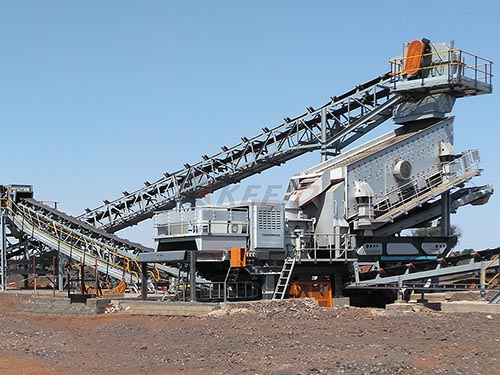
4.Emphasize Operational Excellence Over Pure Hardware Acquisition Alone! Even most eco-designed machine will perform poorly if operated incorrectly therefore comprehensive operator training proper maintenance planning proactive monitoring practices crucial maximizing both economic environmental returns investment made into technology itself thereby amplifying benefits derived therefrom holistically across entire operation’s value chain ultimately!
The ideal of an immediately “cheap” and fully “eco-friendly” new gyratory crusher straight from the manufacturer is largely a mirage when viewed through narrow lens focusing exclusively upon initial purchase price alone without considering broader implications throughout machine’s entire service life cycle realistically speaking today’s market landscape however true convergence between economics ecology occurs when adopting long-term perspective centered around minimizing Total Cost Ownership TCO inherently this approach favors machines designed durability efficiency low resource consumption characteristics defining genuinely environmentally responsible equipment therefore most pragmatic achievable goal today lies not finding mythical cheap green unicorn but rather strategically investing technologies operational practices deliver lowest possible lifetime cost concurrently minimizing environmental footprint making smart capital decision based comprehensive analysis rather than short-sighted focus merely sticker price upfront ultimately proving far cheaper greener choice long run indeed
Lorem ipsum dolor sit amet, consectetur adipisicing elit. Consectetur sequi saepe ut sunt eveniet perferendis excepturi, iste obcaecati. Qui tempore hic sed quia soluta obcaecati vel.