
The gold mining industry, long associated with significant environmental footprints, is undergoing a profound transformation. Central to this shift is the adoption of Eco-Friendly Gold Ore Crushing Equipment. This technology represents a critical nexus where operational efficiency, economic viability, and environmental stewardship converge. The concept of Minimum Order Quantity (MOQ) within this context adds a commercial and strategic layer, influencing how readily these sustainable technologies can be adopted by miners of all scales. This article delves into the technological innovations, environmental and economic benefits, key equipment types, and the strategic considerations surrounding MOQ for eco-conscious crushing solutions.
Traditional gold ore crushing and comminution (size reduction) circuits are notoriously energy-intensive, accounting for approximately 1-3% of global industrial energy consumption. Jaw crushers, gyratory crushers, and ball mills operating without modern optimization consume vast amounts of electricity, often sourced from fossil fuels. Furthermore, they generate substantial dust emissions (silica dust), leading to air pollution and health hazards like silicosis. Noise pollution is another significant issue, disrupting local ecosystems and communities. Water usage in traditional wet crushing circuits can also be high, and slurry management poses risks of contamination. These factors collectively necessitate a move toward more sustainable practices.
Eco-friendly crushing equipment is engineered to minimize environmental impact throughout its lifecycle—from manufacturing and operation to maintenance and end-of-life recycling. Key defining principles include: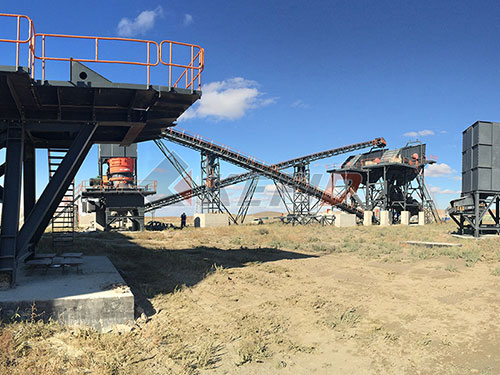
a) High-Pressure Grinding Rolls (HPGR):
A flagship technology for green comminution. HPGRs compress the ore bed between two counter-rotating rolls, causing micro-fractures. They offer 20-30% lower energy consumption compared to conventional SAG/Ball mill circuits for similar throughput. They produce a more favorable particle size distribution with less overgrinding, which can enhance downstream gold recovery in leaching processes while reducing cyanide consumption.
b) Vertical Shaft Impact (VSI) Crushers:
Often used in tertiary or quaternary crushing stages for producing finely crushed ore or manufactured sand from tailings. Their “rock-on-rock” or “rock-on-anvil” crushing action is highly efficient for specific ore types and can be optimized for lower energy use per ton. Modern VSIs feature precise speed control via VFDs for optimal performance.
c) Hybrid & Electric Mobile Crushers:
Track-mounted jaw and cone crushers are now available with hybrid diesel-electric drives or fully electric plug-in options where grid power is available. These drastically cut fuel consumption diesel particulate emissions on-site. Their mobility also reduces the need for multiple fixed installations and associated site disturbance.
d) Advanced Jaw & Cone Crushers:
Next-generation models feature computerized control systems that automatically adjust the closed-side setting (CSS) and eccentric throw to maintain optimal throughput and product size while protecting the crusher from uncrushable material (“tramp iron”). This “brain-based” optimization prevents energy spikes and equipment stress.
e) Ore Sorter Pre-Concentration Devices:
While not strictly crushers, sensor-based ore sorters (using X-ray transmission, laser-induced breakdown spectroscopy – LIBS) are a revolutionary pre-crushing technology. They scan coarse rock post-primary crushing and eject waste gangue before further comminution. This can reduce the mass entering fine crushing/grinding circuits by 30-50%, leading to massive savings in energy water.
MOQ is a standard commercial term specifying the smallest quantity of a product a supplier is willing to sell in a single order. For capital-intensive eco-friendly crushing equipment:
Strategies to Navigate MOQ:
Economic Incentives:
Social License Operate (SLO):
Demonstrating investment genuine environmental care through visible technology like dust-free quiet crushers builds trust with local communities governments facilitating smoother project approvals expansions
The transition eco-friendly gold ore crushing equipment not fleeting trend but fundamental restructuring mining’s core processes Driven by climate imperatives economic sense technological innovation this shift accelerating The challenge MOQ highlights need inclusive business models ensure benefits sustainable technology reach entire mining sector—from multinational giants small-scale operators responsible artisanal miners Future lies smart highly efficient low-impact comminution circuits integrated circular economy principles where waste heat recovered water recycled wear parts remanufactured By prioritizing these investments today gold mining industry can secure its social environmental license operate while safeguarding its own long-term economic viability truly golden future
Lorem ipsum dolor sit amet, consectetur adipisicing elit. Consectetur sequi saepe ut sunt eveniet perferendis excepturi, iste obcaecati. Qui tempore hic sed quia soluta obcaecati vel.