
The global construction industry, the primary consumer of natural aggregates, stands at a critical juncture. With escalating demand for infrastructure and building materials, the environmental footprint of aggregate production—encompassing energy consumption, dust emissions, noise pollution, and landscape degradation—has become untenable. In this context, the role of an Eco-Friendly 250-300tph Stone Crushing Plant Supplier transcends mere equipment provision; it represents a partnership in sustainable industrial ecology. Such a supplier delivers not just machinery, but integrated solutions that enable high-capacity production (250 to 300 tonnes per hour) while rigorously minimizing environmental impact through advanced engineering, intelligent design, and life-cycle stewardship.
Traditional stone crushing plants are often associated with significant environmental challenges: uncontrolled dust generation poses health risks (silicosis) and pollutes air/water; high-energy drives contribute to substantial carbon emissions; loud operational noise disturbs communities; and inefficient water usage strains local resources. Regulatory frameworks worldwide are tightening, and corporate social responsibility (CSR) goals are now central to business operations. An eco-friendly crushing plant is therefore no longer a luxury but a compliance necessity and a strategic advantage, reducing operational risks and enhancing community relations.
A reputable supplier engineers solutions around several interconnected pillars:
1. Dust Suppression and Containment:
This is the most visible aspect of eco-friendly design. Advanced systems go beyond simple water sprays. They incorporate:
2. Noise Abatement:
A 250-300tph plant involves large crushers (jaws, cones, impactors) and vibrating screens that are inherently noisy. Mitigation strategies include:
3. Energy Efficiency:
The high capacity directly correlates with power demand. Eco-efficiency is achieved through: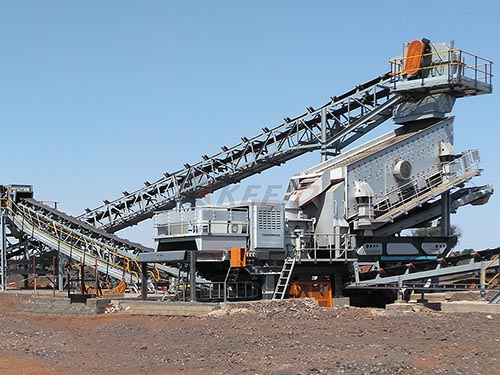
4. Water Management and Recycling:
Modern plants drastically reduce freshwater consumption through closed-loop systems:
5. Smart Technology & Automation:
Intelligence is key to eco-efficiency. An advanced plant includes:
An authentic eco-friendly supplier differentiates itself through holistic service:
2.Modular & Flexible Design Philosophy:
Plants in this capacity range can be stationary,semi-mobile modular units allowing phased relocation minimizing site disturbance compared permanent structures.Modular designs also facilitate future technological upgrades as standards evolve.
3.Lifecycle Support & Circular Economy Principles:
Genuine suppliers emphasize durability using wear-resistant steels extend component life reducing resource depletion.They also facilitate proper end-of-life management recycling steel components responsibly.Some offer refurbishment programs extending machinery lifespan significantly lowering cradle-to-grave environmental impact compared frequent replacement cycles typical conventional suppliers who prioritize short-term sales over long-term sustainability partnerships .
4.Compliance Navigation Expertise:
They possess deep knowledge international environmental standards(EPA,Tier IV Final,BAT(Best Available Techniques) EU directives ) helping clients navigate permitting processes smoothly by providing necessary emission data noise maps required regulatory approvals .
5.Operator Training & Performance Auditing:
Sustainability features only effective if operated correctly.Suppliers provide comprehensive training on optimized eco-mode operations regular performance audits ensure plant continues meet its designed environmental KPIs over time adjusting wear part changes seasonal variations feedstock characteristics .
Investing in an eco-friendly plant from a specialized supplier has compelling economic drivers:
Reduced Operational Costs : Lower energy water consumption directly cut utility bills.Efficient dust control reduces wear on machinery components extending intervals between maintenance shutdowns .
Minimized Downtime & Fines : Proactive compliance avoids costly work stoppages due regulatory violations community complaints .
Enhanced Market Access & Premium Positioning : Many government tenders large infrastructure projects(Green Building LEED certified projects ) now mandate sustainably sourced materials .Suppliers offering verifiable low-carbon aggregates gain competitive edge command price premiums .
Improved Asset Longevity & Resale Value : Well-maintained technologically advanced plants retain higher residual values secondary markets .
The transition towards sustainable construction materials begins at the quarry face.The choice of an Eco-Friendly 250-300tph Stone Crushing Plant Supplier is therefore a foundational strategic decision.It moves aggregate production from being perceived as necessary nuisance towards being model modern responsible industry.A leading supplier this space does not simply sell rock-breaking machines ; they deliver integrated productivity systems engineered balance economic viability ecological responsibility social license operate .Through relentless innovation intelligent application existing technologies—from precision dust suppression smart grid-ready power management—these partners enable producers meet world’s insatiable need built environment without compromising health planet communities they serve .As capacity demands scale so too must our commitment embedding sustainability core extraction processing processes making eco-friendly high-capacity crushing not just niche offering but new standard global industry .
Lorem ipsum dolor sit amet, consectetur adipisicing elit. Consectetur sequi saepe ut sunt eveniet perferendis excepturi, iste obcaecati. Qui tempore hic sed quia soluta obcaecati vel.