Eco-Friendly 250-300tph Stone Crushing Plant: Achieving Efficiency and Sustainability on a Budget
The global construction and infrastructure sectors are under increasing pressure to balance relentless demand for raw materials with stringent environmental responsibilities. In this context, the concept of an eco-friendly 250-300tph (tonnes per hour) stone crushing plant that is also cost-effective represents not just a market niche, but the future trajectory of the aggregate production industry. A plant with this capacity is considered medium-to-large scale, capable of supplying material for significant projects like highways, large residential complexes, or commercial developments. The challenge lies in integrating “eco-friendly” principles with “cheap” operational and capital costs—a synergy that is complex but entirely achievable through intelligent design, technology selection, and life-cycle management.
Deconstructing the Core Requirements: Capacity, Ecology, and Cost
- 250-300tph Capacity: This output range indicates a robust plant designed for continuous, high-volume production. It typically involves a primary crushing stage (often a jaw crusher), secondary and tertiary stages (like cone or impact crushers), along with multiple stages of screening, conveying, and material handling systems. Design must prioritize steady material flow and minimize bottlenecks.
- Eco-Friendly (Green Crushing): This extends far beyond mere regulatory compliance. It encompasses:
- Dust Suppression: Implementing comprehensive systems at transfer points, crusher inlets/outlets, and screens using mist cannons, fogging systems, and enclosed conveyors to arrest particulate matter (PM10 and PM2.5).
- Noise Control: Utilizing acoustic enclosures for motors and crushers, installing sound-dampening screens/barriers, and selecting equipment designed for lower vibration and noise.
- Water Management & Recycling: Implementing closed-loop water systems for dust suppression to minimize freshwater consumption and prevent contaminated runoff.
- Energy Efficiency: Employing variable frequency drives (VFDs) on conveyors and crushers to match power consumption with actual load, using high-efficiency electric motors, and optimizing plant layout to reduce belt conveyor lengths.
- Site Rehabilitation & Biodiversity: Planning for concurrent land rehabilitation during operation and final site restoration.
- Cheap (Cost-Effectiveness): “Cheap” should be interpreted as optimal life-cycle cost-effectiveness rather than merely low initial purchase price. It involves:
- Low Operational Expenditure (OPEX): Achieved through energy savings, reduced wear part consumption (via better technology), lower water bills (via recycling), and minimal downtime.
- Rationalized Capital Expenditure (CAPEX): Selecting reliable, fit-for-purpose equipment without superfluous features, modular designs that reduce civil works, and smart sourcing strategies.
Strategic Design Principles for an Affordable Green Plant
Achieving this trifecta requires a paradigm shift from traditional plant design.
-
Modular & Compact Plant Design: Skid-mounted or modular plants significantly reduce foundation work, on-site assembly time, and associated costs. A compact layout shortens conveyor distances directly cutting energy use (OPEX savings) and initial steel/fabrication costs (CAPEX savings). This also reduces the overall land footprint—an ecological benefit.
-
Intelligent Equipment Selection:
- Crushers: Modern jaw crushers with aggressive crushing curves can sometimes reduce the need for secondary crushing stages. High-efficiency cone crushers with advanced hydraulic systems adjust settings in real-time for optimal product shape and throughput while consuming less power per ton crushed.
- Screens: Choosing high-frequency screens or banana screens improves screening efficiency at finer separations, reducing recirculating loads back to crushers—this saves energy and wear.
- Drives & Motors: Mandatory use of IE3 or IE4 premium efficiency motors coupled with VFDs is non-negotiable for an eco-cheap plant. The initial premium is repaid quickly through substantial energy savings.
-
Integrated Dust & Noise Abatement as Standard: Instead of retrofitting pollution control as an afterthought (“end-of-pipe”), design them into the plant’s DNA. Enclosed transfer towers with dust seals are cheaper to build-in than to add later. Properly sized baghouse filters or cartridge collectors integrated into the design are more effective than scattered spray nozzles.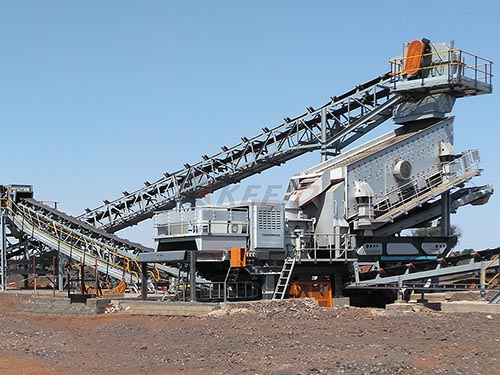
-
Advanced Automation & Control Systems: A centralized PLC/SCADA system might seem like a CAPEX increase but is a major OPEX saver. It optimizes feed rates across all stages prevents choke-feeding or running empty ensures all eco-features operate only when needed monitors wear parts predicts maintenance prevents catastrophic failures reduces manpower requirements improves product consistency
Key Technologies Enabling the Vision
- Electric/Hybrid Drives: Moving from diesel-powered units to grid-connected electric power slashes carbon footprint fuel costs noise pollution For remote sites hybrid systems can provide flexibility while maintaining green operation periods
- Wear Part Technology: Using advanced metallurgy like ceramic composites in liners blow bars jaws increases their service life reducing replacement frequency waste generation downtime
- Water-Free Dust Suppression: Systems using surfactant-based foam or chemical binders can suppress dust effectively using up to 90% less water ideal for arid regions eliminating water recycling infrastructure costs
- Digital Twins & Simulation Software: Using software to simulate material flow particle size distribution energy consumption before physical installation allows designers to optimize the entire plant layout process flow equipment selection virtually avoiding costly design mistakes inefficiencies
The Economic Argument: Life-Cycle Cost Analysis
The true “cheapness” emerges when evaluating total cost over say a 10-year period:
- High-CAPEX / Low-OPEX Model: An eco-friendly plant may have a 15-20% higher initial investment due to VFDs enclosures better motors sophisticated controls However it can yield:
- Up to 30% reduction in energy costs
- Up to 40% reduction in water consumption/purchasing/treatment
- Up to 50% lower dust-related maintenance on other equipment
- Avoidance of environmental fines community litigation shutdowns
- Enhanced social license to operate leading to smoother project timelines
The payback period for the green premium is often between 2-5 years after which the plant operates at a significantly lower cost per ton than a conventional cheaply-built alternative
Challenges Considerations
- Initial Perception vs Reality: Convincing investors focused solely on upfront cost requires clear life-cycle cost modeling case studies
- Technology Access: In some markets access latest efficient technologies may be limited by availability import duties requiring innovative local adaptations
- Material Characteristics: The hardness abrasiveness moisture content of feed rock dramatically impacts achievable efficiency wear rates; design must be site-specific
- Skilled Operation: Even best automated plants require skilled technicians understand maintain optimize both production environmental systems; training is crucial investment
Conclusion
An eco-friendly 250-300tph stone crushing plant that is genuinely cost-effective is not a contradiction but rather hallmark sophisticated modern engineering It represents move from resource-intensive brute-force processing towards intelligent precision-based manufacturing aggregates By prioritizing long-term operational savings through strategic investments energy efficiency waste minimization smart automation operators can achieve dual goal sustainable profitability environmental stewardship The cheapest ton of aggregate ultimately one produced without waste excessive energy social conflict making investment green crushing technologies not just ethical choice but soundest financial decision future-focused business
