
In the vast and essential industries of mining, quarrying, construction, and recycling, the stone crusher stands as a cornerstone piece of equipment. Its primary function is unambiguous: to reduce large rocks, ore, and demolition concrete into smaller, usable aggregate. While a robust market exists for standardized, off-the-shelf crushing machinery, a distinct and vital niche is occupied by the Custom Stone Crusher Machine Company. These specialized firms do not merely sell equipment; they provide engineered solutions, tailoring every aspect of a crushing system to overcome specific operational challenges that generic machines cannot address. This article delves into the raison d’être, core competencies, design processes, and economic value proposition of these highly specialized engineering enterprises.
The need for custom stone crushers arises from the profound variability inherent in raw materials and project goals. A standard crusher might be adequate for processing homogeneous limestone in a controlled quarry setting, but many real-world scenarios demand a higher degree of specialization. Key drivers for customization include: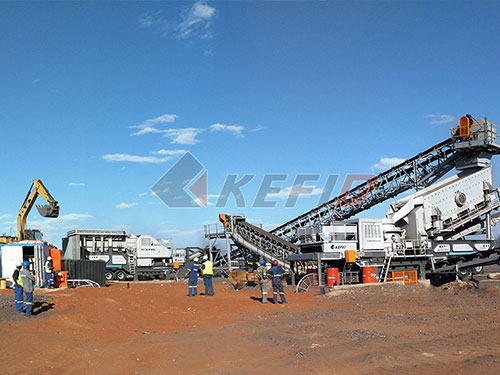
Material Characteristics: The properties of the feed material are paramount. Is it extremely abrasive (like granite or basalt), sticky (clay-laden ore), soft (chalk), or exceptionally hard (trap rock)? Does it have high moisture content? A custom company designs crushers with specific wear-resistant alloys, unique chamber geometries, and adjusted operational parameters to handle these characteristics efficiently, minimizing wear and maximizing uptime.
Desired Final Product Specifications: The end-use of the aggregate dictates its required size, shape (cubicity), and gradation. Producing ballast for railway beds requires different particle shapes than manufacturing sand for asphalt or high-quality concrete. Custom crushers can be engineered to optimize for these specific outputs—for instance, employing particular impact or compression crushing techniques to enhance cubicity over flaky, elongated pieces.
Site-Specific Constraints and Mobility Requirements: Operational environments vary drastically. A stationary quarry may require a high-capacity primary jaw crusher integrated into a complex plant layout. In contrast, a demolition contractor working in an urban environment needs a highly mobile, compact, and often quieter machine that can be easily transported between sites and comply with strict noise and dust regulations.
Throughput and Efficiency Goals: Large-scale mining operations prioritize maximum tonnage per hour with high reliability. A custom solution can involve designing larger feed openings, more powerful drives, and automated control systems to optimize material flow and prevent bottlenecks that standard configurations might create.
Integration with Existing Systems: Many operations seek to upgrade or expand their current processing plants. A custom crusher company can design and build machinery that seamlessly interfaces with existing conveyors, screens, and other equipment, ensuring compatibility and preserving prior capital investments.
A company operating in this domain distinguishes itself through a set of integrated capabilities that blend mechanical engineering prowess with practical application knowledge.
Engaging with a custom stone crusher company is typically a collaborative journey involving several distinct phases:
Consultation & Needs Analysis: The process begins with an in-depth dialogue between the client and the manufacturer’s engineering team. They discuss material samples production goals final product specs site limitations budget constraints environmental regulations
Feasibility Study & Proposal: Based on the initial data engineers perform simulations create preliminary designs often presenting multiple conceptual solutions Each option is evaluated for its performance cost-benefit ratio return on investment ROI
3 3D Modeling & Simulation: Once a direction is chosen detailed CAD models are developed FEA ensures structural soundness while discrete element modeling DEM software can simulate the flow breakage behavior millions individual particles within crushing chamber This virtual prototyping saves significant time cost identifying potential issues before metal cut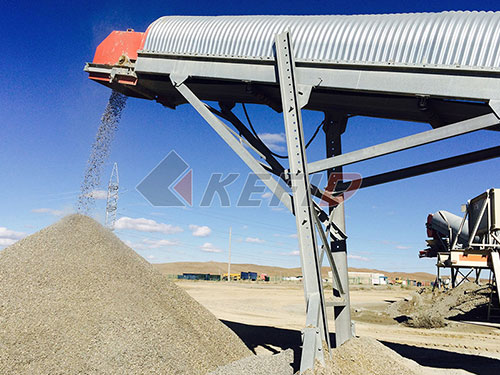
4 4Manufacturing & Quality Assurance: Fabrication begins under strict quality control protocols Every component from castings shafts bearings fabricated inspected ensure meets design specifications Non-destructive testing methods like ultrasonic magnetic particle testing common practice
5 5Factory Acceptance Testing FAT: Before shipment machine assembled tested factory presence client This allows verification performance noise levels functionality control systems any adjustments made controlled environment
6 6Installation & Commissioning: Company specialists often supervise onsite installation ensuring correct integration existing plant They oversee initial startup fine-tune operations train client’s personnel proper maintenance procedures
7 7After-Sales Support & Service: Long-term partnership crucial Custom manufacturers provide comprehensive support including ready supply wear parts field service technicians remote monitoring diagnostics help maximize machine availability lifespan
A custom-designed stone crusher invariably carries higher initial capital expenditure than standard model However total cost ownership TCO analysis often reveals compelling value proposition Key financial benefits include:
The role Custom Stone Crusher Machine Company extends far beyond simple manufacturing represents pinnacle applied mechanical engineering materials science industrial sectors These organizations serve indispensable partners businesses whose profitability competitiveness depend ability process difficult unique materials efficiently reliably sustainably While path customization requires greater upfront investment collaboration deeper technical engagement ultimate payoff manifests form robust tailored crushing solution delivers unparalleled performance durability precisely defined application landscape ever-evolving demands global construction mining industries ensures continued relevance importance these highly specialized innovative enterprises
Lorem ipsum dolor sit amet, consectetur adipisicing elit. Consectetur sequi saepe ut sunt eveniet perferendis excepturi, iste obcaecati. Qui tempore hic sed quia soluta obcaecati vel.