Custom Sand and Gravel Mining and Manufacturing: A Comprehensive Overview

The sand and gravel industry, often perceived as a simple extraction business, is in fact a sophisticated, technologically driven sector critical to modern civilization. Custom sand and gravel mining and manufacturing represents the pinnacle of this evolution, moving beyond bulk commodity production to a tailored, precision-based service that meets exacting specifications for a diverse range of high-value applications. This article delves into the processes, technologies, economic significance, environmental considerations, and future trends of this essential industry.

1. From Commodity to Custom Product: Defining the Niche

Traditional sand and gravel operations focus on producing standard aggregate grades for general construction fill, concrete, and road base. Custom manufacturing, however, is client-specific and application-driven. It involves modifying the physical and chemical properties of raw aggregate to meet precise engineering requirements. The “custom” aspect encompasses:

  • Particle Size Distribution (Gradation): Engineering specific sieve curves rather than offering standard “one-size-fits-all” products.
  • Particle Shape: Manufacturing crushed materials with optimal shape (cubical) for strength in asphalt or high-performance concrete.
  • Cleanliness and Durability: Washing and processing to strict limits for deleterious materials like clay, silt, organic matter, or weak particles.
  • Specialty Products: Creating materials like silica sand for glass manufacturing, frac sand for oil/gas extraction, filter sand for water treatment, golf course bunker sand, or abrasives.
  • Blending: Combining different aggregates or adding components to create proprietary mixes for specific ready-mix concrete or asphalt plants.

2. The Custom Mining and Manufacturing Process: A Step-by-Step Analysis

The transformation of raw deposit into a custom product is a multi-stage process requiring careful planning and advanced technology.

A. Geological Assessment & Resource Planning
It begins long before mining. Geologists conduct extensive drilling and sampling to characterize the deposit’s quality, volume, and variability. For custom operations, understanding the inherent properties—such as sandstone hardness for crushing or natural roundness for specialty uses—is paramount. Sustainable resource management plans ensure long-term viability.

B. Mining MethodsCustom Sand Gravel Mining Manufacturing
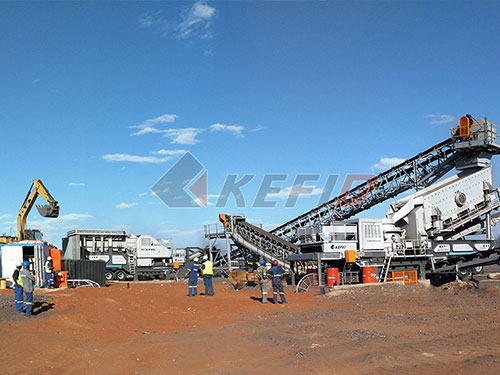
  • Pit Mining: The most common method for sand and gravel deposits near the surface. Overburden (topsoil and clay) is removed using scrapers or excavators. Material is then excavated with front-end loaders or dredges.
  • Dredging: Used for underwater deposits in rivers, lakes, or floodplains. A hydraulic dredge pumps a slurry of sand/gravel/water to the processing plant.
  • Quarrying: For harder rock (e.g., limestone) that must be drilled, blasted, and crushed to produce manufactured sand (M-Sand) or custom-sized stone.

C. The Custom Manufacturing Plant: Heart of the Operation
This is where customization occurs through an integrated circuit of mechanical processes.Custom Sand Gravel Mining Manufacturing

  1. Primary Crushing & Scalping: Large material is reduced by jaw or gyratory crushers. A vibrating grizzly feeder/scalper removes oversized material and fine particles early in the process.
  2. Screening: The cornerstone of gradation control. Raw material passes over multiple decks of vibrating screens with precisely sized meshes to separate particles into distinct size fractions (e.g., ¾”, ½”, 3/8”, #4 mesh).
  3. Secondary & Tertiary Crushing: For custom shape requirements (like cubical chips for asphalt), cone crushers or impact crushers are used in closed circuits with screens to recirculate material until the desired size and shape are achieved.
  4. Washing & Classification: Critical for product purity. Log washers, scrubbers, and screw classifiers remove clay coatings and silt. Sand classifying tanks use hydraulic rising current principles to separate fine sand fractions by particle size with extreme accuracy—a key capability for producing concrete sand or masonry sand to exact specifications.
  5. Specialized Processing: This may include:
    • Attrition Scrubbing: For high-intensity cleaning of grain surfaces.
    • Dewatering & Fine Recovery: Using cyclones and dewatering screens to capture valuable fine materials (like concrete fines) from slurry ponds.
    • Thermal Processing/Drying: Essential for frac sand production to achieve optimal dryness and strength.
  6. Automated Blending & Loadout: Computer-controlled systems draw from multiple stockpiles (each holding a specific size fraction) to blend a product matching a customer’s unique gradation recipe before loadout via conveyor or truck.

3. Economic Significance & Market Drivers

Custom aggregate manufacturing adds significant value to a basic mineral resource.

  • Infrastructure Development: Highways bridges require aggregates with specific fracture faces for stability; pervious concrete needs an open-graded mix for drainage.
  • Construction Industry Demands: High-rise buildings specify high-strength concrete requiring perfectly graded aggregates; architectural precast concrete demands consistent color texture from washed aggregates.
  • Industrial Applications:
    • Frac Sand: High-purity quartz sand with exceptional roundness sphericity compressive strength is critical hydraulic fracturing operations energy sector
    • Glass Sand: Ultra-high silica content low iron oxide
    • Sports Recreation: Uniformly sized angular sands synthetic turf systems golf course bunkers
  • Environmental Water Treatment: Filter media municipal industrial water plants requires specific effective size uniformity coefficient

Environmental Stewardship Sustainability

Modern custom operations are leaders sustainable practice due regulatory scrutiny community expectations:

Reclamation Planning: Progressive reclamation concurrent mining restoring land agricultural wildlife habitat recreational use
Water Management Recycling: Closed-loop water systems minimize freshwater consumption treat recycle process water settling ponds clarifiers
Dust Noise Control: Enclosed conveyors misting systems dust suppression covers haul roads vegetative buffers mitigate community impacts
Resource Efficiency Maximizing Yield: Advanced processing ensures nearly total utilization mined material minimizing waste

Technological Innovations Shaping Future

Automation Digitalization: Centralized PLC control systems monitor adjust entire plant flow real-time optimizing production quality reducing labor costs IoT sensors predictive maintenance prevent downtime
Advanced Sorting Technologies: Optical X-ray sensor-based sorters can remove undesirable particles color contaminants enhancing product purity without chemicals
Alternative Materials Manufactured Sand M-Sand With natural riverine sources depleting regulated crushed rock produce consistent eco-friendly alternative natural sand especially regions scarcity
Carbon Footprint Reduction Electrification renewable power sources low-emission mobile equipment development reduce carbon intensity essential supply chain

Conclusion

Custom Sand Gravel Mining Manufacturing represents dynamic technologically advanced sector evolved far beyond simple excavation It complex interplay geology engineering chemistry logistics driven relentless demand high-performance materials global infrastructure industrial processes By leveraging sophisticated processing techniques embracing environmental responsibility harnessing digital innovation industry not only provides fundamental building blocks modern society but does so manner increasingly precise efficient sustainable As challenges resource scarcity climate change continue intensify role custom aggregate producers providing tailored solutions will become even more vital ensuring resilience growth built environment decades come

Lorem ipsum dolor sit amet, consectetur adipisicing elit. Consectetur sequi saepe ut sunt eveniet perferendis excepturi, iste obcaecati. Qui tempore hic sed quia soluta obcaecati vel.