Designing and Operating a Custom Iron Ore Crushing and Processing Plant: A Comprehensive Overview
The journey of iron ore from a raw, mined material to a refined product ready for the blast furnace is a complex and capital-intensive process. At the heart of this transformation lies the crushing and processing plant. While the fundamental principles of comminution and beneficiation are universal, no two iron ore deposits are identical. Variations in mineralogy, grade, physical properties, and economic constraints necessitate a tailored approach. A custom-designed iron ore crushing and processing plant is therefore not a luxury but a fundamental requirement for operational efficiency, cost control, and maximized return on investment. This article delves into the critical stages, equipment choices, and strategic considerations involved in creating such a facility.
Phase 1: Foundational Analysis – The Blueprint for Customization
Before any equipment is selected or layouts are drawn, a comprehensive understanding of the ore body is paramount. This phase dictates every subsequent decision.
-
Ore Characterization:
- Geological and Mineralogical Analysis: A thorough analysis determines the iron-bearing minerals (e.g., magnetite vs. hematite), their liberation size (the particle size at which the valuable mineral separates from the gangue), and the hardness and abrasiveness of the ore.
- Competency and Work Index: Laboratory tests, such as the Bond Work Index, quantify the ore’s resistance to crushing and grinding. This data is critical for sizing motors and selecting appropriate machinery.
- Moisture and Clay Content: Sticky, high-clay ores present significant challenges in handling and crushing, often requiring specialized solutions like scrubbers or washing drums to prevent clogging.
-
Product Specification:
The final product’s target size and grade are defined by market demands or downstream processing requirements (e.g., Direct Reduced Iron (DRI) plants require finer, higher-grade pellets compared to traditional blast furnace feed). This target dictates the entire process flow.
-
Site-Specific Constraints:
Topography, climate, water availability, environmental regulations, and energy costs all influence plant design. A plant in an arid region may opt for dry processing methods where feasible, while one with ample water might use wet beneficiation for superior efficiency.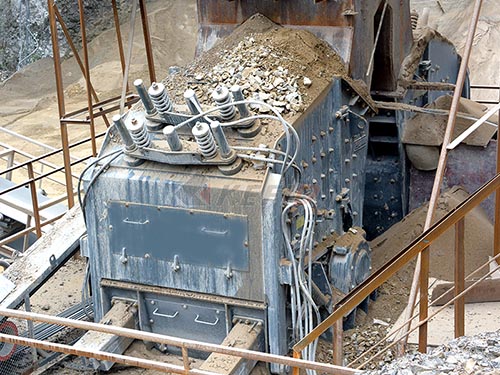
Phase 2: The Core Process Flow – From Run-of-Mine to Concentrate
A custom plant integrates several key stages into a seamless operation.
1. Primary Crushing: The First Line of Reduction
Located typically near the mine pit, the primary crusher’s role is to reduce large run-of-mine (ROM) ore, which can be over 1 meter in diameter, down to a manageable size (typically 150-250 mm) for transport via conveyor to the next stages.
- Customization Choice: The selection between a Gyratory Crusher and a Jaw Crusher is crucial.
- Gyratory Crushers are preferred for high-capacity operations (over 1,000 tons per hour) and very abrasive ores. They offer continuous crushing action and are more energy-efficient at large scales.
- Jaw Crushers are often chosen for smaller-to-medium capacities or where the ore is less abrasive. They have a lower initial cost and a simpler mechanical design.
- The decision hinges on throughput requirements, feed size, ore hardness, and total cost of ownership.
2. Secondary and Tertiary Crushing: Achieving Liberation
This stage further reduces the ore to a finer size (often below 30 mm) to liberate the iron minerals from the waste gangue.
- Customization Choice: Here, Cone Crushers are almost universally employed due to their efficiency in intermediate and fine crushing.
- Different chamber profiles (standard, short-head) can be selected based on the desired product size distribution.
- Modern cone crushers are often equipped with automated setting regulation systems (like ASRi) that optimize crusher performance in real-time based on load conditions.
- For specific applications requiring cubical product shapes or dealing with less abrasive ore, Horizontal Shaft Impactors (HSI) may be considered.
3. Screening: The Sorting Mechanism
Screening is interwoven with all crushing stages to ensure efficiency and control product size.
- Scalping: Removes fine material before it enters a crusher, preventing unnecessary wear and improving throughput.
- Closed-Circuit Operation: The output from secondary/tertiary crushers is sent to screens. Oversize material is sent back to the crusher (“closed circuit”), while correctly sized material moves forward. This ensures optimal particle size control.
4. Beneficiation: Upgrading the Ore
Once sufficiently liberated through crushing, low-grade iron ore must be upgraded or “beneficiated” to increase its iron content.
- For Magnetite Ores (Fe₃O₄): Magnetic separation is highly efficient. After grinding in ball mills or AG/SAG mills to a very fine powder (often below 0.1 mm), slurry passes through low-intensity magnetic separators (LIMS) that extract the magnetic magnetite particles from non-magnetic silica gangue.
- For Hematite Ores (Fe₂O₃): Beneficiation can be more complex due to hematite’s weak magnetism.
- Wet Processing: Involves spirals or hydrocyclones that separate particles by specific gravity.
- High-Gradient Magnetic Separators (HGMS): Can be used to capture weakly magnetic hematite.
- Flotation: Uses chemical reagents to make either the iron mineral or the silica gangue hydrophobic (“water-repelling”), allowing them to be separated by bubbling air through the slurry.
The choice of beneficiation method is entirely customized based on mineralogy; designing a magnetite plant like a hematite plant would be fundamentally flawed.
5. Dewatering & Tailings Management:
The beneficiated concentrate is a slurry that must be dewatered.
- Thickeners are used initially to recover process water.
- Filters (disc or drum filters) or Centrifuges create a damp filter cake suitable for transport.
- Tailings—the waste material—are pumped to engineered tailings storage facilities (TSFs). Customization here involves designing thickeners or paste plants that maximize water recovery while ensuring geotechnical stability of tailings dams.
Phase 3: Advanced Customization Through Control & Automation
A truly modern custom plant leverages technology not just in its hardware but in its operational brain.
- Process Control Systems (PCS/DCS): These systems integrate all unit operations—from crusher settings based on power draw to mill feed rates based on density—into one centralized control room.
- Advanced Process Control (APC): APC uses sophisticated algorithms that go beyond simple PID loops to optimize entire circuits simultaneously for objectives like maximizing throughput at target grind size with minimal energy consumption.
- Digital Twins: A virtual model of the plant can simulate operations under different conditions—testing new ore blends or process changes without disrupting actual production—allowing for continuous optimization throughout mine life as conditions change.
Conclusion
A custom iron ore crushing and processing plant represents an intricate symphony of geology, mechanical engineering, metallurgy,and digital technology.It transcends being merely acollectionof machines;itisapurpose-built system engineeredtoextractmaximumvaluefromauniqueorebody.Thecustomizationprocessbeginswithdeeporeunderstandingandculminatesinacohesiveflow sheetwhereprimarycrushingstrategiesalignwithliberationcharacteristics,andbeneficiationmethodsaresynergisticwithfinalproductspecifications.Investinginthisfront-endengineeringrigorisnon-negotiable.Itisthecriticaldifferentiatorbetweenanoperationplaguedbydowntime,inconsistentproductquality,andhighoperatingcosts,andasleek,efficientfacilitythatdeliverssustainedprofitabilityandlong-termviabilityinanincreasinglycompetitiveglobalmarket.Themostsuccessfulironoreplantsarethoseengineerednotjustforiron,butfortheiriron
