
In the fiercely competitive global mining industry, the efficiency and cost-effectiveness of primary processing are paramount. A custom iron ore crushing plant is not merely a capital expenditure; it is a strategic investment that directly influences operational viability, product quality, and long-term profitability. The concept of a “competitive price” for such a plant transcends the initial purchase order. It encompasses the total cost of ownership—capital expenditure (CAPEX), operational expenditure (OPEX), maintenance, downtime, and final product yield—over the plant’s entire lifecycle. This article delves into the engineering, design, and economic principles behind achieving a truly competitive custom iron ore crushing solution.
Iron ore is not a monolithic commodity. Its characteristics vary dramatically:
A standardized, off-the-shelf plant forces the ore to conform to the equipment, leading to inefficiencies like premature wear, choking, capacity bottlenecks, and suboptimal liberation. Customization aligns the plant precisely with the ore body’s geology and the operation’s commercial goals. This tailored approach minimizes waste—of energy, liner material, and time—which is the foundational driver of a competitive lifecycle cost.
A competitive custom design optimizes each stage of the crushing circuit.
A. Primary Crushing Station:
The choice here sets the tone for the entire circuit. For large-tonnage, hard abrasive ores:
B. Secondary & Tertiary Crushing Stages:
This is where liberation intensifies.
C. Screening is inseparable from crushing.** Efficient screening ensures crushers are not recrushing already-sized material (“circulating load”). Custom designs employ multi-deck vibrating screens with appropriate screen media (polyurethane vs. rubber vs. wire cloth) tailored to moisture levels and cut points. Correctly sized screens reduce energy waste in crushers—a major OPEX saving.
D. Material Handling & Conveying:** A custom plant designs transfer points with minimal drop heights to reduce impact wear on belts and dust generation. It specifies idler spacing belt grades tailored to load impact zones saving long-term maintenance costs often overlooked in cheaper bids.
The path to a competitively priced reliable plant is rigorous:
1.Comprehensive Ore Testing: Davis tube recovery Bond Work Index abrasion tests drop weight tests particle shape analysis These data are non-negotiable inputs
2.Simulation & Flowsheet Development: Using advanced software like Bruno or PlantDesigner engineers simulate multiple circuit configurations (e.g., open circuit vs closed circuit three-stage vs four-stage). They model performance energy consumption wear rates predicting outcomes before fabrication
3.Modular vs Fixed Design: Competitive pricing often leverages modular skid-mounted designs fabricated in controlled shop environments reducing field installation time labor costs site disruption Modular plants also offer future reconfigurability
4.Technology Integration: Modern automation PLC systems with continuous level sensing pressure monitoring provide real-time optimization They adjust crusher settings feeder rates ensuring peak performance protecting equipment This technology investment pays back through higher availability lower manpower dependency
A low bid can be dangerously expensive True competitiveness is measured by Total Cost Ownership TCO:
CAPEX Elements
Equipment procurement structural steel electrical controls installation commissioning A custom design may have higher upfront engineering costs but these are offset by optimized equipment sizing eliminating overdesign paying only for required capacity
OPEX & Lifecycle Cost Drivers
Power Consumption Crushing/comminution can consume over 50% of site energy An optimized circuit with efficient motors well-matched components reduces kWh/tonne significantly
Wear Parts Consumption Liner costs are massive Custom design selects optimal alloy metallurgy manganese steel chrome iron uses chamber profiles distributing wear evenly extending life Predictive maintenance scheduling based on actual duty further cuts cost
Availability & Downtime A poorly designed plant suffers frequent clogging unplanned stops A reliable custom layout with adequate access maintenance platforms proper redundancy ensures >90% availability maximizing revenue
Product Yield The ultimate metric A plant producing more in-spec product per ton of feed directly boosts income Customization maximizes lump production if that commands premium or ensures optimal fineness for grinding recovery
Achieving this balance requires more than a vendor-client transaction it demands an engineering partnership
Look for suppliers offering:
Lifecycle Service Agreements Guaranteed performance metrics throughput product size power consumption
Wear Part Optimization Programs Sharing data on liner wear patterns recommending improvements
Process Expertise Engineers who understand geology metallurgy not just mechanical equipment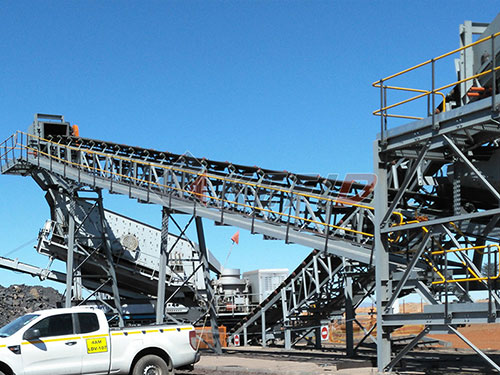
A custom iron ore crushing plant at a competitive price is therefore an engineered system meticulously designed from first principles around a specific ore body Its “price” is justified not by its invoice but by its demonstrably lower cost per tonne processed over decades of operation The most competitive investment minimizes waste in all forms—energy wasted on overgrinding steel wasted on premature wear time wasted on downtime By investing in thorough testwork intelligent simulation smart technology integration operators secure not just equipment but a foundational pillar for sustainable profitable mineral processing The true economy lies not in the cheapest bid but in the most intelligent holistic design delivering relentless efficiency at every stage of its operational life
Lorem ipsum dolor sit amet, consectetur adipisicing elit. Consectetur sequi saepe ut sunt eveniet perferendis excepturi, iste obcaecati. Qui tempore hic sed quia soluta obcaecati vel.