Engineering Excellence: The Design and Operation of a Custom Iron Ore Crushing Plant

The extraction and processing of iron ore form the foundational bedrock of the global steel industry, which in turn is a critical enabler of modern infrastructure, transportation, and machinery. At the very heart of any efficient iron ore processing operation lies the crushing plant. However, there is no universal, one-size-fits-all solution. The specific characteristics of an ore body—its mineralogy, hardness, abrasiveness, moisture content, and the desired final product—dictate that a truly efficient and profitable operation requires a custom iron ore crushing plant. This article delves into the engineering principles, key components, circuit configurations, and operational philosophies that define such a bespoke system.

1. The Imperative for Customization: Understanding the Ore Body

The design of a custom crushing plant begins long before equipment selection, with a rigorous and comprehensive analysis of the ore body itself. This foundational step determines every subsequent decision.custom Iron Ore Crushing Plant

  • Ore Competence and Abrasiveness: Iron ores vary dramatically in hardness (measured by indices like Unconfined Compressive Strength – UCS or Bond Work Index) and abrasiveness (measured by indices like the Los Angeles or Bond Abrasion Index). A hard, tough magnetite ore requires a fundamentally different approach than a softer, yet potentially sticky, hematite or goethite ore. Hard ores demand robust crushers with high pressure capabilities, while abrasive ores necessitate wear-resistant materials and designs that facilitate easy maintenance.
  • Mineralogy and Liberation Size: The grain size at which the valuable iron minerals (e.g., magnetite, hematite) are liberated from the waste gangue (typically silica) is critical. If liberation occurs at a coarse size, the crushing circuit can be designed to produce a coarser product, potentially bypassing further fine crushing or grinding stages, leading to significant energy savings.
  • Moisture and Clay Content: Sticky ores with high moisture or clay content present one of the most significant challenges. They can cause plugging in crushers, chutes, and screens. A custom plant for such material will incorporate specific solutions like grizzly feeders with high-energy bar vibration to scalp sticky fines, apron feeders for direct dump hopper feeding, and potentially even pre-screening washing stages to remove problematic clays.
  • Feed Size vs. Product Size: The top size of the run-of-mine (ROM) ore from the mine and the required top size for the downstream beneficiation process (e.g., milling for magnetite or direct shipping ore – DSO – screening for hematite) define the overall reduction ratio that the plant must achieve.

2. Core Components of a Custom Circuit

A custom iron ore crushing plant is an integrated system of several key components selected and sized to work in harmony.

1. Primary Crushing Station:
This is the first point of contact for the massive ROM ore (often up to 1.5 meters in diameter). The primary crusher must be capable of handling large lumps with high throughput.

  • Gyratory Crushers: Typically preferred for high-capacity operations (over 1,000 t/h). They are robust, reliable, and handle slabby material well. Their deep crushing chamber allows for continuous operation with a large feed opening.
  • Jaw Crushers: Often used in smaller operations or where the ore is less abrasive. They offer lower capital cost and simpler maintenance but are less efficient on high-tonnage applications compared to gyratories.
  • Supporting Equipment: A dumping hopper with a heavy-duty grizzly to scalp off oversize rocks that could damage the crusher is essential. An apron feeder is almost always used to regulate feed into the primary crusher uniformly.

2. Secondary Crushing Stage:
The goal here is further size reduction after primary crushing. Secondary crushers take feed from around 200-300 mm down to 40-60 mm.

  • Cone Crushers: The undisputed workhorse of secondary crushing. For iron ore applications,
    • Standard Cone Crushers are used for normal secondary duties.
    • Short Head Cone Crushers are employed for tertiary crushing where a finer product is needed due to their steeper head angle and finer setting capabilities.
    • Modern cone crushers feature advanced hydraulic systems for setting adjustment, clearing blockages (tramp release), and unbreakable overload protection.

3. Tertiary Crushing Stage:
For plants requiring a finely crushed product as feed for grinding mills (common in magnetite processing), a tertiary stage is added.

  • Cone Crushers (Short Head): Again, these are standard.
  • High-Pressure Grinding Rolls (HPGR): An increasingly popular technology in iron ore processing. HPGRs offer significant energy efficiency over traditional crushers by utilizing inter-particle compression. They produce a product with more micro-cracks, which can lead to substantial energy savings in downstream ball mills.

4. Screening:
Screening is not an auxiliary process; it is integral to efficiency. It ensures that only correctly sized material proceeds to each stage (“efficiency”) and prevents finished product from being over-crushed (“circuit productivity”).

  • Vibrating Screens: Heavy-duty inclined or horizontal screens are used.
    • Scalping Screens: Positioned before primary crushers to remove fines.
    • Classification Screens: Positioned after each crushing stage to separate “product-sized” material from “crusher-feed-sized” material via closed-circuit loops.

3. Circuit Configuration: Open vs. Closed Circuit

The arrangement of these components defines their efficiency.

  • Open Circuit: Material passes through each crushing stage only once without any recirculation based on size classification via screens.This configuration offers simplicity but leads to poor control over final product size distribution as some particles may be discharged too early while others are over-crushed.It generates more fines than necessary.It has low energy efficiency.It’s rarely used in modern custom plants except perhaps as temporary setup during commissioning phase only because it lacks precision control required by today’s standards
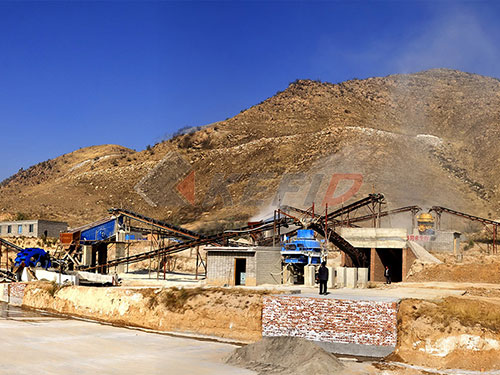
    .custom Iron Ore Crushing Plant
  • Closed Circuit: This represents best practice.The discharge from each crusher stage (secondary & tertiary)is fed onto screen(s).The oversize materialis recirculated backto samecrusherfor further reduction while undersize proceeds nextstageor becomes finalproduct.This configuration:

    • Maximizes overall throughput
      Provides tight control over final product top-size
      Reduces power consumption per tonofproductby preventingover-crushing
      Optimizes wear lifeofcrushing linersby ensuringtheyareonlyprocessingmaterialthatneedsbeingsizedreduced

A typical three-stage custom closed circuit would be: Primary Crusher → Secondary Crusher(s) in closed circuit with screens → Tertiary Crusher(s)inclosedcircuitwithfinalscreens

4.The Role Of Automation And Control Systems

Customization extends beyond mechanical hardware into digital intelligence.A state-of-the-artplantincorporatesa sophisticatedProcessControlSystem(PCS)andSupervisoryControlAndDataAcquisition(SCADA)systemThese systems:

  • OptimizeCrusherSettingsAutomaticallyadjustingtheclosedsidesetting(CSS)ofconecrushersinreal-timetomaintainoptimalthroughputandproductsizebasedonfeedconditionsandpowerdraw
  • ManageChoke-FeedConditionsEnsuringcrushersarealwaysoperatingatfullcapacitywhichimprovesefficiencyandreduceslinerwear
  • MonitorWearAndPerformanceTrackingoperatinghourspowerconsumptionandpressurestoschedulepredictivemaintenanceforlinersandotherwearpartsminimizingunscheduleddowntime
  • IntegrateWithUpstreamAndDownstreamProcessesProvidingholisticoptimizationfromthemineface throughtheprocessingplantensuringaconsistentfeedrateandqualitytothebeneficiationcircuit

5.Case Study Example:A Custom Plant For A Magnetite Ore Body

Consider designingaplantforahardabrasivemagnetiteorewithliberationat6mm:

1.Primary Crushing:AGyratoryCrusherselectedforitshighcapacityandabilitytohandlehardrockROMfeedupto1200mm
2.Secondary Crushing:Two large conecrusherstaketheprimarycrusherdischarge reducingittoabout-75mmTheyoperateinclosedcircuitwithlargevibratingscreens
3.Tertiary Crushing:HerethecustomizationiskeyInsteadofanothersetoftraditionalconecrushersthedesignspecifiesHighPressureGrindingRolls(HPGR)TheHPGRisextremelyefficientatreducingthe-75mmfeeddowntothetarget-6mmsizewhileconsumingupto30%lessenergythanconventionalcrusherstheadditionalbenefitisthatitproducesamicro-crackedproductthatsignificantlyreducestheenergyrequiredinthedownstreamballmillsforthefinalgrindThisdecisiondrivenbythespecificorecharacteristicsdeliversalifecyclecostsavingthatjustifiesthehigherinitialcapitalexpenditure

Conclusion

A custom ironorecrushingplantisnotmerelyacollectionofstandardizedequipmentitistheembodimentofappliedengineeringprinciplestailoredtoauniquegeologicaldepositItsdesignisaniterativeprocessthatbalancesgeologymetallurgyequipmentselectionandeconomicstoachieveaspecificoperationalobjectiveByinvestinginthefront-endengineeringtodesignacustomsolutionminingoperationscanachievesuperiorperformanceenhancedenergyefficiencyloweroperatingcoststhroughoptimizedwearmanagementandincreasedoverallprofitabilityoverthelifemineInthehighstakesworldofmineralprocessingthislevelofcustomizationisthedifferencebetweenamediocreoperationandanindustryleadingone

Lorem ipsum dolor sit amet, consectetur adipisicing elit. Consectetur sequi saepe ut sunt eveniet perferendis excepturi, iste obcaecati. Qui tempore hic sed quia soluta obcaecati vel.