
The Strategic Role of the Custom Impact Crushers Dealer in Modern Aggregate and Mining Operations
Introduction
In the highly competitive sectors of aggregate production, mining, construction, and demolition recycling, operational efficiency is the primary driver of profitability. At the heart of these operations lies the crushing circuit, a complex system designed to reduce material size. Among the various types of crushing equipment, the impact crusher stands out for its versatility and ability to produce a highly cubical product. However, the standard, off-the-shelf machine often fails to meet the specific logistical, geological, and budgetary constraints of a particular site. This is where the Custom Impact Crushers Dealer emerges as a critical partner in the supply chain. Unlike a standard equipment retailer, a custom dealer functions as a solutions provider, bridging the gap between raw manufacturing capabilities and the specific, often unique, demands of the end-user.
Defining the Custom Impact Crushers Dealer
To understand the value proposition of a custom dealer, one must first distinguish them from general equipment suppliers. A standard dealer typically sells inventory that is manufactured based on broad market averages. In contrast, a Custom Impact Crushers Dealer specializes in the modification, configuration, and sometimes the ground-up engineering of impact crushing equipment to suit a client’s specific application.
This role requires a deep understanding of both metallurgy and process engineering. The dealer does not merely push a product; they analyze the customer’s feed material—whether it is limestone, granite, recycled concrete, or asphalt—and their desired end-product specification. They then work with manufacturers or their own fabrication teams to adjust variables such as rotor speed, blow bar metallurgy, chamber geometry, and drive systems.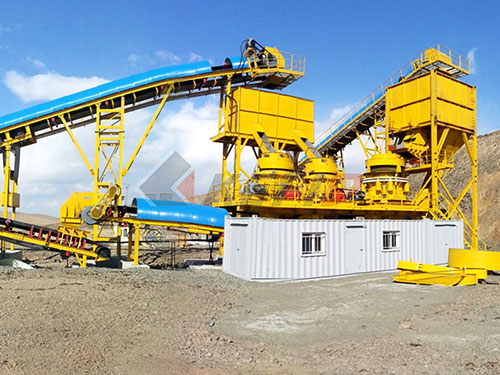
The Engineering Necessity for Customization
The necessity for customization in impact crushing is rooted in the physics of the machine. Impact crushers work on the principle of rapid impact rather than compression. The material is struck by hammers (blow bars) attached to a spinning rotor and is then thrown against impact plates (curtains) to break along its natural fissures.
Because the fracture mechanics of every rock type differ, a “one-size-fits-all” approach is inefficient. A Custom Impact Crushers Dealer addresses several critical variables:
The Value Chain: From Consultation to Commissioning
The workflow of a Custom Impact Crushers Dealer is a consultative process that extends far beyond a simple transaction.
Phase 1: Application Analysis
The process begins with a site visit or a detailed analysis of the material. The dealer’s engineers assess the feed size, the percentage of fines, and the work index of the rock. They also evaluate the available power source (diesel or electric) and the mobility requirements (track-mounted, wheel-mounted, or stationary).
Phase 2: Engineering and Design
Based on the data, the dealer proposes a customized solution. This may involve selecting a base model crusher and then modifying it. For instance, a customer might require a larger feed opening to handle slabby material, or a hydraulic curtain adjustment system to quickly change product size without shutting down the plant. The dealer coordinates with the factory to ensure these modifications do not void warranties and are structurally sound.
Phase 3: Fabrication and Assembly
In some cases, the dealer acts as the integrator. They may source the crusher body from a manufacturer but design and fabricate the chassis, the feeder, the discharge conveyor, and the screening unit in-house. This ensures that the entire circuit is optimized, not just the crusher itself. A custom dealer ensures that the feeder width matches the crusher inlet and that the discharge conveyor can handle the peak surge of material.
Phase 4: Commissioning and Training
Once the unit is delivered, the dealer’s role shifts to commissioning. They oversee the first startup, adjust the aprons, and monitor the amperage draw to ensure the machine is running at optimal capacity. Crucially, they train the operator on the specific nuances of the customized machine, such as the proper way to rotate blow bars to maximize wear life.
Economic Impact of Customization
The economic argument for utilizing a Custom Impact Crushers Dealer is compelling. While the initial capital expenditure (CAPEX) for a custom machine may be higher than a standard unit, the operational expenditure (OPEX) is typically lower.
Challenges and the Future of Custom Dealing
The role of the custom dealer is not without challenges. Supply chain volatility for specialized components, such as high-grade steel castings and large bearings, can delay projects. Furthermore, the rise of digitalization is changing the landscape. Modern Custom Impact Crushers Dealer operations are increasingly integrating telematics and IoT sensors into their builds. This allows for remote monitoring of rotor speed, bearing temperature, and wear rates, enabling predictive maintenance.
Additionally, the push for sustainability is driving innovation. Custom dealers are now frequently tasked with designing impact crushers that can process Construction and Demolition (C&D) waste more effectively, separating rebar and producing clean recycled aggregate. This requires specialized chamber designs to handle the unpredictable nature of demolition debris.
Conclusion
In an industry where margins are tight and specifications are stringent, the Custom Impact Crushers Dealer is more than a vendor; they are a strategic ally. They provide the engineering expertise necessary to transform a generic piece of machinery into a precision tool tailored for a specific geological and logistical environment. By focusing on application analysis, wear part metallurgy, and system integration, these dealers unlock value that standard equipment cannot provide. As the demand for high-quality aggregates and recycled materials continues to rise globally, the expertise of the custom dealer will remain indispensable in building efficient, profitable, and sustainable crushing operations. For any operation serious about optimizing their reduction circuit, engaging a specialized dealer is not just a purchasing decision—it is a strategic investment in operational longevity.
If you have any questions about our products, please feel free to contact us. We take all inquiries and suggestions very seriously.