
The pursuit of gold has driven exploration and extraction techniques to the very bedrock of our planet. While placer deposits in riverbeds have historically been the easiest sources for early prospectors, the true origin of this precious metal lies within hard rock formations. Among these, schist—a common metamorphic rock—frequently serves as a host for significant gold mineralization. The process of “crushing schist for gold” is not a simple act of brute force but a sophisticated operation grounded in geology, mineralogy, and precise engineering. This article provides a comprehensive overview of the geological context, the methodologies involved, and the economic considerations of extracting gold from schist.
To understand why crushing schist is necessary, one must first understand the geological processes that emplaced the gold within it. Gold is primarily introduced into rock systems by hydrothermal fluids. These are hot, mineral-rich aqueous solutions that circulate deep within the Earth’s crust, typically associated with magmatic activity.
Primary Formation: As these hydrothermal fluids migrate through fractures and pore spaces, changes in temperature, pressure, or chemistry cause them to deposit their dissolved minerals. Gold, along with quartz and sulfide minerals like pyrite (fool’s gold) and arsenopyrite, precipitates out of solution. This process often forms quartz veins that cut through the surrounding rock.
The Role of Metamorphism: Schist itself is a product of regional metamorphism, where pre-existing rocks like shale, mudstone, or igneous rocks are subjected to intense heat and pressure. This process causes the recrystallization of minerals and imparts a distinct foliation—a wavy, layered texture—due to the parallel alignment of platy minerals like mica.
The Ideal Host: Schist is an excellent host rock for several reasons:
Consequently, when a prospector or geologist targets schist, they are not looking for gold disseminated evenly throughout the rock mass. They are searching for quartz veins or sulfide-rich zones within the schist that act as the actual repositories for gold particles.
Crushing schist for gold is a multi-stage process designed to progressively liberate the microscopic or visible gold from its hard rock prison. Each stage reduces the particle size until the gold can be efficiently separated.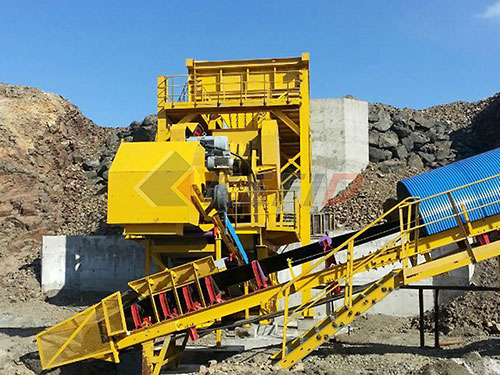
1. Sampling and Analysis:
Before any crushing begins, rigorous sampling is conducted to determine if the operation is economically viable. This involves drilling core samples or collecting chip samples from surface outcrops. These samples are assayed to determine the grade—the concentration of gold, usually expressed in grams per tonne (g/t). Only material with a grade high enough to cover extraction costs is processed.
2. Primary Crushing:
The first stage involves breaking down large pieces of mined schist into manageable fragments (typically <150-200mm). This is often accomplished using a jaw crusher or a gyratory crusher at the mine site.
3. Secondary and Tertiary Crushing:
The output from primary crushing is still too coarse for effective liberation. It is then conveyed to secondary crushers like cone crushers or impact crushers to reduce it further to gravel-sized material (<50mm). For finer liberation, tertiary crushing may be employed using cone crushers set to even tighter tolerances.
4. Grinding (Milling):
This is arguably the most critical stage for fine-grained gold deposits locked within schist. Grinding mills pulverize the crushed material into a fine powder or slurry.
The goal of grinding is to liberate individual mineral grains from each other without over-grinding them into particles too fine to handle efficiently.
5. Concentration and Separation:
Once liberated from its host matrix by crushing and grinding processes described above ,the next step involves separating minute particles/particulates containing valuable metals such as Gold etc.,from worthless gangue materials.This involves several techniques:
6. Refining:The final stepinvolvespurifyingtherecoveredgoldtodoremoveanyremainingimpurities&achievehighpuritylevels(e.g.,99 .99%)suitablefor bullionmarkets.This isoftendone throughelectrolytic refiningorchlorinationprocesses .
Crushing hard rock like schistforgoldisanenergy-intensiveandcapital-heavyendeavor.Thecostsofdrilling ,blasting ,crushing(whichcanaccountforasignificantportionoftotalenergyconsumptionatamine),grinding,andprocessingare substantial.Consequently,theoperationisonlyviableifthegradeoftheoreissufficientlyhightooffsetthese costs.Factorssuchasthedepthofthedeposit ,itsaccessibility ,andthegrain sizeofthewillgreatlyinfluence themethodologyandprofitability .
Environmentally,theprocesspresentssignificantchallenges.Thecrushingandgrindingprocessesgeneratelargeamountsofdustthatmustbecontrolled.Cyanideleaching ,whilehighlyefficient ,requiresextremelycarefulmanagementtopreventcontaminationofwaterways.Moreover,theleftovercrushedrock ,nowfinelygroundtailings ,mustbestoredinsecuretailingsstoragefacilities(T SFs)indefinitely .Modernminingoperationsareheavilyregulatedto mitigatetheseimpacts ,requiringcomprehensivewatermanagementplans ,dustsuppressionsystems,andpost-miningrehabilitationplans .
Crushingschistforgoldisfar morethanjustbreakingrock.Itrepresentsaconvergenceofgeologicalunderstandingandsophisticatedengineering .Fromidentifyingtherighttypeofschisthostingmineralizedquartzveins ,toprogressivelyliberatingthegoldthroughacascadeofcrushingandgrindingstages,andfinallyseparatingitviagravity ,flotation ,orleachingtechniques,theentireprocessisatestamenttohumaningenuity inpursuitofararesubstance .Whileeconomicallyande nvironmentallycomplex,theextractionofgoldfromschistleveragestheverygeologicalprocessesthatcreatedittounlockvaluefromtheEarth’smostancientfoundations .
Lorem ipsum dolor sit amet, consectetur adipisicing elit. Consectetur sequi saepe ut sunt eveniet perferendis excepturi, iste obcaecati. Qui tempore hic sed quia soluta obcaecati vel.