The Strategic Imperative of Customization in Crushing and Screening Equipment Distribution
The global market for crushing and screening equipment is a cornerstone of the construction, mining, and aggregate industries. While the core technology of jaw crushers, cone crushers, impactors, and screens is well-established, the competitive landscape for distributors has evolved dramatically. No longer is it sufficient to simply stock machinery from a leading manufacturer and offer standard warranties. Today, the most successful distributors differentiate themselves not through the equipment alone, but through a deep commitment to customization. This strategic imperative transforms them from passive middlemen into essential engineering partners, creating tailored solutions that address the unique operational, financial, and site-specific challenges of each client.
Beyond the Catalogue: Understanding the Drivers of Customization
The demand for customized crushing and screening solutions stems from several powerful industry trends:
- Maximizing Return on Investment (ROI): Clients operate in an environment of intense cost pressure. A standard plant might process material, but a customized one does so at the lowest cost per ton. Customization ensures optimal feed size, capacity matching between stages, and minimal waste—directly impacting profitability.
- Diverse and Challenging Feed Material: No two quarries or mine sites are identical. Material characteristics—abrasiveness (SiO2 content), hardness (Wi), moisture content, clay contamination, and desired final product shape—vary immensely. A one-size-fits-all crusher will lead to premature wear, excessive downtime, or subpar product gradation.
- Site Constraints and Mobility Requirements: Projects can be in remote locations with limited space or require frequent relocation (e.g., contract crushing). Distributors must customize for portability (track-mounted vs. wheeled), compact plant footprints, and ease of assembly/disassembly.
- Stringent Environmental and Regulatory Mandates: Noise suppression enclosures, dust collection systems (baghouses or misting systems), water recycling loops for washing plants, and emission controls on engines are no longer optional. These are often highly customized add-ons dictated by local regulations.
- Integration with Automation and Digitalization: Modern plants are data hubs. Customization includes integrating weigh scales, level sensors, camera systems, and telematics into a cohesive control system (SCADA). Distributors may customize software interfaces or provide remote monitoring dashboards tailored to the client’s management style.
The Spectrum of Customization Services Offered by Leading Distributors
A sophisticated distributor’s customization capability operates on multiple levels:
1. Pre-Sale Engineering & Application Analysis:
This is the foundational stage. It involves detailed site visits, material testing (either on-site or in partnership with labs), and production goal analysis. Using advanced software for plant simulation and flow analysis (e.g., Bruno™ or similar), distributors model different equipment configurations to predict output gradation curves, power consumption, and potential bottlenecks before a single machine is ordered.
2. Physical Modification & Fabrication:
- Wear Parts Configuration: Selecting the optimal manganese steel alloy for liners, designing jaw die profiles for better shape, or specifying screen media (rubber vs polyurethane vs woven wire) based on wear life and blinding propensity.
- Structural Modifications: Custom-built feed hoppers with grizzly sections or apron feeders; extended conveyors with specific inclines; custom discharge chutes to minimize spillage and dust; reinforced frames for extreme-duty cycles.
- Plant Layout & Modular Design: Creating semi-fixed or fully modular plants that can be pre-assembled in sections for faster installation. This includes designing walkways, guardrails, ladders (compliant with OSHA/MSHA), and centralized lubrication points for maintenance safety.
3. Power System & Drive Train Tailoring:
Choosing between electric drive (requiring custom power distribution) or diesel-hydraulic drive; sizing generators for standalone operation; implementing soft starters or variable frequency drives (VFDs) for energy savings and controlled starting torque; configuring hybrid power options.
4. Control System Integration & Automation:
This is a major area of value addition.
- Basic PLC Controls: Programming logic for automatic start/stop sequences and safety interlocks.
- Advanced Process Control: Automatically adjusting crusher settings (like CSS) based on feed conditions or power draw to optimize throughput.
- Telematics & Remote Monitoring: Providing branded portals where clients can view real-time production data, location tracking (for mobile plants), fuel consumption, maintenance alerts, and even perform remote diagnostics.
5. Financial & Service Package Customization:
Customization extends beyond hardware:
- Flexible Financing: Structuring leases with upgrade options, rental-to-own schemes tailored to project cash flows.
- Custom Maintenance Contracts: Offering tailored service plans based on predicted wear rates from the specific material analysis—ensuring parts availability before failure occurs.
Challenges in Delivering Customized Solutions
Customization presents significant challenges that distributors must navigate:
- Engineering Overhead: Requires in-house engineering talent—mechanical engineers who understand stress dynamics as well as process engineers who understand comminution theory.
- Supply Chain Complexity: Managing lead times for non-standard components from both OEMs and local fabrication shops.
- Cost Management & Pricing: Accurately quoting custom work without eroding margins requires sophisticated costing models.
- Warranty Implications: Modifying OEM equipment can complicate warranty claims unless there is a strong partnership agreement with the manufacturer.
The Future: From Equipment Sellers to Solution Partners
The trajectory is clear: leading crushing and screening equipment distributors are evolving into full-service solution providers whose core competency is bespoke engineering integration rather than transactional sales.
Future trends will deepen this: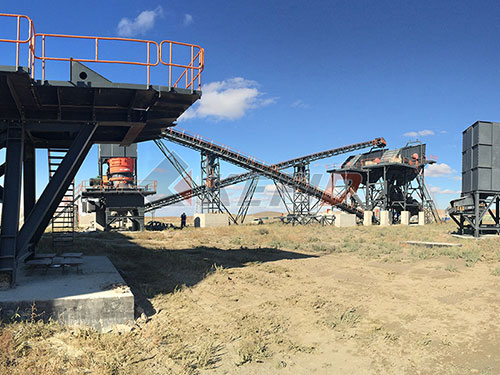
- Digital Twins: Creating virtual replicas of customized plants to simulate performance under different scenarios before physical implementation.
- AI-Powered Optimization: Using machine learning algorithms on operational data from customized plants to recommend real-time adjustments for peak efficiency.
- Sustainability-Driven Customization: Designing closed-loop circuits that maximize water reuse or integrating renewable power sources will become standard customization requests.
In conclusion,customization within crushing screening equipment distribution represents a fundamental shift from selling machinery to delivering guaranteed productivity outcomes. It demands deep technical expertise consultative approach long-term partnership mindset The distributor who masters art science customization providing not just piece equipment but complete optimized system becomes indispensable partner their clients’ success securing dominant position dynamic demanding market
