
In the global aggregates, mining, and construction industries, the supply chain’s backbone is formed by specialized distributors of crushing and screening equipment. These entities are far more than mere middlemen; they are critical partners in capital project planning, operational efficiency, and long-term profitability. A quotation from such a distributor is not just a price list but a complex technical and commercial proposal that encapsulates value engineering, lifecycle cost analysis, and strategic partnership. This article delves into the multifaceted role of these distributors and dissects the key components of a professional distributor quotation.
Today’s leading distributors have evolved into Total Solution Providers. Their scope extends beyond logistics to include:
A comprehensive quotation for crushing and screening equipment is a technical document that justifies the investment. It typically includes the following sections:
1. Executive Summary & Project Reference
This section outlines the client’s stated need (e.g., “600 TPH granite crushing circuit producing 3/4″ aggregate and manufactured sand”). It references all communication and site visit reports, establishing a clear understanding of the project’s foundation.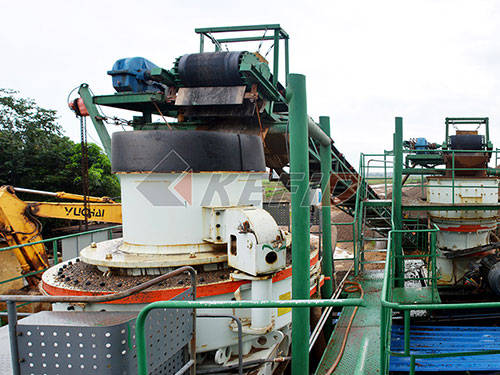
2. Technical Proposal & Flow Diagram
The heart of the quotation. It details the recommended equipment model-by-model.
3. Pricing Schedule
A clear itemization in tabular format:
4. Commercial Terms & Conditions
This defines the legal framework:
5. Performance Guarantees
A reputable distributor will offer guarantees based on agreed test conditions:
“Subject to correct feed gradation (<80% of crusher feed opening) with defined moisture content (<5%), we guarantee that Plant Model ABC-500 will achieve a sustained production rate of 500 MTPH (±5%) of crushed product passing 2″ at a CSS of 4″.”
6. Lifecycle Cost Analysis & Value Proposition
This differentiates superior quotations. It may include:
1.Total Cost of Ownership
(TCO):
The lowest capital expenditure
(CAPEX)
often leads to higher operational expenditure
(OPEX).
Evaluate fuel efficiency,
wear part life expectancy,
and required service intervals.
2.Technology & Automation:
Modern PLC-controlled plants with level sensors
and automatic setting adjustment can optimize yield
and protect equipment from damage.
Ensure compatibility with your control room systems.
3.Local Support Capability:
The proximity
and expertise of field service engineers are paramount during unplanned downtime.
Verify parts inventory levels at the local branch.
4.Financial Flexibility:
Assess if the distributor can provide attractive financing solutions that preserve working capital or offer rental-to-own options for project-based work.
5.Sustainability Compliance:
Equipment must meet local emissions standards
(Tier 4 Final/Stage V)
for diesel engines
and incorporate water recycling or dust control features mandated by environmental regulations.
Distributors now quote solutions shaped by industry megatrends:
Modularity &
Rapid Deployment: Modular plants that ship in containerized skids reduce site installation time/cost—a key value point in quotations.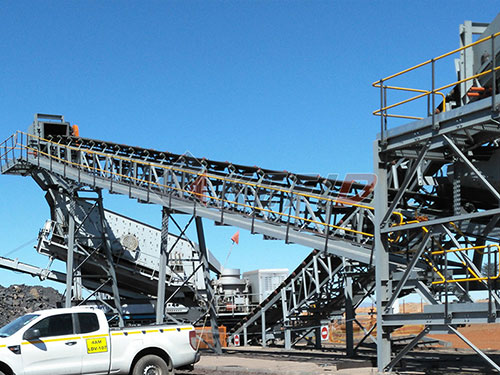
Digitalization &
IIoT: Quotes increasingly include telematics subscriptions
(e.g.,
Sandvik My Fleet,
Metso Metrics)
for remote monitoring,
production reporting,
and predictive maintenance alerts.
Emissions-Free Sites: Growing demand for fully electric or hybrid drive plants is reflected in new equipment offerings focused on reducing carbon footprint
and noise pollution.
A quotation from a crushing and screening equipment distributor is therefore a strategic document that bridges engineering capability
with commercial viability.It demands careful scrutiny beyond bottom-line price.The most valuable proposals demonstrate deep application knowledge,a robust support ecosystem,and a commitment to minimizing the client’s cost per ton over the asset’s entire lifespan.In an era defined by volatile input costs,supply chain pressures,and stringent sustainability mandates,the choice of distributor-partner—as evidenced first by their detailed professional quotation—becomes one of most consequential decisions for any aggregate producer or mining contractor.Ultimately,the goal is not merely to purchase machinery,but to secure productive capacity,growth potential,and competitive advantage through reliable,efficient rock processing technology supported by an unwavering local partnership
Lorem ipsum dolor sit amet, consectetur adipisicing elit. Consectetur sequi saepe ut sunt eveniet perferendis excepturi, iste obcaecati. Qui tempore hic sed quia soluta obcaecati vel.