
Australia’s economic landscape is profoundly shaped by its vast and diverse mineral wealth. From the iron-rich Pilbara to the goldfields of Western Australia and the coal basins of Queensland, the nation has built a global reputation as a reliable supplier of essential commodities. At the very heart of this colossal industry lies a critical, yet often overlooked, process: crushing. The symbiotic relationship between mining and crushing forms the fundamental link between raw geological material and marketable product, driving efficiency, profitability, and safety across the entire resource sector.
To understand the role of crushing, one must first appreciate the scale of Australian mining. The sector is a cornerstone of the national economy. According to the Australian Bureau of Statistics and industry reports, mining contributes over 10% to Australia’s GDP annually and accounts for a staggering majority of its export income. Key commodities include:
This immense production volume necessitates equally immense processing capabilities. Run-of-Mine (ROM) material, as it is excavated, is an heterogeneous mixture of valuable ore and worthless waste rock, in sizes ranging from fine dust to boulders several meters across. It is unusable in this form. The primary objective is to liberate the valuable minerals from the gangue (waste rock) to prepare them for subsequent beneficiation processes like milling, flotation, or magnetic separation. This is where crushing becomes indispensable.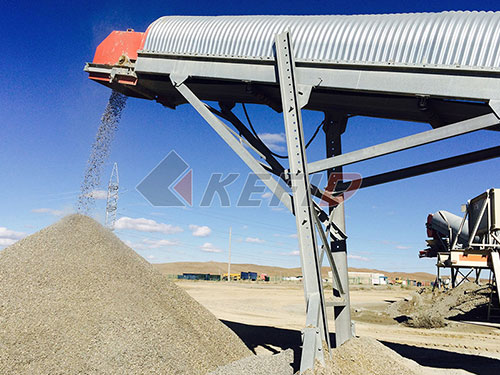
Crushing is the systematic process of reducing large solid rock masses into smaller, predefined fragment sizes. It is rarely a single-step operation but rather a multi-stage circuit designed for maximum efficiency and particle size control.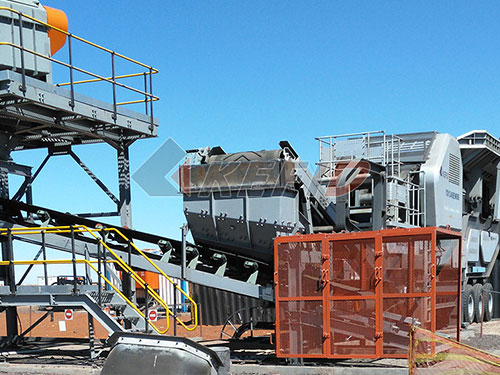
Primary Crushing: This is the first line of attack, typically located in close proximity to the mine face—sometimes even within the pit itself. The goal here is coarse reduction. Massive haul trucks dump ROM material into a primary crusher, which is designed to handle very large feed sizes. The most common types are:
The output from this stage is usually material sized around 100-250 mm, which is then conveyed to secondary crushing facilities.
Secondary Crushing: This stage further reduces the particle size received from the primary crusher. It aims to produce a more uniform product, typically in the range of 20-100 mm. Common secondary crushers include:
Tertiary and Quaternary Crushing: For finer product specifications or very hard ores, additional crushing stages may be employed. These stages refine the product size further, often down to less than 10 mm, preparing it perfectly for the grinding mills.
The entire process is supported by vibrating screens that sort the crushed material by size. Oversized material is recirculated back into the crusher (forming a “closed circuit”), while correctly sized material moves forward—a principle known as “screen-and-crush.” This ensures energy is not wasted on already adequately sized particles.
The Australian mining sector has been at the forefront of adopting technology to optimize its crushing operations.
Automation and Digitalization: Modern crushing plants are highly automated hubs controlled by sophisticated Programmable Logic Controllers (PLCs) and Supervisory Control and Data Acquisition (SCADA) systems. These systems monitor variables like power draw, crusher pressure, and feed rates in real-time.
In-Pit Crushing & Conveying (IPCC): This represents one of th emost significant shifts in mine design philosophy for large open-cut operations like many iron ore mines in WA Instead of relying entirely on fleets of diesel-guzzling haul trucks IPCC systems use mobile or semi-mobile primary crushers located directly within or near th e pit After initial crushin g th e material i s transported via an extensive network o f conveyor belts Thi s system offers substantial benefits including lower operating costs reduced carbon emissions decreased traffic congestion an d enhanced safety
Energy Efficiency: Comminution th e combined process o f crushin g an d grinding i s th e single largest consumer o f energy i n minin g accounting fo r up t o o f site energy usage Th e industry i s therefore intensely focused o n developing more efficient crusher designs an d circuit configurations High Pressure Grinding Rolls HPGR fo r example ar e increasingly used as an energy efficient alternative t o conventional crushers an d mills particularly i n hard rock applications
Th e efficiency o f th e crushin g circuit ha s direct economic implications A well optimized plant maximizes throughput reduces energy costs per tonne an d minimizes wear part consumption all contributing directly t o th e mine s bottom line
Environmentally th e industry faces increasing pressure t o reduce its footprint Dust suppression systems ar e critical around all transfer points screens an d crushers Water management i s also vital particularly i n arid regions where many Australian mines operate with many sites recycling up t o o f their process water Furthermore th e push towards electrification using renewable energy sources fo r IPCC systems an d processing plants i s gaining momentum aligning with corporate net zero commitments
Socially th e minin g sector including its processing operations provides significant employment both directly an d indirectly through equipment supply maintenance services an d engineering However it must navigate complex relationships with Traditional Owners ensuring cultural heritage protection an d providing meaningful employment an d business opportunities
While spectacular haul trucks an d deep open pits capture th e public imagination it i s th e relentless systematic operation o f crushin g plants that truly powers Australia s resource engine Thi s fundamental process transforms intractable rock into manageable commodity enabling everything from steel production i n Asia t o battery manufacturing fo r electric vehicles As technological innovation continues t o drive gains i n efficiency safety an d sustainability crushin g will remain th e indispensable mechanical bridge connecting Australia s subterranean wealth with global markets securing its position as a minin g superpower fo r decades t o come
Lorem ipsum dolor sit amet, consectetur adipisicing elit. Consectetur sequi saepe ut sunt eveniet perferendis excepturi, iste obcaecati. Qui tempore hic sed quia soluta obcaecati vel.