
The Sultanate of Oman, a nation historically renowned for its maritime prowess and frankincense trade, has in recent decades undertaken a monumental journey of modernization and infrastructure development. At the very core of this transformation lies a critical, yet often overlooked, industrial sector: the crushing and screening industry. “Crusher Oman” is not merely a search term but a descriptor for a vibrant and essential ecosystem of quarries and crusher plants that supply the fundamental building blocks for the nation’s progress. This article provides a comprehensive overview of this sector, examining its strategic importance, operational landscape, regulatory environment, economic contributions, technological advancements, and future prospects.
Oman’s geography is characterized by vast mountain ranges, notably the Al Hajar Mountains, which are rich in high-quality aggregates and other mineral resources. This natural endowment provided the foundational logic for establishing a robust crushing industry. The primary driver for this sector’s growth has been the Omani government’s sustained investment in national infrastructure projects. From the construction of world-class airports like Muscat International and Salalah International to the extensive network of highways connecting previously remote regions, from the development of major ports like Duqm and Sohar to urban housing and commercial projects—all demand immense quantities of processed rock materials.
Aggregates—crushed stone, sand, and gravel—are the second most consumed natural resource globally after water. In Oman, crusher plants are responsible for transforming raw bedrock (primarily gabbro and limestone) into precisely graded materials essential for concrete production, asphalt mix, road base layers, railway ballast, and erosion control. Without a reliable domestic supply from these crushers, the cost and timeline of every government-led initiative and private construction project would escalate dramatically. Therefore, the crusher sector is inextricably linked to the successful implementation of Oman Vision 2040, which prioritizes economic diversification but still relies on robust physical infrastructure as its backbone.
The operational workflow of a typical Omani crusher plant is a multi-stage process designed for efficiency and product specificity.
Quarrying: The process begins at the quarry site, where geological surveys identify viable deposits. After obtaining necessary permits (discussed later), overburden (the top layer of soil and valueless rock) is removed. Blasting techniques are then employed under strict safety protocols to fragment large masses of bedrock into manageable sizes.
Primary Crushing: The blasted rock is transported by heavy-duty haul trucks to the primary crusher—typically a large jaw crusher or gyratory crusher. This initial stage reduces large boulders (often over one meter in diameter) to smaller pieces roughly 150-250 mm in size.
Secondary and Tertiary Crushing: To achieve finer grades required for specific applications like asphalt or concrete sand, material from the primary crusher is conveyed to secondary crushers (such as cone crushers or impact crushers). For even finer products or to produce cubical-shaped aggregates crucial for high-strength concrete, tertiary crushing stages may be employed.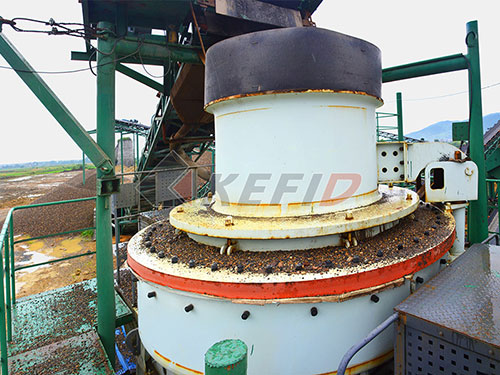
Screening: Throughout this process, vibrating screens are used to separate crushed material into different size fractions (e.g., 0-5mm, 5-10mm, 10-20mm). Oversized material is recirculated back through the crushers in a closed-loop system to maximize yield and ensure product uniformity.
Washing: In some plants dedicated to producing high-quality plastering sand or concrete sand, sand washing systems are integrated to remove fine dust and impurities that could compromise the integrity of construction materials.
Omani crusher plants range from small-scale operations serving local markets to large-scale facilities with production capacities exceeding several thousand tons per day. Many are strategically located near major development corridors—such as those leading from quarries in Al Batinah to Muscat or from interior regions to Duqm—to minimize logistical costs.
Recognizing both its importance and potential environmental impact,the Omani government has established a comprehensive regulatory framework primarily overseen by the Ministry of Energy and Minerals (MEM), formerly under the Public Authority for Mining (PAM). Key regulatory aspects include:
While enforcement continues to evolve,the regulatory push aims to mitigate key challenges such as visual scarring,dust pollution,and water consumption,promoting sustainable mining practices within this extractive industry.
The economic footprint of Crusher Oman extends far beyond simply selling rocks.It is an engine for job creation,captial investment,and downstream industrial activity.The sector provides direct employment for thousands across roles in geology,machine operation,truck driving,laboratory quality control,and management.Furthermore it stimulates demand in ancillary industries including heavy equipment supply (Caterpillar,Sandvik etc.),logistics & transportation services,maintanence workshops,and explosives manufacturing.The revenues generated through licensing fees,taxes,and royalties contribute directlyto national coffers,supporting public services.Moreover,a stable domestic supplyof competitively priced aggregates insulates Oman’s construction economyfrom volatile international market pricesfor building materials.This stabilityis crucialfor maintaining momentumin both public infrastructure projectsand private real estate development.In essence,a healthy crushing sectoris indicativeofa healthy construction industrywhich itselfis abarometerfor overall economic activityin thenon-oil sectors–a key goalof Vision2040
To remain competitiveand compliant,Omani crusher operationsare progressively adopting advanced technologies.Automation systemsare being integratedinto crushingandscreening circuitsfor optimized productionefficiencyand energy consumption.Modernplantsutilize Programmable Logic Controllers(PLCs)and SCADA systemsfor real-time monitoringof equipment performance.Predictive maintanceusing IoT sensorshelps prevent unplanned downtimeby identifying potential mechanical failuresbefore they occur.GPS trackingof fleet vehiclesenhances logistics managementensuring timely deliveryto project sites.Furthermorethereis growing interestin developing manufactured sand(m-sand)as asustainable alternativeto natural wadi sandthe extractionof whichcan have significant ecological consequenceson local water tablesand ecosystems
Looking aheadthe future trajectoryof Crusher Omantied directlyto national priorities.The ongoing developmentof Special Economic Zones(SEZs)like Duqmand Al Mazunahwill require sustainedmaterial supply.Similarlythe nation’sambitious tourism strategywhich involvesbuilding new resortsand upgrading heritage sitesrelies onthis foundational industry.As Omanshifts towards renewable energyprojectslike solar farmsand wind turbinestheir constructiontoo will dependon locally sourcedaggregatesfor foundationsand access roads
In conclusion,Crusher Omansymbolizes much morethan an industrial processit representsa critical nexusbetween natural resource endowmentnational ambitionandeconomic resilienceThrough continuous improvementin operational efficiencyenvironmental complianceand technological adoptionthis vital sectoris poisedto continue servingas an indispensable pillar supportingthe Sultanate’sjourney towardsa prosperousand sustainable future
Lorem ipsum dolor sit amet, consectetur adipisicing elit. Consectetur sequi saepe ut sunt eveniet perferendis excepturi, iste obcaecati. Qui tempore hic sed quia soluta obcaecati vel.