
The journey of a diamond from a rough, unassuming stone embedded deep within the earth to a brilliantly cut and polished gem is one of the most demanding processes in the mining industry. Central to this transformation is a stage that seems counterintuitive to the uninitiated: crushing. The application of immense, controlled force to break down diamond-bearing ore is not merely a step in the process; it is the foundational operation upon which the entire recovery system depends. Crushers for diamond mining are highly specialized pieces of equipment, engineered not just for brute strength but for precision, efficiency, and, most critically, the preservation of the valuable crystals they seek to liberate.
This article provides a comprehensive overview of crushers in diamond mining, detailing their function within the processing circuit, the specific types employed at various stages, their operational principles, and the critical design considerations that differentiate them from crushers used in bulk commodity mining.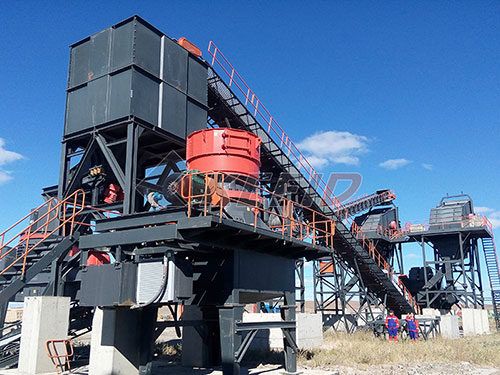
In most mining operations, such as those for copper or iron ore, the primary goal of crushing and grinding is to reduce the particle size to a fine powder to facilitate mineral separation. Diamond mining presents a unique paradox. The ore must be broken down sufficiently to liberate the diamonds from their host rock (kimberlite or lamproite), but excessive force or improper methods can fracture the diamonds themselves, drastically reducing their value. A single large gem-quality diamond can be worth exponentially more than its weight in smaller industrial-grade fragments.
Therefore, the overarching philosophy in diamond ore comminution (the technical term for crushing and grinding) is selective liberation. The aim is to break the rock along natural grain boundaries, freeing the diamonds while minimizing any contact with or impact on the hard but brittle crystals. This principle dictates every aspect of crusher selection and circuit design.
Diamond processing plants typically employ a multi-stage crushing circuit, often followed by a milling circuit. Each stage reduces the ore to a smaller size range and is optimized for a specific task.
1. Primary Crushing: The First Line of Size Reduction
The process begins at the mine face, where large blasts break the kimberlite ore into manageable blocks, often up to 1-1.5 meters in diameter. Primary crushers are responsible for accepting this run-of-mine (ROM) material and reducing it to a top size of approximately 150-250 mm.
2. Secondary Crushing: Further Reduction for Liberation
The product from the primary crusher is conveyed to secondary crushing units. The goal here is further size reduction to a top size of around 50-75 mm, increasing the degree of liberation for larger diamonds.
3. Tertiary Crushing and Milling: The Final Stage of Liberation
After secondary crushing, much of the ore may be ready for concentration. However, some plants employ tertiary crushing or milling circuits using specialized equipment designed specifically for diamond preservation.
The choice of crusher type is only one part of equation; how they integrated into plant crucial: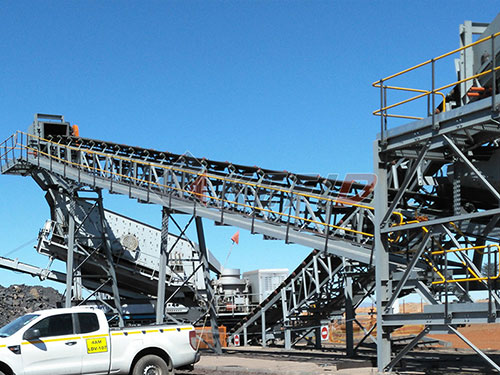
1.Diamond Preservation Technology: Modern plants incorporate several technologies mitigate damage:
2.Tramp Metal Removal: Unwanted metal e.g., drill bits shovel teeth catastrophic any downstream crusher especially cone HPGR Sophisticated metal detectors powerful magnets installed before each critical stage trigger shutdown eject tramp metal before causes severe damage
3.Wear Part Materials Metallurgy: Kimberlite extremely abrasive leading rapid wear liners mantles concaves Using advanced manganese steels chromium white irons ceramic composites extends operational life reduces frequency costly shutdowns replacement parts
4.Automation Control Systems: Modern PLC-based control systems monitor power draw pressure feed rates optimize performance ensure consistent product size prevent choking overloading Maximizing efficiency directly correlates lower energy consumption per tonne processed longer equipment lifespan
Crushers are far more than simple rock-breaking machines within context diamond mining represent sophisticated carefully selected engineered components integrated into holistic recovery strategy Their operation balanced act applying sufficient force liberate world’s hardest natural substance while simultaneously treating with fragility crystalline structure makes valuable Through staged approach using robust jaw cone gentle HPGR technology coupled advanced sorting early recovery modern diamond processing plants achieve remarkable feat transforming tonnes barren rock handful precious gems testament engineering precision underpins entire industry
Lorem ipsum dolor sit amet, consectetur adipisicing elit. Consectetur sequi saepe ut sunt eveniet perferendis excepturi, iste obcaecati. Qui tempore hic sed quia soluta obcaecati vel.