
The crusher device stands as a cornerstone of modern industrial processing, a fundamental piece of equipment whose primary function is the reduction of large, solid materials into smaller, more manageable fragments. Its significance permeates a vast array of critical sectors, including mining, aggregate production, construction, recycling, and chemical processing. The underlying principle is universal: to apply a mechanical force, sufficient in magnitude to overcome the internal cohesive strength of the material, thereby effecting its fracture. This article provides a detailed examination of crusher devices, delving into their operational principles, the major types prevalent in industry, key selection criteria, and their diverse applications.
The process performed by a crusher is known as comminution—the intentional breaking of solid rocks and ores through the application of external forces. The efficiency and mechanism of this process are governed by several key principles:
Applied Forces: Crushers primarily utilize one or a combination of three fundamental mechanical forces:
Breakage Behavior: When force is applied to a rock particle, it absorbs energy until its internal stress exceeds its strength limit. The resulting breakage can be single-stage (shattering into several pieces) or multi-stage (progressive fragmentation). The final product’s size distribution is influenced by the type of force applied and the material’s inherent properties.
Reduction Ratio: A critical performance metric for any crusher is its reduction ratio—the ratio of the feed size to the product size. It quantifies the degree of size reduction achieved in a single crushing stage. Higher reduction ratios often require specialized crusher designs or multiple crushing stages in sequence.
Crushers are categorized based on their working principles and stage of application—primary, secondary, tertiary, or quaternary.
A. Primary Crushers
These are heavy-duty machines designed to handle the largest feed material directly from the mine or quarry face.
Jaw Crusher: A quintessential primary crusher, the jaw crusher operates on a simple yet robust compression principle. It consists of two vertical jaws: one stationary (fixed jaw) and one that moves back and forth (swing jaw). The material is fed into the top of the “V”-shaped chamber and is crushed progressively as it moves downward through the narrowing space until it is small enough to escape from the bottom discharge opening (closed-side setting). Jaw crushers are renowned for their reliability, high capacity, and ability to process very hard and abrasive materials.
Gyratory Crusher: Functionally similar to a jaw crusher in that it uses compression, the gyratory crusher is distinguished by its design. It consists of a long, spindle-shaped central shaft with a crushing head (mantle) that gyrates within a concave hopper. The gyrating motion continuously changes the gap between the mantle and concave, compressing and fracturing the material. Gyratory crushers are typically more expensive than jaw crushers but offer higher throughput capacities for large-scale mining operations and are often more efficient in continuous feeding scenarios.
B. Secondary and Tertiary Crushers
These units further reduce material after primary crushing to achieve finer product sizes and specific particle shapes.
Cone Crusher: Perhaps the most versatile secondary/tertiary crusher; cone crushers operate on a similar principle to gyratory crushers but on a smaller scale with some key differences. The crushing head gyrates within a bowl-shaped concave. They are available in various configurations: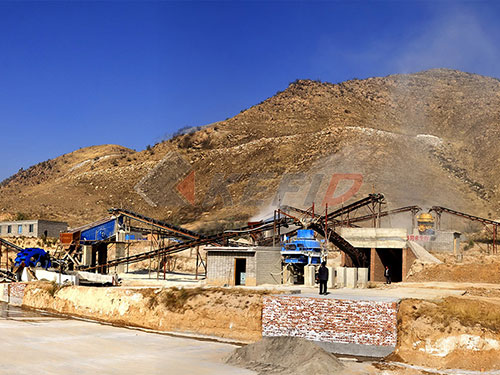
Impact Crusher: These crushers utilize impact force as their primary breaking mechanism.
Roll Crusher: A simpler design consisting of two counter-rotating cylinders (rolls). Material is drawn between the rolls and crushed by compression and attrition. Roll crushers offer precise control over product size but have lower capacity and are best suited for soft to medium-hard materials with low abrasiveness.
Choosing an appropriate crusher device requires careful consideration beyond mere capacity requirements:
The utility extends far beyond traditional rock breaking:
1.Mining And Mineral Processing : Essential liberating valuable minerals from waste rock before further beneficiation stages .
2.Aggregate Production : Foundation construction industry producing crushed stone sand gravel used concrete asphalt base layers roads buildings .
3.Recycling : Specialized shredders impactors crush demolition debris concrete asphalt bricks transforming waste valuable recycled aggregates reducing landfill dependence .
4.Chemical Pharmaceutical Industries : Used create fine powders from raw chemicals ensuring consistent reactivity dissolution rates .
Modern evolution focuses heavily automation sustainability energy efficiency :
In conclusion,the seemingly simple concept embodied within term “crusher device” belies immense technological sophistication operational diversity underpinning much global infrastructure economic activity . From massive stationary installations processing thousands tons hour compact mobile units repurposing urban waste continuous innovation ensures these machines remain indispensable tools shaping built environment managing planetary resources responsibly efficiently . Understanding intricate interplay between principles design application crucial selecting deploying right technology meet specific industrial challenges today tomorrow alike .
Lorem ipsum dolor sit amet, consectetur adipisicing elit. Consectetur sequi saepe ut sunt eveniet perferendis excepturi, iste obcaecati. Qui tempore hic sed quia soluta obcaecati vel.