Crushed Aggregate in Concrete: A Comprehensive Analysis
Concrete, the most ubiquitous construction material on the planet, is a composite substance whose properties are fundamentally defined by its constituent parts. While cement paste provides the binding matrix, it is the aggregate—making up 60% to 80% of the concrete’s volume—that forms the skeletal backbone, dictating its strength, durability, and long-term performance. Among the various types of aggregate, crushed aggregate stands as a cornerstone of modern concrete technology. This article provides a comprehensive examination of crushed aggregate, delving into its production, characteristics, advantages over its natural counterpart (gravel), and its profound influence on the properties of both fresh and hardened concrete.
Definition and Production
Crushed aggregate is a coarse granular material produced artificially through mechanical means. It originates from large rocks, boulders, or oversized gravel that are extracted from quarries. These source materials are typically dense, durable bedrock such as granite, limestone, trap rock, or sandstone. The production process involves a series of stages:
- Drilling and Blasting: The bedrock is drilled and strategically blasted to break it into manageable-sized pieces.
- Primary Crushing: These large rocks are fed into primary crushers (e.g., jaw crushers) that reduce them to smaller fragments, typically around 6 to 10 inches in diameter.
- Secondary and Tertiary Crushing: The material is then passed through secondary (e.g., cone or impact crushers) and sometimes tertiary crushers to achieve the desired gradation. This stage is critical as it controls the particle size distribution.
- Screening: The crushed material is passed over a series of screens with progressively smaller openings to separate it into various size fractions (e.g., ¾”, ½”, 3/8”).
- Washing (Optional): In some cases, aggregates are washed to remove deleterious materials like clay coatings, silt, or fine dust that could impair the bond with the cement paste.
The key outcome of this mechanical crushing process is the creation of particles with angular, rough-textured surfaces and a multitude of fractured faces.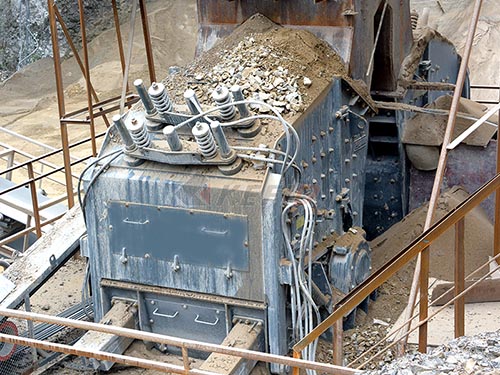
Key Characteristics Influencing Concrete Properties
The properties imparted by crushed aggregate to concrete are a direct result of its physical and geometric characteristics: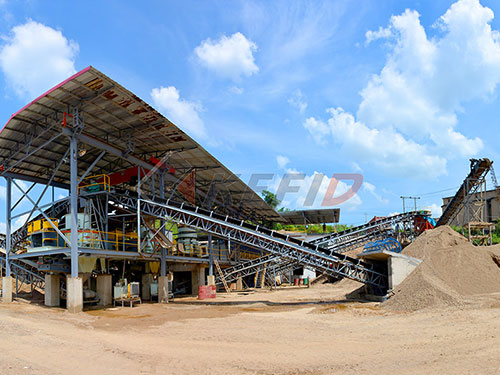
-
Particle Shape and Surface Texture: Unlike the smooth, rounded surfaces of naturally weathered river gravel, crushed aggregate particles are angular and possess a rough surface texture. This geometry has several critical implications:
- Enhanced Bond Strength: The rough surface provides a much larger surface area and superior mechanical interlock with the cement paste. This significantly improves the bond strength at the aggregate-paste interface, which is often the weakest link in concrete.
- Improved Load-Bearing Capacity: The angular particles interlock with one another within the concrete matrix, creating a more rigid internal structure that resists deformation under load more effectively than rounded particles.
-
Gradation: This refers to the particle size distribution of the aggregate blend. A well-graded aggregate—containing a continuous range of particle sizes from the largest coarse aggregate down to fine sand—is essential for producing dense, strong concrete. A proper gradation minimizes the void space between particles, reducing the amount of cement paste required to fill these voids and resulting in a more economical and less permeable mix.
-
Strength and Toughness: The intrinsic strength of the parent rock directly influences the compressive strength of the concrete. Aggregates must be significantly stronger than the surrounding cement matrix to carry the imposed loads effectively.
-
Cleanliness and Soundness: Aggregates must be free from harmful amounts of clay lumps, shale, coal, pyrites, or other chemicals that can cause staining, pop-outs (D-cracking), or disruptive expansion within the concrete.
Advantages Over Rounded Gravel (Natural Aggregate)
The choice between crushed stone and rounded gravel is a fundamental one in mix design. While gravel has its applications (notably in workability), crushed aggregate offers distinct advantages for high-performance applications:
- Superior Compressive and Flexural Strength: The enhanced inter-particle locking and bond strength translate directly into higher compressive strength for a given water-cement ratio. More importantly for pavements and slabs-on-grade is flexural strength—the ability to resist bending—which is markedly improved by angular aggregates.
- Higher Shear Strength: The internal friction generated by angular particles gives concrete made with crushed aggregate superior resistance to shear forces.
- Enhanced Durability in Pavements: For rigid pavements subject to heavy traffic loads,the interlocking structure resists rutting and permanent deformation under repeated loading.
- Better Performance in Skid-Resistant Applications: The rough texture at both micro (particle surface) and macro (pavement surface) scales provides better skid resistance for driving surfaces.
- Sustainability: Using locally quarried rock reduces transportation emissions compared to hauling gravel from distant riverbeds or glacial deposits.
Considerations and Potential Challenges
Despite its numerous benefits,the use of crushed aggregate is not without considerations that must be managed during mix design:
- Workability: This represents one of trade-offs.The angular shapeand rough texture increase internal friction,makingthe concreteless fluidand more difficultto placeand consolidatecomparedtoa mixwith smoothroundedgravel.Fora givenwatercontent,a crushedaggregateconcretewill havea low slump.To achieveequivalentworkability,the mixmayrequirea higherwatercontentor morecementpaste(whichcanincreasecostandshrinkage).Themodernsolutionis theregulateduseof high-range water-reducing admixtures(superplasticizers),whichcanrestoreworkabilitywithoutcompromisingthe water-cementratioandstrength.
- Water Demand: As mentioned,the increasedsurfaceareaandangularitytendto increasethe water demandof themixfor agivenworkability.This must becarefullymanaged,becauseanuncontrolledincreaseinwatercontentdirectlylowersconcretestrengthandincreasespermeabilityandshrinkage.
- Finishing (for flatwork): The harshnessof themixcansometimesmakefinishingslabsslightlymorechallengingfortheconcretefinishercomparedtoasmoothergravelmix.
Applications in Modern Concrete Construction
Crushedaggregateisthepreferredchoiceinawiderangeofdemandingapplicationswhereperformanceanddurabilityareparamount:
- Structural Concrete: In columnsbeams,andfoundationswherehighcompressivestrengthisrequiredthesuperiorbondstrengthandinternalstructureprovidedbycrushedstoneareinvaluable
- Pavement Concrete(RigidPavement): Forhighwaysairportrunways,andindustrialfloors,theenhancedflexuralstrengthandresistancetodeformationmakecrushedaggregateindispensable
- High-StrengthandPerformanceConcrete(HSC/HPC): Theseformulationsrelyontheoptimumpackingofstrongangularaggregatestominimizevoidsandcreatemicrostructurallydenseimpermeableconcrete
- Pre-castandPrestressedConcrete: Manufacturingpre-castelementslikedouble-teebeamsandsolidwallpanelsrequiresearlyhighstrengthwhichisfacilitatedbytheuseofhigh-qualitycrushedaggregate
- Mass Concrete:Inlargevolumepourssuchasdamsfoundationsmatsslabsorsubstructurestheinterlockingnatureoftheaggregatereducestheriskofsegregationduringplacement
Conclusion
Crushedaggregateismorethanjustafillerinconcrete;itisafundamentalengineeredcomponentthatdictatesthematerial’smechanicalpropertiesstructuralintegrityandlong-termservice lifeItsangulargeometryroughsurface textureandcontrollablegradationmakeit asuperioroptionforvirtuallyallstructuralandhigh-performanceapplicationsdespitetheminorchallengesrelatedtoworkabilitythatcanbeeffectivelymitigatedwithmodernadmixturesTheunderstandingofitspropertiesandtheirinteractionwiththecementpasteiscentraltothescienceofconcretemixdesignenablingengineerstoformulatematerialsthatmeettheever-increasingdemandsforstrengthdurabilityandsustainabilityinconstruction
