
In the world of aggregate production and mineral processing, the terms “cone crusher” and “secondary crusher” are frequently used, often leading to confusion for those outside the industry. It is crucial to understand that this is not a direct comparison of equals. A cone crusher is a type of machine, defined by its specific mechanical action and design. In contrast, a secondary crusher describes a stage in the multi-stage crushing circuit, defined by its function and position.
Therefore, the most accurate and professional discussion revolves around the role of the cone crusher within the secondary crushing stage, while comparing it to other machine types that can fulfill the same role. This article will delve into the principles of comminution, the specific design and operation of cone crushers, their advantages and limitations, and a comparative analysis with other prominent secondary crushing equipment like impact crushers and jaw crushers configured for secondary duty.
Crushing is rarely a single-step process. To achieve the desired product size, shape, and gradation efficiently, raw material is progressively reduced in a series of stages:
The secondary crushing stage is therefore critical for overall plant efficiency. An ill-suited secondary crusher can become a bottleneck, limit production yield of valuable products, and produce poor-shaped aggregate that may be unsellable.
The cone crusher is one of the most prevalent technologies used in secondary crushing applications globally. Its operation is based on a fundamental principle: continuous compression.
Design and Operating Principle:
A cone crusher consists of a fixed concave (or bowl) and a gyrating mantle mounted on an eccentric shaft. As the shaft rotates, the mantle moves in an elliptical path against the concave. The feed material enters the top of the crusher and is progressively crushed as it falls through the constantly narrowing chamber between the mantle and concave. The final product size is determined by the closed-side setting (CSS)—the smallest distance between the mantle and concave at their closest point during the cycle.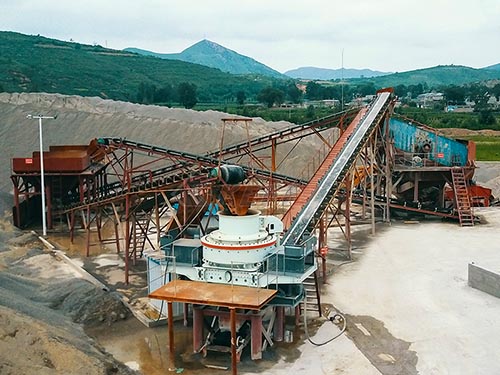
Key Characteristics:
Advantages:
Limitations:
To objectively evaluate a cone crusher’s place in secondary crushing requires comparing it directly with its main alternatives.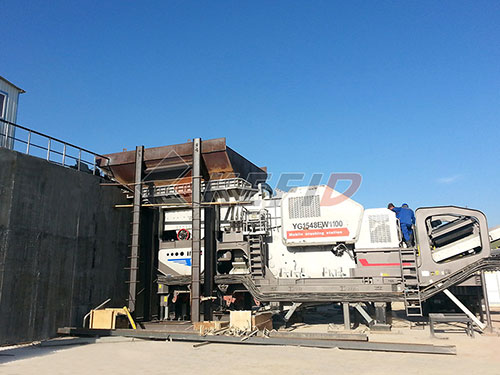
A) Horizontal Shaft Impact Crusher (HSI)
The HSI operates on a fundamentally different principle: impact breaking.
B) Jaw Crusher Configured for Secondary Duty
While primarily primarycrushers certainjawcrusherstypicallysmaller oneslike thosewithasingle-toggle designcanbeusedinsecondaryroles
Principle:Compressionbreakingbetweenafixedandamovingjawplate
ComparisonwithConeCrushe
Simplicity:Jawcrushersaremechanicallysimplerandeasiertomaintain
LowerHeadroom:Theyrequirelessverticalheightmakingthemgoodforportableplantsormobileapplicationswhereheightisaconstraint
LowerCapacityandProductShape:Generallytheyofferlowercapacitythanaconecrusherofsimilarsizeandproduceevenmoreelongatedparticlesmakingthemlessidealforhigh-qualityaggregateproduction
Thedebatebetween”conecrushervssecondarycrushe”isultimatelymootThesecondarycrushingstageisafunctionandtheconecrusherapossibletooltofulfillitTheselectionoftheappropriatetool—whetherconeimpactorjaw—isacriticaldecisionbasedonacomprehensiveanalysisofoperationalparameters
Hereisageneralguidelineforselection:
ChooseaConeCrusheroveranHSIwhen:
Thefeedmaterialishardandhighlyabrasiveeggranitebasalt
Consistentproductgradationismorecriticalthanperfectcubicity
Minimizingwearpartcostsisapriorityoverinitialcapitalinvestment
Productionofexcessivefinesisanundesirableoutcome
ChooseanHSICrusheroveraConewhen:
Thematerialissetto moderatelyabrasiveeglimestonedolomite
Superiorparticlecubicityisthemostimportantfactorforthefinalproductegforasphaltorncreteaggregates
Versatilityisneededtorecyclematerialslikedemolishedconcreteorasphalt
Higherfinesproductionisacceptableorevendesirable
Inmanymodernhigh-volumeprocessingplantsitiscommonstoseeacombinationofthesetechnologiesForinstanceaconecrusherexcelingatreducinghardabrasiverockmaybeusedinasecondarystagefollowedbyanHSIintertiarystagetoperfecttheparticleshapeThisoptimizesthestrengthsofeachtechnologytodeliverafinalproductthatmeetsexactspecificationswhilecontrollingoperatingcosts
Ultimatelythereisnouniversal”bestchoice”Theoptimalsecondarycrushingsolutionistheonethatalignswiththespecificoreorquarryfeedcharacteristicsdesiredproductspecificationsproductiontargetsandoveralleconomicsoftheoperation
Lorem ipsum dolor sit amet, consectetur adipisicing elit. Consectetur sequi saepe ut sunt eveniet perferendis excepturi, iste obcaecati. Qui tempore hic sed quia soluta obcaecati vel.