
The commercial stone crusher machine is far more than a simple tool of brute force; it is a sophisticated, engineered cornerstone of modern infrastructure and development. Its manufacturing represents a critical intersection of metallurgy, mechanical engineering, dynamics, and digital technology. This industry supplies the essential equipment that transforms raw, quarried rock into the fundamental aggregates—crushed stone, sand, and gravel—that form the literal foundation of our built environment. From skyscrapers and highways to bridges and railways, the journey of construction begins with these powerful machines.
At its heart, crushing is the process of reducing large rocks into smaller, specific-sized fragments through the application of mechanical force. The manufacturing of crushers is dictated by the fundamental crushing methods they employ:
Compression Crushers: These apply slow, immense pressure to fracture rock between a stationary and a moving surface.
Impact Crushers: These utilize high-speed impact rather than pressure, ideal for less abrasive materials and producing a more cubical product.
Cone Crushers: An advanced evolution offering finer control over product size and shape. Modern cone crushers incorporate hydraulic systems for adjusting the closed-side setting (CSS) under load, clearing tramp metal, and providing overload protection. Their manufacturing involves complex castings for the main frame and bowls, advanced liner profiles made from proprietary alloys, and sophisticated hydraulic and lubrication systems.
The production of a commercial stone crusher is a multi-stage process demanding rigorous quality control at every step.
Design & Engineering: This phase uses advanced CAD (Computer-Aided Design) and FEA (Finite Element Analysis) software to simulate stresses, optimize weight-to-strength ratios, predict wear patterns, and ensure kinematic efficiency. CFD (Computational Fluid Dynamics) may be used for dust suppression and cooling system design.
Material Selection & Procurement: Durability is non-negotiable. Primary frames are constructed from high-grade, weldable steel plate (e.g., ASTM A36 or higher). Critical wear parts—jaw plates, concaves, mantles, blow bars—are cast from specialized abrasion-resistant steels like Austenitic Manganese Steel (12-14% Mn), Martensitic steel with chrome additions (18-22% Cr), or composite alloys offering different toughness/abrasion resistance balances.
Fabrication & Machining: Heavy-duty CNC plasma cutters shape steel plates precisely. Welding is performed using submerged arc welding (SAW) or flux-cored arc welding (FCAW) for deep penetration on thick sections; procedures are certified to international standards like ISO 3834 or EN 1090. Massive CNC boring mills and lathes machine bearing housings, shaft seats, and mating surfaces to micron-level tolerances to ensure perfect alignment.
Casting & Forging of Wear Parts: Wear components are produced in dedicated foundries using electric arc furnaces for precise alloy control. Sand casting or investment casting techniques are employed based on part complexity. Post-casting heat treatment (quenching & tempering) is crucial to achieve desired microstructures like martensite or austenite.
Assembly & Integration: Skilled fitters assemble machined components onto the frame: mounting massive spherical roller bearings onto shafts precisely fitted into housings; installing motors; aligning drive belts or gear couplings; integrating hydraulic power packs; mounting electrical panels with PLCs (Programmable Logic Controllers).
6.Testing & Quality Assurance: Before shipment,crushers undergo rigorous testing.Functional tests check all moving parts.Hydraulic systems are pressure-tested.Electrical systems are verified.Some manufacturers conduct “no-load” spin tests,and increasingly,factory acceptance tests(FATs)with simulated material may be performed using test rigs.
The industry has moved far beyond simple mechanical devices.Today’s manufacturing incorporates:
The market is served by global giants(Sandvik,Mesto,Terex,Trio)and strong regional players.The supply chain spans continents:specialtysteelfromEurope,wearingartfoundriesinAsiaandtheAmericas,hightorquegearboxesfromspecializedsuppliers,andgloballogisticsforfinaldelivery.Geopoliticalfactors,tariffs,andrawmaterialcosts(e.g.,steel,pigiron)pricesdirectlyimpactmanufacturingcostsandpricingstrategies.Demandiscloselytiedtoglobalconstructionactivityinfrastructureinvestmentminingcyclesmakingtheindustrycyclicalinnature。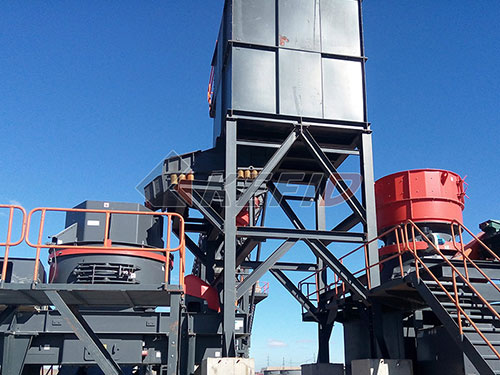
Manufacturers navigate several persistent challenges:
Commercial stone crusher machine manufacturing is not merely about building heavy metal boxes.Itisanengineeringdisciplinethatcontinuouslyevolvestobalancetheextremeforcesofnaturewiththerequirementsofmodernconstructionandefficiency。Eachmachineistheembodimentofdecadesofaccumulatedknowledgeinmaterialssciencemechanicaldesignandprocesscontrol。Astheworldcontinuestobuildupgradeandrecycleitsinfrastructure,themanufacturersofthesemachineswillremainpivotal,drivinginnovationtoproducetheaggregatesneededforthefutureinever-moreefficient,reliable,andsustainableways。Thenextgenerationofcrusherswilllikelybemoreautonomousmoreconnectedtothewiderplantecosystemandevenmorepreciseintheirfunction,ensuringthatthisindustrialbackboneremainsstrongandsupportiveforgenerationstocome。
Lorem ipsum dolor sit amet, consectetur adipisicing elit. Consectetur sequi saepe ut sunt eveniet perferendis excepturi, iste obcaecati. Qui tempore hic sed quia soluta obcaecati vel.