The Commercial Iron Ore Crushing Plant: A Deep Dive into Wholesale Pricing Dynamics

In the global industrial ecosystem, iron ore stands as a foundational pillar, feeding the vast steel production machinery that builds our world. At the heart of transforming raw, mined ore into a transportable and blast furnace-ready commodity is the Commercial Iron Ore Crushing Plant. For mining companies, investors, and industry procurement specialists, understanding the wholesale price of such a plant is not about a simple sticker price; it’s a complex calculus of capacity, technology, operational philosophy, and long-term value. This article provides a detailed, professional analysis of the factors influencing the wholesale pricing of these critical industrial assets.

1. Defining the Scope: What is a Commercial Iron Ore Crushing Plant?

A commercial iron ore crushing plant is a high-capacity, stationary or semi-mobile system designed to reduce mined iron ore (which can range from massive hard rock hematite or magnetite to softer goethite-rich ores) into a finely sized product for beneficiation and pelletizing or direct shipping. It is far more than a collection of crushers; it is an integrated material handling system typically comprising:

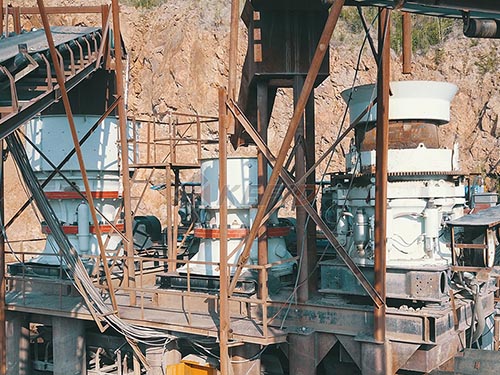
  • Primary Crushing Station: Often a gyratory or jaw crusher for initial size reduction from run-of-mine (ROM) dimensions.
  • Secondary & Tertiary Crushing Stages: Cone crushers and high-pressure grinding rolls (HPGR) for further reduction.
  • Screening Units: To separate material by size and ensure closed-circuit efficiency.
  • Material Handling Conveyors: The network linking all components.
  • Dust Suppression & Control Systems: Critical for environmental compliance and worker safety.
  • Electrical & Control Systems: Including advanced automation and process control software.
  • Structural Steel, Platforms, and Infrastructure.

2. The Core Determinants of Wholesale Price

The wholesale price for a complete plant can range from several million to over $100 million USD. This vast range is dictated by several interconnected factors:

A. Capacity and Throughput
This is the primary driver. A plant designed for 1,000 tonnes per hour (tph) will be fundamentally different—and exponentially more expensive—than one rated for 5,000 tph or 10,000 tph. Price does not scale linearly; larger capacities require heavier-duty components, more robust structural engineering, and more powerful drives.

B. Technological Configuration & Process Flow
The choice of technology stack significantly impacts cost.

  • Crushing Circuit Design: A traditional three-stage (jaw-cone-cone) circuit differs in capital and operational cost from a more modern two-stage circuit using an impact crusher or an energy-efficient HPGR circuit. HPGRs offer superior energy efficiency in downstream grinding but have higher initial capital costs.
  • Automation Level: A basic PLC-controlled plant costs less than one equipped with a full Plant Process Control (PFC) system, smart sensors for liner wear monitoring, and digital twin integration for predictive maintenance. This “smart plant” premium can be substantial but promises significant returns through optimized yield and reduced downtime.
  • Mobility Concept: A fully stationary plant requires extensive civil works (foundations). A modular or semi-mobile design on skid-mounted or trailer units may have higher upfront equipment costs but can reduce installation time and civil expenses, offering flexibility.

C. Ore Characteristics
The plant must be engineered for the specific ore.Commercial Iron Ore Crushing Plant Wholesale Price
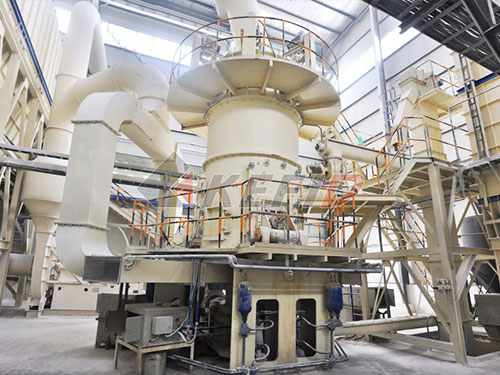
  • Abrasion Index & Work Index: Harder, more abrasive ores (like many magnetites) demand crushers with heavier-duty liners, specialized alloys (e.g., manganese steel), and more robust designs, increasing component costs.
  • Moisture & Clay Content: Sticky ores require special considerations in chute design, screening (possibly including scalping screens or rollers), and may necessitate washing modules, adding complexity and cost.

D. Supplier Profile & Scope of Supply
Wholesale pricing varies dramatically based on what is included in the package.

  • Engineering-Procurement-Construction (EPC) Turnkey Contract: This is the most comprehensive—and expensive—option. A single supplier takes full responsibility for design, equipment supply, construction, commissioning, and sometimes even training and initial operation guarantee. It offers price certainty but at a premium.
  • Equipment Package Only: The client purchases major machinery (crushers screens conveyors) from a wholesaler/integrator but manages civil works installation and commissioning separately This lowers the initial wholesale price but transfers risk and coordination burden to the buyer
  • Brand Equity: Established OEMs (Original Equipment Manufacturers) like Metso FLSmidth ThyssenKrupp Mining Technology etc command higher prices due to proven reliability global service networks and R&D investment Lower-cost alternatives may come from regional manufacturers or Chinese OEMs offering competitive pricing but with potential variances in after-sales support longevity

E Geographical Location & Logistics
Site location influences cost through

  • Freight & Import Duties Shipping massive components to remote mining regions e g Pilbara Western Australia West Africa or Northern Canada incurs enormous logistics costs
  • Local Labor & Construction Standards Compliance with local regulations union requirements and environmental codes adds variable costs
  • Climate Considerations Arctic conditions requiring enclosed heated structures or tropical climates with corrosion protection dictate specific design features

3 Understanding Price Components A Hypothetical Breakdown

For illustrative purposes consider a mid-range commercial plant rated at 2 500 tph for hematite ore

Cost Component Approximate Share of Total Key Influencers
Major Equipment Crushers Screens Feeders 35%-45% Capacity brand technology type alloy specifications
Structural Steel Platforms Buildings 15%-25% Design complexity site seismicity climate enclosures
Electrical Motors Drives Switchgear Automation 15%-20% Automation level drive technology VFDs power distribution
Engineering Project Management Procurement 10%-15% EPC vs equipment-only complexity of design
Installation Commissioning Civil Works 15%-25% *Note often excluded from pure wholesale equipment price Site remoteness labor rates foundation requirements

Crucial Distinction The true wholesale price often quoted by equipment suppliers covers primarily the first three rows The total installed cost which is the miners actual capital expenditure includes rows four and five often doubling or more the base equipment price

4 Market Trends Impacting Wholesale Pricing

Several macro-trends are reshaping cost structures

  • Energy Efficiency Focus Rising global energy costs make HPGRs and variable frequency drives VFDs more attractive despite higher CAPEX as they reduce long-term operating expenses OPEX
  • Digitalization Premium Investments in IoT sensors AI-powered optimization software and remote monitoring platforms are becoming standard line items adding to upfront cost but justified by throughput gains
  • Sustainability Mandates Dust containment systems water recycling plants noise suppression all add to capital cost but are non-negotiable for permitting
  • Supply Chain Volatility Post-pandemic geopolitical tensions continue to cause fluctuations in steel copper electronics prices directly impacting machinery manufacturing costs leading to price escalation clauses in contracts

5 Strategic Procurement Beyond Sticker Price

Astute buyers evaluate wholesale price through the lens of Life Cycle Cost LCC
1 Operational Cost OPEX Impact A cheaper plant with lower efficiency can incur millions in extra energy maintenance downtime over its lifetime
2 Availability & Reliability Premiums for robust design mean higher availability >92 crucial for high-volume operations where downtime costs exceed $100k per hour
3 Flexibility Can the plant handle future changes in ore body characteristics without major redesign Modular designs offer value here
4 After-Sales Service The value of readily available spare parts skilled field service technicians cannot be overstated It often justifies selecting established OEMsCommercial Iron Ore Crushing Plant Wholesale Price
Conclusion

The wholesale price of a commercial iron ore crushing plant is therefore not merely an invoice figure it represents a crystallized summary of technical choices operational priorities market positioning strategic foresight Ultimately it reflects how much you pay today versus what you will earn tomorrow over decades operation Investing wisely means looking beyond initial CAPEX engaging deeply with engineering partners conducting rigorous feasibility studies that weigh all technical options against their total lifecycle value In this high-stakes industry where margins are perpetually scrutinized selecting crushing plant based solely on lowest bid often proves most expensive path long run

Lorem ipsum dolor sit amet, consectetur adipisicing elit. Consectetur sequi saepe ut sunt eveniet perferendis excepturi, iste obcaecati. Qui tempore hic sed quia soluta obcaecati vel.