The Industrial Backbone: A Comprehensive Look at Commercial Gyratory Crusher Manufacturing
In the vast and demanding world of mineral processing, mining, and aggregate production, the primary crushing stage is a critical bottleneck that dictates overall circuit efficiency. Standing as the undisputed workhorses for high-tonnage, primary crushing applications are Commercial Gyratory Crushers. These massive, robust machines are engineering marvels designed to accept run-of-mine feed directly from trucks or shovels and reduce thousand-millimeter rocks to manageable sizes with relentless reliability. Their manufacturing is not merely an assembly process; it is a sophisticated fusion of metallurgical science, precision heavy engineering, digital design, and stringent quality control to create assets that must operate continuously under extreme abrasive and impact loads for decades.
1. Core Design Principle and Market Position
Unlike jaw crushers which use a compressive “chewing” motion, a gyratory crusher operates on a fundamental principle: a central vertical shaft with a long, wear-resistant manganese steel mantle gyrates eccentrically within a stationary concave bowl (or concaves). This gyratory motion creates a progressive crushing action—rocks are nipped and crushed multiple times as they descend through the continually narrowing gap between the mantle and concaves.
Commercial models are defined by their size (typically denoted by feed opening dimensions like 42×65, 54×75, 60×89 inches) and their application:
- Primary Gyratory Crushers: The largest units, handling thousands of tons per hour. They are often the first point of contact with mined material.
- Secondary Gyratory Crushers: Slightly smaller configurations for further reduction.
Their key advantages over other primary crushers include higher capacity (upwards of 10,000 t/h), lower unit power consumption at high throughputs, continuous crushing action leading to fewer fines generation in certain settings, and natural suitability for direct feed from haul trucks due to their deep chamber and large feed opening.
2. The Manufacturing Journey: From Raw Steel to Site Commissioning
A. Design & Engineering:
The process begins with advanced digital design and simulation. Using Finite Element Analysis (FEA), engineers model stress distributions in the main frame, top shell, and shaft under maximum load conditions to ensure structural integrity without excessive weight. Discrete Element Modeling (DEM) simulates material flow and crushing dynamics within the chamber to optimize cavity profiles for desired product size and throughput. This virtual prototyping phase is crucial for developing modern “Smart Crushers” equipped with sensors for real-time health monitoring.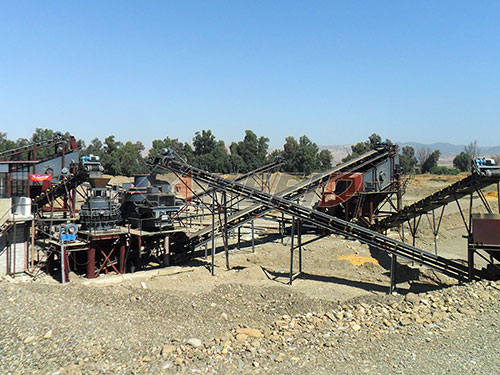
B. Material Selection & Metallurgy:
The choice of materials is paramount.
- Main Frame & Top Shell: Fabricated from high-strength, low-alloy steel plates via automated cutting (plasma/oxy-fuel) and submerged arc welding (SAW). These welds undergo rigorous non-destructive testing (NDT) like ultrasonic testing (UT) to ensure flawless integrity.
- Wear Parts – Mantle & Concaves: The heart of crushing performance. These are cast from austenitic manganese steel (typically 12-18% Mn), known for its exceptional work-hardening capability. As it is impacted during operation, its surface hardness increases dramatically while retaining a tough inner core. Advanced foundries use precise heat treatment in computer-controlled furnaces to achieve optimal microstructure.
- Eccentric Assembly & Main Shaft: Forged from high-grade alloy steel for superior fatigue resistance. The eccentric bushing is often made from bronze or specialized alloys with excellent bearing properties.
C. Machining & Assembly:
Precision machining on colossal scales defines this stage.
- The main frame’s bore must be machined to exacting tolerances to house the eccentric assembly perfectly.
- The main shaft undergoes turning, grinding, and milling to precise specifications.
- Key interfaces—like where the mantle attaches to the head assembly or where concaves seat into the top shell—are machined with extreme accuracy to ensure proper alignment and even load distribution.
Assembly is a meticulous process performed in dedicated heavy bays using overhead cranes capable of lifting hundreds of tons. It involves fitting massive bearings (both radial and thrust), installing lubrication systems with intricate internal galleries, mounting countershaft assemblies that drive the eccentric motion, and integrating hydraulic systems for adjustment (CSS – Closed Side Setting) and overload protection (tramp release).
D. Testing & Quality Assurance:
Before shipment, crushers undergo comprehensive testing.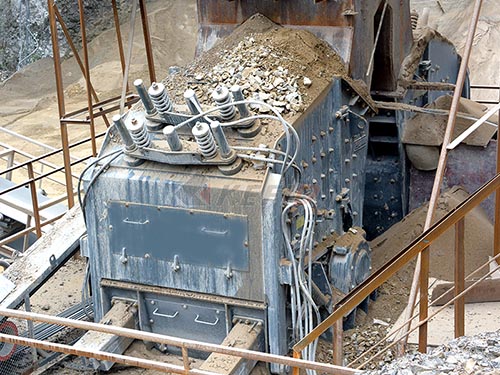
- Dry-run testing ensures all rotating components operate smoothly without load.
- The lubrication system is tested for flow, pressure, temperature control, and filtration efficiency—a critical system that prevents catastrophic failure.
- All safety interlocks and control systems are verified.
- Dimensional inspections confirm alignment per engineering drawings.
3. Key Technological Advancements in Modern Manufacturing
- Advanced Chamber Designs: Computer-optimized cavity profiles (e.g., non-choking concaves) maximize throughput while controlling product gradation and wear life.
- Integrated Automation & IoT: Modern crushers come equipped with programmable logic controllers (PLCs) linked to sensors monitoring power draw, pressure, temperature, CSS wear compensation via hydraulics). This data feeds into plant-wide optimization systems for predictive maintenance.
- Hybrid & Direct Drive Systems: Transition from traditional V-belt drives to gearless direct drives or hybrid systems improves energy efficiency reduces maintenance complexity
- Wear Monitoring Technologies: Laser scanning systems can create 3D profiles of mantle wear during maintenance shutdowns allowing for precise planning of part replacements
4. Major Global Manufacturers & Competitive Landscape
The market is dominated by a few global giants with extensive R&D capabilities:
- Metso Outotec (Superior™ MKIII series): A leader known for innovative designs like their “Smart Station” for setting adjustment
- FLSmidth (TS Gyratory Crushers): Focus on low service height designs facilitating easier maintenance
- ThyssenKrupp Industrial Solutions: Renowned for their particularly rugged designs featuring integrated jacking systems
Competition drives innovation in service life energy efficiency ease of maintenance Manufacturers compete not just on machine price but on total cost ownership which includes wear part life energy consumption availability
5 Challenges Facing Manufacturers
1 Sustainability Pressures: Reducing immense power consumption developing more efficient motors drives major focus Recycling worn manganese steel parts also key consideration
2 Supply Chain Complexity: Sourcing large forgings castings specialty bearings global projects requires robust resilient supply chains
3 Skilled Labor Shortage: Designing building maintaining these complex machines demands highly skilled engineers metallurgists welders machinists finding retaining talent ongoing challenge
4 Customization vs Standardization Balance: While standard models exist mines often demand customizations feed size product requirements necessitating flexible manufacturing approaches
Conclusion
Commercial gyratory crusher manufacturing represents apex heavy industrial engineering It seamlessly blends century-old mechanical principles cutting-edge digital technology produce machines essential global infrastructure raw material supply Future evolution will driven smarter more connected devices greater emphasis energy efficiency circular economy principles where every component from massive frame individual wear liner designed extended life recyclability As demand minerals aggregates continues grow so too will sophistication these formidable industrial titans ensuring they remain backbone material reduction well into future
