Ensuring Operational Excellence: A Comprehensive Guide to Quality Control for Coke Vibration Screen Dealers
In the high-stakes, continuous-process world of metallurgical coke production, the efficiency of screening operations is not merely a matter of productivity—it is a critical determinant of product quality, operational cost, and plant safety. At the heart of this process lies the coke vibration screen, a robust piece of equipment tasked with the precise separation of coke by size, ensuring that blast furnaces receive a consistent, optimally graded feedstock. For dealers specializing in these screens, quality control (QC) transcends being a simple checklist; it is the foundational pillar of their value proposition, reputation, and long-term viability. This article provides a detailed examination of the multifaceted quality control protocols that define a premier coke vibration screen dealer.
1. The Critical Role of Vibration Screens in Coke Production
Before delving into QC, one must understand the operating environment. Coke screening occurs post-quenching, where hot, abrasive, and often corrosive coke is rapidly sized into fractions (e.g., blast furnace coke, nut coke, breeze). Screens must withstand:
- Extreme Abrasion: Coke is highly abrasive, leading to rapid wear of decks, side plates, and liners.
- Impact Loads: Large coke lumps impose significant dynamic stress.
- Thermal Cycling: From quenching temperatures to ambient conditions.
- Dust and Moisture: Harsh environmental factors that can compromise mechanical and electrical components.
- 24/7 Operation: Demanding exceptional mechanical endurance and reliability.
A screen failure can cause downstream bottlenecks, contamination of size fractions (affecting blast furnace permeability), and costly unplanned shutdowns. Therefore, the dealer’s role is to supply not just equipment, but guaranteed uptime.
2. The Dealer’s Quality Control Framework: A Multi-Stage Approach
A professional dealer implements a rigorous QC system spanning the entire product lifecycle: from supplier selection to after-sales support.
Stage 1: Incoming Material & Component Control
The quality of the final assembly is dictated by the quality of its parts. Key controls include:
- Material Certification: Mandatory Mill Test Certificates (MTCs) for all structural steel (e.g., S355JR), verifying chemical composition and tensile strength. Wear-grade steels (Hardox, JFE Everhard) require additional hardness certification (Brinell scale).
- Precision Part Inspection: Critical components like vibrator shafts (for dynamic balance), bearing housings (for dimensional tolerance), and sieve deck panels are inspected using calibrated tools—micrometers, CMMs for complex parts, and surface roughness testers.
- Subassembly Testing: Vibrator motors or exciters are often tested on dedicated rigs before integration to verify power output, vibration amplitude/frequency consistency, and noise levels.
Stage 2: In-Process Manufacturing & Assembly QC
This phase ensures precision in fabrication and assembly: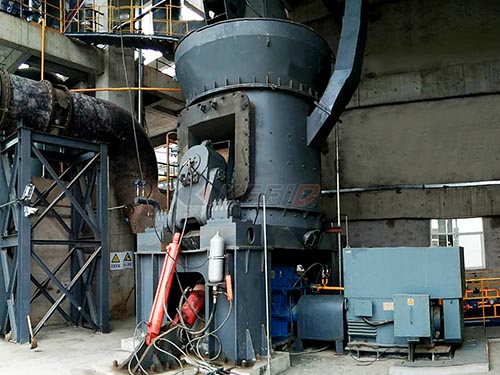
- Welding Integrity: Welding procedures must be qualified (per AWS/EN standards). Welders are certified. Critical welds on main frames and vibrator supports undergo 100% visual inspection (VT), with random or risk-based non-destructive testing (NDT) like Magnetic Particle Inspection (MPI) or Ultrasonic Testing (UT).
- Geometric Accuracy: The entire screen body is checked for squareness and flatness. Misalignment can cause uneven vibration distribution leading to premature failure.
- Dynamic Balancing: This is arguably the most critical single test. The entire vibrator assembly (shafts, bearings, eccentric weights) must be dynamically balanced to ISO 1940 G6.3 standard or better. Imbalance causes destructive vibrations transmitted to the supporting structure.
- Deck & Media Fit-Up: Sieve decks—whether polyurethane panels or woven wire mesh—must be tensioned uniformly without distortion or gaps that allow bypass (“short-circuiting”).
Stage 3: Pre-Dispatch Final Inspection & Testing
Before leaving the factory:
- Comprehensive Run-In Test: The assembled screen undergoes a no-load run-in test for 4-8 hours minimum. Parameters monitored include:
- Bearing temperature rise (must stabilize within limits).
- Vibration amplitude at all four corners (must be within ±10%).
- Noise level measurement.
- Current draw on drive motors.
- Paint & Corrosion Protection: Coating thickness is measured with dry film gauges. Systems often require abrasive-blasted surfaces with epoxy primers and polyurethane topcoats for corrosion resistance.
- Documentation Pack Verification: The “as-built” documentation pack—including General Arrangement drawings; foundation load diagrams; detailed part lists; maintenance manuals; lubrication charts; test certificates; warranty documents—is finalized.
Stage 4: Supplier & Supply Chain Management
A dealer’s QC extends to their own supply chain:
- Approved vendor lists for bearings (SKF, FAG), vibrator motors (Siemens, WEG), polyurethane components etc., based on historical performance data.
- Regular supplier audits focusing on their internal QC processes.
3. Beyond Hardware: The Quality of Technical Service
For a dealer product quality also encompasses intangible services:
- Accurate Sizing & Selection**: Providing screens matched to capacity requirements using proven calculation methods ensures optimal performance from day one
- Installation Supervision**: Ensuring proper installation according to supplied drawings prevents commissioning failures
- Training**: Comprehensive operator/maintenance training maximizes screen life
- After-Sales Support**: Availability of genuine spare parts responsive technical support predictive maintenance advice
Conclusion
For a coke vibration screen dealer quality control is not an isolated department function but an all-encompassing culture It represents commitment through every stage from raw material procurement final commissioning By implementing such rigorous multi-stage QC protocol dealers deliver far more than machinery They deliver operational certainty reduced total cost ownership enhanced safety metallurgical plants Ultimately this unwavering focus on quality builds trust becomes most powerful competitive advantage in demanding industrial marketplace where reliability non-negotiable
