
Chinese Stone Quarry Crushing Plant: A Comprehensive Overview of Processing Technology, Operational Dynamics, and Industry Evolution
Introduction
The People’s Republic of China stands as the world’s largest producer and consumer of construction aggregates, with an annual output exceeding 20 billion metric tons. Central to this staggering volume is the stone quarry crushing plant—a complex, multi-stage industrial system designed to transform raw rock extracted from open-pit mines into graded, market-ready aggregates for concrete, asphalt, road base, and railway ballast. This article provides a professional, objective examination of the Chinese stone quarry crushing plant, focusing on its processing architecture, key equipment, operational parameters, environmental compliance, and the technological shifts that have redefined the sector over the past two decades. The analysis is grounded in engineering principles, regulatory frameworks, and real-world operational data from major aggregate-producing provinces such as Zhejiang, Fujian, Hubei, and Hebei.
1. Raw Material Extraction and Feed Preparation
The processing chain begins at the quarry face, where drilling and blasting operations fragment the parent rock—commonly limestone, granite, basalt, diorite, or sandstone—into boulders ranging from 300 mm to over 1,200 mm in diameter. In modern Chinese operations, hydraulic drilling rigs equipped with down-the-hole (DTH) hammers or top-hammer systems are standard, with blast patterns designed to minimize overbreak and optimize fragmentation for downstream crushing efficiency. The blasted material is then loaded by hydraulic excavators (typically 30–80 metric ton class) into rigid dump trucks (40–100 metric ton capacity) for transport to the primary crusher.
A critical pre-processing step is the removal of overburden and deleterious materials. Chinese plants increasingly employ vibrating grizzly feeders ahead of the primary crusher. These feeders perform dual functions: they regulate the flow of material to prevent choke feeding, and their grizzly bars (spaced at 100–150 mm) scalp out fines and soil, which are diverted to a waste stockpile or used for site rehabilitation. This step is essential for protecting downstream equipment from abrasive wear and for maintaining product cleanliness.
2. Primary Crushing Stage
The primary crusher is the workhorse of the plant, reducing run-of-mine rock to a size suitable for downstream conveyors and secondary crushers. In China, the dominant primary crusher types are:
Jaw Crushers: The most common choice for hard, abrasive rocks (granite, basalt). Chinese manufacturers such as Shanghai Shibang, Zhengzhou Yifan, and Henan Liming produce jaw crushers with feed openings ranging from 600×900 mm to 1500×1800 mm. These machines operate on the principle of compression, with a fixed jaw and a reciprocating swing jaw. Typical reduction ratios are 4:1 to 6:1, yielding a product of 150–300 mm. Modern Chinese jaw crushers feature hydraulic wedge adjustment for closed-side setting (CSS) control, enabling rapid compensation for wear.
Gyratory Crushers: Used in ultra-large capacity plants (above 2,000 t/h), particularly in limestone-rich regions. Gyratory crushers offer a higher throughput per unit footprint and a more consistent product shape, but their capital and maintenance costs are significantly higher. Their use in China is concentrated in mega-quarries operated by state-owned enterprises or large private conglomerates.
Impact Crushers (Primary): For softer, less abrasive materials like limestone and dolomite, primary horizontal-shaft impact (HSI) crushers are preferred. They provide a higher reduction ratio (up to 15:1) and produce a more cubical product, but their wear parts (blow bars, impact plates) require frequent replacement—typically every 200–400 operating hours depending on silica content.
The primary crusher discharge is typically conveyed to a surge pile or directly to a secondary screening station. Surge piles (live storage capacity of 1,000–5,000 metric tons) are critical for decoupling the quarry’s intermittent blast cycles from the continuous downstream processing, thereby maximizing plant utilization.
3. Secondary and Tertiary Crushing: The Reduction Circuit
The reduction circuit is where the aggregate’s final gradation and shape are determined. In a typical Chinese configuration, the primary product is screened into two streams: oversize (+100 mm) and undersize (−100 mm). The oversize is fed to secondary crushers, while the undersize may bypass to tertiary stages or be used as a base product.
Secondary Cone Crushers: For hard rock, standard or short-head Symons-type cone crushers (e.g., spring cone crushers, hydraulic cone crushers) are ubiquitous. Chinese manufacturers (e.g., Shenyang Sanland, Zhejiang MP) produce cones with crushing forces up to 600 kN and throughputs of 200–800 t/h. The key operational parameter is the CSS, which is hydraulically adjusted to control product size. Modern Chinese cones are equipped with automatic overload protection, clearing systems, and real-time wear monitoring via pressure sensors.
Secondary HSI Crushers: In limestone plants, secondary HSI crushers with a reduction ratio of 8:1 are common. They are configured with two or three impact aprons, allowing fine-tuning of the product curve. The rotor tip speed (typically 35–45 m/s) is the primary variable controlling product fineness.
Tertiary VSI Crushers: Vertical-shaft impact (VSI) crushers have become standard in Chinese plants producing high-quality manufactured sand (0–5 mm) and cubical coarse aggregates. VSI crushers operate on the rock-on-rock or rock-on-anvil principle, with rotor speeds of 50–70 m/s. They are essential for meeting the stringent flakiness index requirements (≤10% for high-grade concrete) set by Chinese national standards (GB/T 14685-2022). Many Chinese VSIs now feature a “rock box” configuration to reduce wear costs and a cascade feed system to increase throughput.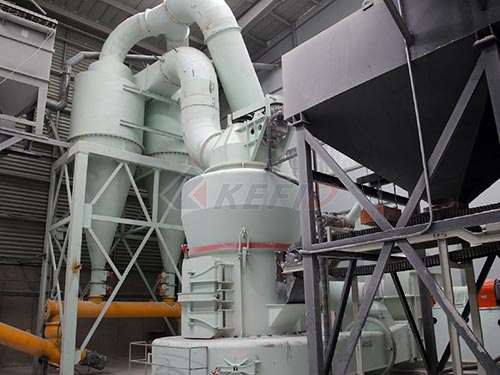
The crushing circuit is typically closed with a series of vibrating screens. Multi-deck screens (2–4 decks) with apertures ranging from 5 mm to 100 mm are arranged in a cascade to produce multiple product fractions simultaneously. In high-capacity plants, banana screens or circular-motion screens with a screening area of 20–30 m² are used to achieve separation efficiencies above 90%.
4. Screening, Washing, and Classification
Screening is not merely a sizing operation; it is a quality control gate. Chinese plants employ a combination of:
For applications requiring high cleanliness (e.g., concrete aggregates for hydraulic structures), washing is integrated. Log washers, screw classifiers, and hydrocyclones are used to remove clay, silt, and organic impurities. The wash water is typically recycled in a closed-loop system using thickeners and filter presses, in compliance with China’s stringent “zero liquid discharge” policies in water-scarce regions.
5. Dust Suppression and Environmental Control
The Chinese stone quarry crushing plant operates under some of the world’s most rigorous environmental regulations, particularly following the 2018 “Blue Sky Defense War” and the subsequent “Dual Carbon” (peak carbon and carbon neutrality) goals. Key environmental systems include:
6. Automation and Digitalization
The Chinese industry has rapidly adopted automation, driven by labor shortages and the need for consistent quality. Modern plants are equipped with:
7. Operational Efficiency and Maintenance Practices
The economic viability of a Chinese stone quarry crushing plant hinges on two metrics: cost per ton and availability. Best-in-class plants achieve a processing cost of RMB 8–15 per ton (including energy, wear parts, labor, and maintenance), with availability above 90%.
8. Regulatory Compliance and Safety
China’s Mine Safety Law (effective 2022) imposes strict requirements on quarry crushing plants, including:
9. Market Dynamics and Future Trends
The Chinese aggregate market is undergoing a structural shift from fragmented, small-scale operations to large, integrated, and environmentally certified plants. The government’s policy of “closing small mines and consolidating large ones” has reduced the number of licensed quarries from over 50,000 in 2010 to approximately 15,000 in 2024, while average plant capacity has tripled to 1,500 t/h.
Future trends include:
Conclusion
The Chinese stone quarry crushing plant is a marvel of industrial engineering, balancing high throughput, product quality, environmental stewardship, and economic efficiency. From the robust jaw crushers handling 1,000 mm boulders to the precision VSI crushers producing sand with a fineness modulus of 2.6–3.0, every stage is optimized through decades of operational experience and continuous technological innovation. As China’s infrastructure enters a phase of maintenance and urban renewal, the role of these plants will evolve—but their fundamental importance to the built environment remains unassailable. For engineers, operators, and investors, understanding the intricate workings of this machinery is not merely an academic exercise; it is a prerequisite for participating in one of the world’s most dynamic and demanding industrial sectors.
If you have any questions about our products, please feel free to contact us. We take all inquiries and suggestions very seriously.