The Integral Role of Chinese Slag Crusher Plant Suppliers in Global Steel and Sustainable Construction
Within the intricate ecosystem of global heavy industry and sustainable construction, Chinese suppliers of slag crusher plants have emerged as pivotal, yet often understated, players. Their role transcends simple equipment manufacturing; they are enablers of circular economies, critical partners for the world’s largest steel industry, and key contributors to technological advancement in material processing. A “slag crusher plant” is not a single machine but a complete processing system designed to crush, screen, and sometimes further process various types of slag—primarily blast furnace slag (BFS) and steel slag—into valuable aggregate materials used in cement production, road bases, and concrete.
The Industrial Backdrop: Why China?
China’s dominance in this niche sector is a direct consequence of its position as the world’s largest producer of crude steel, accounting for over half of global output. This massive industrial activity generates staggering volumes of metallurgical slag—estimated at hundreds of millions of tons annually. Historically considered waste, this byproduct presented a dual challenge: immense disposal issues and a significant opportunity for resource recovery.
Driven by stringent national policies on environmental protection, industrial solid waste utilization (with targets often exceeding 85% for steel slag), and sustainable development goals outlined in successive Five-Year Plans, the domestic demand for efficient slag processing solutions exploded. This created a fertile ground for domestic machinery manufacturers to innovate, scale up, and develop deep expertise. Chinese suppliers thus evolved not in isolation but as problem-solvers within the world’s most demanding and volume-intensive operational environment.
Anatomy of Expertise: Technological Capabilities and Product Range
The proficiency of leading Chinese suppliers lies in their ability to offer tailored, turnkey solutions. A modern slag crusher plant from a reputable Chinese manufacturer typically integrates several key components: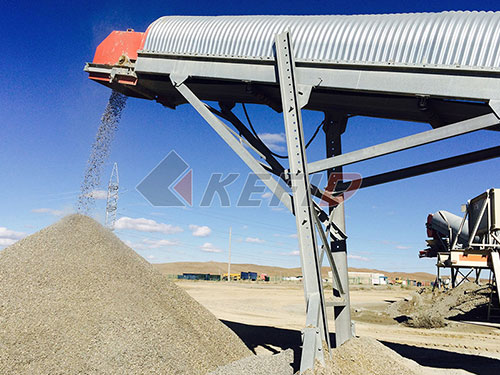
- Primary Crushing: Utilizing robust jaw crushers or powerful impact crushers to handle large, abrasive slag chunks directly from the steel mill.
- Secondary and Tertiary Crushing: Employing cone crushers or fine impact crushers to achieve the desired particle size reduction. Advanced hydraulic systems allow for easy adjustment and unblocking, crucial for handling unpredictable feed materials.
- Screening: Multi-deck vibrating screens precisely separate crushed material into different size fractions (e.g., 0-5mm, 5-10mm, 10-20mm).
- Iron Removal: A critical stage involving magnetic separators (suspended magnets or drum magnets) to recover residual metallic iron from the slag. This reclaimed metal is returned to the furnace, adding economic value and improving aggregate purity.
- Material Handling: A complete network of belt conveyors, feeders, and sometimes dust suppression systems.
- Control Systems: Increasingly automated PLC control panels for efficient operation with minimal manpower.
Leading suppliers have moved beyond standard catalog offerings. They engage in detailed material testing (often with samples sent by clients), process design based on specific slag characteristics (hardness, moisture content, metal content), and plant layout optimization for space-constrained steel mills.
Competitive Advantages in the Global Market
Chinese suppliers compete on a global scale based on several compelling advantages:
- Cost-Effectiveness: Leveraging mature supply chains for heavy castings, steel plates, motors, and bearings within China allows for significant cost advantages without necessarily sacrificing core quality.
- Scale and Speed: Massive production capacity enables them to handle large orders and deliver complete plants on relatively shorter lead times compared to many Western counterparts.
- Proven Field Experience: With thousands of installations operating within China itself—in environments ranging from major state-owned steel conglomerates to private mini-mills—their equipment is battle-tested under real-world conditions.
- Technological Pragmatism: While they may not always pioneer fundamental crushing theory, they excel at rapid adaptation, integration of reliable components (like German or Japanese bearings and motors), and designing systems that balance performance with operational cost.
- Policy-Driven Innovation: National focus on “green manufacturing” has spurred R&D into more energy-efficient drives (like permanent magnet motors), integrated dust collection systems meeting strict PM2.5 standards, and processes that maximize recovery rates.
Challenges and Evolving Perceptions
Despite their strengths, Chinese slag crusher plant suppliers face persistent challenges:
- Perception Gap: In some international markets (particularly Europe and North America), there remains a perception gap regarding quality versus price. Overcoming this requires consistent demonstration of reliability through reference projects outside China.
- After-Sales Service Logistics: Providing prompt spare parts delivery and technical support overseas is more complex than domestic service. Leading suppliers are addressing this by establishing regional warehouses and partnering with local service companies.
- Intellectual Property Scrutiny: They operate under increasing global scrutiny regarding IP respect. Forward-thinking companies are now investing heavily in their own patented innovations around wear-resistant materials designs or process flows.
- Customization vs Standardization: While excelling at custom solutions for large clients, managing the cost-effectiveness for smaller-scale international projects remains an ongoing balancing act.
The Future Trajectory: From Equipment Sellers to Solution Partners
The future for top-tier Chinese suppliers lies in transitioning from being mere equipment manufacturers to becoming comprehensive “slag valorization solution providers.” This involves:
- Deep Process Integration: Offering plants that don’t just crush but also include grinding units for producing ground granulated blast furnace slag (GGBFS), a premium cement substitute.
- Digitalization & Smart Plants: Incorporating IoT sensors for real-time monitoring of wear parts (like crusher liners), predictive maintenance algorithms, and remote troubleshooting via AR/VR tools.
- Focus on Total Lifecycle Cost (TLC): Marketing strategies are shifting from low initial price to demonstrating lower TLC through superior wear part longevity (using proprietary high-chrome alloys) and energy efficiency.
- Embracing Carbon Neutrality Goals: Developing processes that minimize power consumption per ton processed and designing plants that facilitate the use of slag in carbon capture applications (e.g., mineral carbonation).
Conclusion
Chinese slag crusher plant suppliers are indispensable actors in the global industrial landscape. Their rise was fueled by domestic necessity but has been solidified through technological competence, operational pragmatism,and strategic scaling.They provide the essential machinery that transforms an environmental liability—steel slag—into a construction resource,fundamentally supporting both the economic viability of the steel industryandthe sustainability goals ofthe buildingmaterials sector.
As global emphasis on circular economy principles intensifies,the demand forefficient solid waste recycling technology will only grow.Their success going forward will depend on their abilityto continuously bridge technological innovationwith robust engineering,build enduring service networks worldwide,and consistently prove that their solutions deliver not just competitive cost,but long-term reliabilityand performance.This will cement their role not just as suppliersfrom China,but as leadingglobal partnersin sustainable industrial processing
