
Title: The Role and Strategic Considerations for Chinese Slag Crusher Plant Importers: A Comprehensive Industry Analysis
Introduction
In the global metallurgical and construction materials sector, slag—a byproduct of steelmaking and smelting—has transitioned from being a waste management burden to a valuable secondary resource. The processing of slag into reusable aggregates, cementitious materials, and road base requires specialized crushing and screening equipment. China, as the world’s largest producer of crude steel (over 1 billion metric tons annually), generates an estimated 200 million tons of slag per year. While domestic Chinese manufacturers dominate the local supply of slag crusher plants, a distinct and growing niche exists for Chinese slag crusher plant importers—entities that source these heavy-duty processing systems from international manufacturers (e.g., European, Japanese, or American brands) and supply them to Chinese end-users, or alternatively, Chinese trading companies that import advanced foreign technology for domestic distribution. This article provides a professional, objective, and detailed examination of the role, market dynamics, technical specifications, procurement challenges, and strategic outlook for Chinese slag crusher plant importers.
1. Defining the Importer’s Scope
The term “Chinese slag crusher plant importer” can be interpreted in two primary operational models:
Model A: Inbound Importation (Foreign to China). A Chinese company (or a foreign-owned subsidiary) purchases complete slag crushing plants—including jaw crushers, cone crushers, impact crushers, vertical shaft impactors (VSI), vibrating screens, and belt conveyors—from overseas manufacturers. These imports are driven by the need for higher wear resistance, advanced automation, or specific European/Japanese engineering standards that domestic equipment may not yet fully match.
Model B: Outbound Re-export (China to Global). A Chinese trading entity acts as an importer of raw materials or components (e.g., high-manganese steel castings, bearings, hydraulic systems) from abroad, then assembles or integrates them into a complete plant for export to third countries. However, the more common usage of the term refers to Model A.
This article focuses primarily on Model A, where the importer serves as the critical bridge between global equipment manufacturers and the demanding Chinese steel, cement, and environmental remediation industries.
2. Market Drivers for Imported Slag Crusher Plants in China
Despite China’s robust domestic manufacturing base, several objective factors sustain demand for imported slag crusher plants:
High Abrasiveness of Slag. Steel slag, particularly basic oxygen furnace (BOF) slag and electric arc furnace (EAF) slag, contains metallic iron and high levels of free lime (CaO). Its abrasiveness index is significantly higher than that of natural hard rock. Imported crushers, especially those from Europe (e.g., Germany, Finland) and Japan, often feature proprietary wear-part alloys and optimized crushing chamber geometries that extend operational life by 20–40% compared to standard domestic units.
Strict Environmental and Recycling Regulations. China’s “Zero Waste City” policy and the revised Solid Waste Law (2020) mandate that slag utilization rates exceed 90% for new steel projects. Imported plants often come with integrated dust suppression systems, noise reduction enclosures, and closed-loop water recycling—features that help Chinese operators meet stringent local emission standards (e.g., GB 16297-1996 for air pollutants).
Demand for High-Purity Aggregate. In high-performance concrete for infrastructure projects (bridges, high-speed rail), the aggregate must have a specific shape (cubical) and low free-lime content. Advanced impact crushers and VSI units from foreign manufacturers provide superior particle shape control, which is critical for the production of premium slag aggregates.
Technological Gaps in Specialized Applications. For processing stainless steel slag or ferrochrome slag, which contain chromium and other heavy metals, specialized crushers with corrosion-resistant linings and sealed bearing systems are required. These are often niche products not mass-produced in China, making importation necessary.
3. Technical Specifications and Equipment Categories
A professional importer must understand the full plant architecture. A typical imported slag crusher plant includes:
Primary Crushing Stage: Heavy-duty jaw crushers (e.g., 1200×900 mm) with hydraulic wedge adjustment. Imported models often feature a deeper crushing cavity and a higher eccentric throw to handle large, dense slag blocks (up to 1,000 mm in size).
Secondary Crushing Stage: Cone crushers (e.g., Symons or HP series) designed for high reduction ratios. For slag, the key specification is the “stroke” and “throw” adjustment, which must be optimized to prevent packing of metallic particles.
Tertiary/Shaping Stage: Vertical Shaft Impactors (VSI) with rock-on-rock or rock-on-anvil configurations. Imported VSIs often have a variable speed drive (VFD) to adjust the rotor speed, allowing operators to control the percentage of manufactured sand.
Screening and Magnetic Separation: High-frequency vibrating screens with polyurethane mesh (imported from Germany or Italy) to handle fine slag particles without blinding. Additionally, overbelt magnetic separators and eddy current separators are integrated to recover metallic iron, which is a revenue stream.
Control Systems: PLC-based automation with remote diagnostics. Imported plants typically use Siemens or Allen-Bradley systems, which allow for real-time monitoring of bearing temperatures, oil pressure, and crusher load.
4. Key Importing Countries and Brands
The Chinese importer’s sourcing landscape is dominated by:
Germany: Manufacturers like Kleemann (Wirtgen Group), SBM, and ThyssenKrupp offer robust, precision-engineered crushers. German equipment is favored for its longevity and precision but comes at a premium price (often 1.5–2.5 times the cost of domestic equivalents).
Finland: Metso Outotec and Sandvik are the global leaders in crushing technology. Their mobile and semi-mobile slag crushing plants are widely imported into China due to their modular design and ease of relocation between steel mill sites.
Japan: Komatsu and Kobe Steel (Shinko) provide crushers with excellent hydraulic systems and compact footprints, suitable for space-constrained steel plants in coastal China.
United States: Terex and Cedarapids are less common but still present, particularly for large primary jaw crushers.
5. Regulatory and Customs Framework for Importers
Importing heavy machinery into China is governed by several key regulations that a professional importer must navigate:
CCC Certification (China Compulsory Certification): While most crushers are not subject to CCC, electrical components (motors, control panels) must carry CCC marks. Importers must verify that the foreign manufacturer has obtained the necessary certifications or arrange for testing via a Chinese certification body (e.g., CQC).
Import Tariffs and VAT: As of 2024, the most-favored-nation (MFN) tariff rate for crushing machinery (HS code 8474.20) is approximately 5–8%. The Value-Added Tax (VAT) is 13%. However, importers can apply for tariff exemptions under the Encouraged Technology and Equipment Import Catalog if the equipment is deemed high-tech and not available domestically.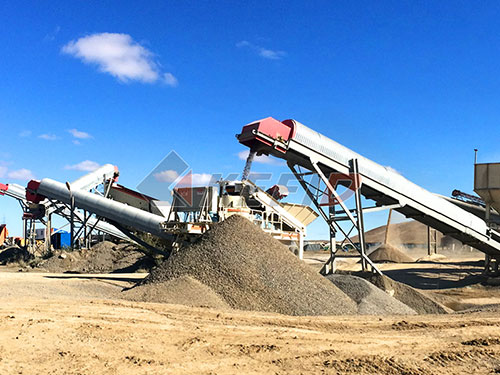
Old Machinery Import Restrictions: China strictly prohibits the import of used or refurbished crushers unless they meet specific age and performance criteria (e.g., less than 10 years old, with a certificate of residual value). This is a critical point—most slag crusher plant imports are new units.
Environmental Impact Assessment (EIA): The end-user (steel plant) must obtain an EIA approval from the local Municipal Ecology and Environment Bureau before the imported plant can be installed and commissioned. The importer often provides technical documentation to support this process.
6. Procurement and Logistics Challenges
Importing a slag crusher plant is a capital-intensive and logistically complex operation. Key challenges include:
Lead Time: Custom-built European crushers can have a lead time of 6–9 months from order to shipment. Importers must manage end-user expectations and secure advance payments (typically 30% T/T deposit, 70% against Bill of Lading).
Ocean Freight and Heavy-Lift Cargo: Crusher components are extremely heavy (a single jaw crusher can weigh 50–80 tons). Importers must charter heavy-lift vessels or use breakbulk shipping, often via ports like Shanghai, Tianjin, or Qingdao. Port handling requires specialized cranes (e.g., 200-ton mobile cranes) and flatbed trailers with lowboy trailers.
Incoterms and Risk Allocation: Most importers prefer FOB (Free on Board) terms to control freight costs, but this shifts the risk to the importer during transit. Marine insurance (Institute Cargo Clauses A) is mandatory. Additionally, the importer must conduct pre-shipment inspection (e.g., via SGS or Bureau Veritas) to ensure the equipment matches the contract specifications.
Installation and Commissioning: Imported plants often require the foreign manufacturer’s engineers to supervise installation. This involves obtaining short-term work visas (Z visas) for foreign technicians, which can take 4–6 weeks. The importer must also arrange for local civil works (foundations) that meet the manufacturer’s tolerance specifications (e.g., ±2 mm levelness).
7. Economic Viability and Total Cost of Ownership (TCO)
A professional importer must present a clear TCO analysis to the end-user. While the initial purchase price of an imported plant is 30–60% higher than a domestic equivalent, the TCO can be lower due to:
Lower Maintenance Frequency: Imported crushers use higher-grade bearings (e.g., SKF or FAG) and oil seals, reducing downtime from 15% to 5%.
Energy Efficiency: Advanced hydraulic systems and optimized crushing cavities reduce power consumption by 10–15% per ton of processed slag.
Resale Value: Imported equipment retains 40–50% of its value after 10 years, whereas domestic equipment may only retain 20%.
Wear Parts Cost: Although imported wear parts (e.g., manganese liners) are 2–3 times more expensive, their lifespan is 1.5–2 times longer, resulting in a lower cost per ton of crushed material.
8. Strategic Recommendations for Importers
To succeed in this niche market, Chinese slag crusher plant importers should adopt the following strategies:
Develop After-Sales Service Capabilities. The biggest complaint from Chinese end-users is the slow response time of foreign manufacturers. Importers should establish a local spare parts warehouse (e.g., in Shanghai or Suzhou) and employ trained service engineers who can perform routine maintenance and emergency repairs.
Offer Turnkey Solutions. Instead of just selling a crusher, importers should partner with local engineering firms to provide complete plant design, civil works, and environmental compliance packages. This adds value and differentiates the importer from mere equipment traders.
Leverage Digitalization. Use IoT (Internet of Things) sensors to provide remote monitoring services to end-users. For example, a predictive maintenance system that alerts the operator to bearing wear before failure can be a strong selling point.
Build Relationships with Steel Mill Groups. The primary buyers are large state-owned enterprises (e.g., Baowu, Ansteel, HBIS) and private steelmakers (e.g., Shagang, Rizhao). Importers should participate in industry exhibitions (e.g., Baosteel Biennial Conference, China International Steel Congress) and establish direct procurement frameworks.
Monitor Policy Shifts. The Chinese government periodically updates the Catalog of Encouraged Foreign Investment and the Import Tax Rebate Policy. Importers must stay abreast of these changes to optimize duty savings.
Conclusion
The role of a Chinese slag crusher plant importer is multifaceted, requiring expertise in international trade, heavy machinery engineering, customs compliance, and logistics. While domestic Chinese crusher manufacturers have improved significantly, the demand for imported plants persists due to the superior wear resistance, advanced automation, and environmental compliance of foreign equipment. For the importer, success hinges on a deep understanding of the end-user’s metallurgical processes, a robust supply chain, and a strong commitment to after-sales support. As China continues to push for circular economy practices and higher slag utilization rates, the market for high-quality imported slag crusher plants is expected to remain stable, albeit competitive. Importers who can offer integrated solutions—not just machines—will be best positioned to thrive in this specialized industrial segment.
If you have any questions about our products, please feel free to contact us. We take all inquiries and suggestions very seriously.