A Comprehensive Analysis of Chinese Gold Ore Crushing Equipment Testing
The global mining industry relies heavily on robust and efficient crushing equipment to liberate valuable minerals from their host rock. In the gold mining sector, this process is the critical first step in the comminution circuit, setting the stage for all subsequent grinding, concentration, and extraction processes. China has emerged as a dominant force in the manufacturing of mining machinery, with its gold ore crushing equipment being deployed in domestic and international projects alike. The testing of this equipment is, therefore, a subject of significant importance, reflecting not only on product quality but also on the technological maturity and international competitiveness of China’s heavy industry. This article provides a detailed examination of the methodologies, key performance indicators (KPIs), challenges, and evolving trends in the testing protocols for Chinese-manufactured gold ore crushing equipment.
1. The Imperative of Rigorous Testing
Gold ores are geologically diverse, ranging from free-milling ores where gold is easily liberated to refractory ores where it is locked within sulfide minerals like pyrite or arsenopyrite. This variability necessitates that crushing equipment be tested against representative samples to predict real-world performance accurately. For Chinese manufacturers, testing serves multiple crucial purposes:
- Performance Validation: To verify that the equipment meets or exceeds its designed specifications for throughput, product size distribution, and power consumption.
- Reliability and Durability Assessment: To ensure components like mantles, concaves, jaw plates, and rotors can withstand the abrasive and sometimes corrosive nature of gold ore without premature failure.
- Market Credibility: As Chinese companies compete internationally with established Western brands (e.g., Metso Outotec, Sandvik, FLSmidth), demonstrable and transparent testing data is essential for building trust with global clients.
- Design Optimization: Iterative testing provides invaluable data for Research & Development (R&D) teams to refine designs for improved efficiency, wear life, and ease of maintenance.
2. Phases of the Testing Protocol
The testing of crushing equipment is not a single event but a multi-stage process that evolves from controlled factory conditions to real-world field operation.
Phase 1: Component and Material Testing
Before a full machine is assembled, critical components and materials undergo rigorous testing.
- Metallurgical Analysis: The steel used for wear parts (e.g., high manganese steel, martensitic iron) is subjected to hardness tests (Brinell, Rockwell), impact toughness tests (Charpy), and microstructural analysis. For gold ores with high abrasiveness, this is paramount.
- Non-Destructive Testing (NDT): Major castings like crusher frames and main shafts are inspected using Ultrasonic Testing (UT), Magnetic Particle Inspection (MPI), or Dye Penetrant Inspection (DPI) to identify internal or surface flaws that could lead to catastrophic failure.
Phase 2: Factory Acceptance Testing (FAT)
The FAT is a critical milestone conducted at the manufacturer’s facility before shipment. While full-scale ore crushing is often impractical here due to logistical constraints, the FAT focuses on:
- Dimensional Compliance: Verifying that the equipment conforms to engineering drawings.
- Assembly Integrity: Checking alignment tolerances, bolt torques, and gear meshing.
- Mechanical Functionality: Running the crusher empty (no-load test) to check for abnormal vibrations, bearing temperatures, noise levels, and lubrication system performance.
- Control System Verification: Testing the Programmable Logic Controller (PLC) and automation systems for start/stop sequences, safety interlocks, and emergency shutdown procedures.
Phase 3: Pilot-Scale and Laboratory Testing
For new crusher models or novel applications with specific ore types—common in China’s diverse mining regions like Shandong, Henan, or Xinjiang—pilot-scale testing is indispensable.
- Test Plants: Manufacturers or independent research institutes (e.g., BGRIMM Technology Group) operate pilot plants where small-scale versions of crushers process several tons of customer ore samples.
- Key Metrics Measured:
- Throughput Capacity (t/h): The rate at which ore is processed.
- Product Size Distribution (P80): The screen size through which 80% of the crushed product passes. This directly impacts downstream grinding circuit efficiency.
- Power Draw (kW): Measured to calculate specific energy consumption—a critical cost factor.
- Wear Rate Measurement: Wear parts are precisely measured before and after a test run to calculate wear life in grams per ton crushed.
Phase 4: Field Performance Monitoring
The ultimate test occurs at the mine site after installation. Chinese manufacturers increasingly deploy technicians and engineers to monitor equipment during commissioning and initial operation. This phase provides real-world data that cannot be fully replicated in a factory or pilot plant.
- Long-Term Reliability Data: Tracking mean time between failures (MTBF) for mechanical and electrical components.
- Operational Availability: Calculating the percentage of time the crusher is available versus down for maintenance or repairs.
- Impact on Downstream Processes: Analyzing how the crusher’s product size affects the performance of SAG mills or ball mills in the grinding circuit.
3. Key Performance Indicators (KPIs) in Focus
The success of any crushing equipment test is judged against a set of well-defined KPIs:
- Reduction Ratio: The ratio of feed size to product size. High-performance cone crushers from leading Chinese brands aim for high reduction ratios in a single stage.
- Product Shape: Cubical particles are generally preferred over flaky or elongated ones as they pack less densely in grinding mills leading to better grinding efficiency. This is assessed through particle shape analysis software using digital imaging.
- Specific Energy Consumption (kWh/t): A direct measure of operational efficiency. Lower energy consumption per ton crushed is a major selling point.
- Wear Cost per Ton ($/t): Calculated by dividing the cost of wear parts by the total tonnage crushed during their service life. This is one of the most critical economic factors for mine operators.
4. Challenges Specific to Gold Ore Crushing
Testing must account for unique challenges posed by gold ores: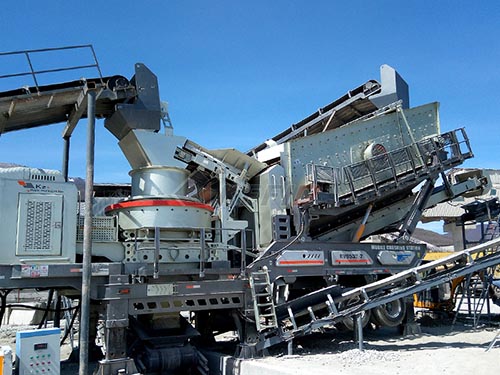
- Abrasiveness/Grindability Index: Ores with high quartz content are extremely abrasive. Tests must run long enough to generate meaningful wear data on liners.
- “Rock-on-Rock” vs “Rock-on-Iron” Crushing: Vertical Shaft Impactors (VSIs), used for producing finely shaped aggregate from gold ore tailings or softer ores require specific “rock-on-rock” testing configurations versus standard “rock-on-iron.”
- “Ore Variability”: A single test may not be representative if an ore body has significant heterogeneity.
Evolving Trends in Chinese Equipment Testing
The approach to testing in China has become increasingly sophisticated:
- Integration with Digitalization: Modern Chinese crushers are equipped with sensors monitoring pressure temperature vibration etc Data from these sensors during testing feeds into Digital Twin models allowing manufacturers simulate performance under various conditions predict wear schedule maintenance
- Focus on Sustainability: Energy consumption noise levels dust emissions are now integral parts evaluation criteria reflecting global shift towards sustainable mining practices
- Standardization International Norms: To gain international acceptance leading Chinese manufacturers now adhere ISO standards ASTM International guidelines their testing protocols ensuring results comparable recognizable worldwide
Conclusion
Testing Chinese gold ore crushing equipment comprehensive multi-faceted process evolved significantly beyond basic functionality checks It now encompasses rigorous laboratory analysis pilot plant trials extensive field performance monitoring driven by need validate reliability efficiency competitive global market Data generated these tests not only assures potential customers but also fuels continuous innovation cycle within China’s vibrant mining machinery sector As technology advances particularly areas automation digitalization we can expect these testing protocols become even more integrated predictive further solidifying position Chinese manufacturers key players global mining industry supply chain
