China Gold Ore Crushing Equipment Exporters: Market Dynamics, Technological Capabilities, and Global Impact
Introduction
The global gold mining industry relies heavily on efficient, durable, and technologically advanced crushing equipment to extract gold from ore. As the world’s largest manufacturer of mining machinery, China has emerged as a dominant exporter of gold ore crushing equipment, supplying jaw crushers, cone crushers, impact crushers, hammer crushers, and mobile crushing plants to mining operations across Africa, Latin America, Southeast Asia, and the Commonwealth of Independent States (CIS). Chinese exporters are no longer viewed merely as low-cost suppliers; they are increasingly recognized for engineering innovation, after-sales service networks, and customized solutions for complex gold-bearing ores. This article provides a detailed, objective analysis of China’s gold ore crushing equipment export sector, covering product categories, technical advantages, export destinations, competitive dynamics, challenges, and future trends.
1. Product Categories and Technical Specifications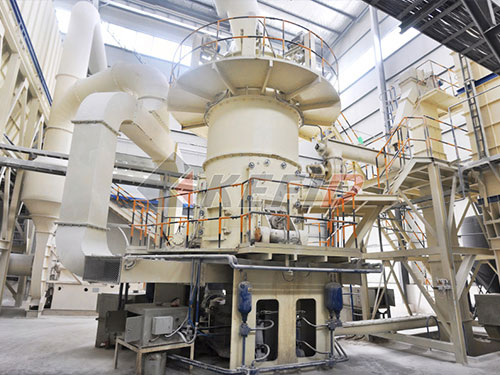
Chinese exporters offer a comprehensive range of crushing equipment tailored to gold ore characteristics, which often include high abrasiveness, varying hardness (from 2 to 12 on the Mohs scale), and the presence of clay or sulfide minerals. The main categories include:
- Jaw Crushers: Typically used for primary crushing. Chinese manufacturers produce PE and PEX series jaw crushers with feed openings from 150×250 mm to 1500×2100 mm, capable of handling capacities from 1 t/h to 1,200 t/h. Advanced models feature hydraulic adjustment, wear-resistant jaw plates (Mn13Cr2 or high-chrome alloys), and overload protection.
- Cone Crushers: For secondary and tertiary crushing, Chinese exporters offer spring cone crushers, single-cylinder hydraulic cone crushers, and multi-cylinder hydraulic cone crushers. The latter, such as the HPT and HST series, achieve crushing ratios up to 6:1 and can process gold ores with compressive strengths up to 300 MPa. Key features include automatic cavity clearing, PLC control, and laminated crushing to minimize flakiness.
- Impact Crushers: Horizontal shaft impact (HSI) and vertical shaft impact (VSI) crushers are used for softer gold ores or as shaping units. Chinese VSI crushers with tungsten carbide anvils are particularly effective for liberating fine gold from quartz veins.
- Hammer Crushers and Roll Crushers: Employed in small- to medium-scale gold operations, especially in artisanal and small-scale mining (ASM) contexts. Chinese exporters provide heavy-duty hammer crushers with grate bars for controlled product size.
- Mobile Crushing Plants: Track-mounted or wheel-mounted jaw and cone crushing stations have gained popularity for remote gold deposits. Chinese mobile plants integrate feeders, screens, and conveyors, with capacities from 50 t/h to 500 t/h and remote monitoring via IoT.
2. Technological Advancements and Quality Standards
Historically, Chinese equipment was perceived as inferior in durability and precision. However, leading exporters have invested heavily in R&D, automation, and quality control. Key advancements include:
- Material Science: Use of high-manganese steel, bimetal composite hammers, and ceramic-reinforced liners extends wear life by 30–50% compared to conventional parts.
- Hydraulic and Electronic Control: Modern cone crushers feature hydraulic tramp release, automatic setting adjustment, and real-time monitoring of pressure, temperature, and power draw. This reduces downtime and improves product consistency.
- Energy Efficiency: Chinese manufacturers have adopted variable frequency drives (VFDs) and optimized crushing chamber designs, reducing energy consumption per ton by 15–25% compared to older models.
- Modular Design: Export-oriented equipment is designed for containerized shipping and rapid on-site assembly, crucial for remote gold mines in Africa and South America.
- Compliance with International Standards: Major exporters now hold CE, ISO 9001, and GOST certifications, and some have obtained SGS or BV verification for specific mining projects.
3. Export Destinations and Market Penetration
Chinese gold ore crushing equipment exports are geographically diversified. According to trade data from 2020–2024, the top destinations include:
- Africa: Ghana, South Africa, Sudan, Tanzania, Zimbabwe, and the Democratic Republic of Congo. Chinese equipment dominates the mid-tier gold mining sector, where capital sensitivity is high. For example, in Ghana’s Ashanti region, Chinese jaw and cone crushers are common in 50–200 t/h plants.
- Latin America: Peru, Chile, Colombia, and Brazil. Chinese exporters have gained share by offering flexible financing (e.g., export credit from Sinosure) and turnkey solutions.
- Southeast Asia: Indonesia, Philippines, Myanmar, and Laos. Mobile crushing plants are particularly popular for alluvial and hard-rock gold deposits.
- CIS and Mongolia: Russia, Kazakhstan, and Mongolia. Chinese equipment benefits from proximity and compatibility with local infrastructure.
- Middle East: Sudan, Saudi Arabia, and Oman.
Notably, Chinese exporters have shifted from direct sales to establishing local warehouses, service centers, and joint ventures with local distributors. For instance, several Chinese manufacturers have set up spare parts depots in Johannesburg and Lima to reduce lead times from 45 days to 7 days.
4. Competitive Advantages and Value Proposition
Chinese exporters compete on multiple fronts: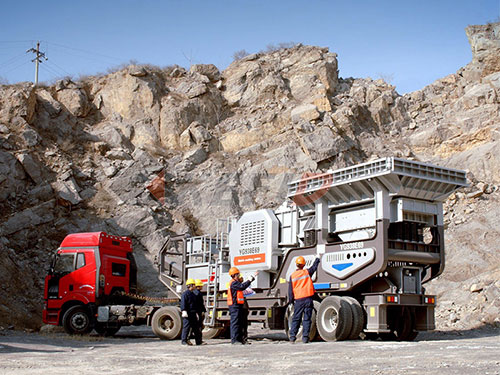
- Cost-Performance Ratio: A 200 t/h Chinese cone crusher typically costs 30–50% less than equivalent Western brands (e.g., Metso, Sandvik) while offering 80–90% of the operational reliability.
- Customization: Chinese factories can modify crushing chambers, motor power, and control systems to match specific gold ore characteristics, often within 30–45 days.
- After-Sales Service: Leading exporters provide 24/7 remote diagnostics, on-site commissioning, operator training, and guaranteed spare parts availability for 5–10 years.
- Financing Options: Partnerships with Chinese policy banks and export credit agencies enable buyers to access loans with favorable terms, which is critical for junior mining companies.
- Turnkey Projects: Some exporters offer complete gold ore processing lines, including crushing, grinding, gravity separation, and CIL/CIP circuits, reducing integration risks for mine owners.
5. Challenges and Criticisms
Despite growth, Chinese exporters face several challenges:
- Perception of Quality: Some international mining companies remain skeptical about long-term reliability, especially for high-capacity, continuous-duty applications. However, this is changing as Chinese equipment proves itself in African and Latin American operations.
- Intellectual Property: Reverse-engineering accusations have occasionally arisen, though leading exporters now invest in original designs and patent portfolios.
- Logistics and Tariffs: Shipping heavy machinery to landlocked countries (e.g., Burkina Faso, Mali) is costly. Additionally, some countries impose import tariffs or require local content, prompting Chinese firms to consider local assembly.
- Competition from Other Exporters: Turkey, India, and South Korea also export crushing equipment at competitive prices. Chinese firms differentiate through scale, speed, and service breadth.
- Environmental and Safety Standards: Chinese equipment must meet increasingly strict emissions, noise, and dust control regulations in developed markets. This has driven innovation in dust suppression systems and electric drives.
6. Case Studies
- Ghana: A 150 t/h gold ore crushing plant supplied by a Chinese exporter uses a PE750×1060 jaw crusher and HPT300 cone crusher. After two years, availability exceeds 92%, with wear parts lasting 20% longer than the previous European brand.
- Peru: A Chinese mobile crushing plant (capacity 80 t/h) operates at 4,200 m altitude, featuring cold-weather hydraulic systems and oxygen-enriched cabins for operators. The exporter provided on-site training and a 3-year warranty.
- Sudan: A Chinese hammer crusher and vibrating screen combination processes 50 t/h of gold-bearing quartz. The low capital cost (under $120,000) enabled a local cooperative to start operations, with payback in 8 months.
7. Future Trends
Several trends will shape China’s gold ore crushing equipment export sector:
- Digitalization and IoT: Remote monitoring, predictive maintenance, and digital twins will become standard, allowing exporters to offer performance-based contracts.
- Electrification and Renewables: Solar-powered or battery-electric crushing plants for off-grid gold mines, reducing diesel dependence.
- Modular and Containerized Plants: Faster deployment for small-scale and temporary mining operations.
- Increased Localization: Chinese exporters will establish more overseas assembly plants and service hubs to circumvent tariffs and improve responsiveness.
- Consolidation: Larger Chinese manufacturers will acquire smaller rivals to compete globally on scale and brand strength.
- Focus on ESG: Exporters will need to demonstrate reduced carbon footprint, water usage, and noise levels to satisfy international financiers and host governments.
Conclusion
Chinese gold ore crushing equipment exporters have transformed from peripheral players to central suppliers in the global mining value chain. Through competitive pricing, rapid customization, expanding service networks, and continuous technological improvement, they serve a wide spectrum of gold mining operations—from artisanal mines in Sudan to mid-tier projects in Ghana and Peru. While challenges related to quality perception, logistics, and regulatory compliance persist, the trajectory is clear: China will remain a leading exporter, and its equipment will increasingly set benchmarks for cost-effectiveness and adaptability. For gold mining companies worldwide, engaging with Chinese exporters is no longer a compromise but a strategic choice—provided that due diligence, spare parts planning, and operator training are properly addressed. As the industry moves toward digital, electric, and modular solutions, Chinese manufacturers are well-positioned to co-innovate with global partners, ensuring that gold ore crushing becomes more efficient, safer, and more sustainable.
